 ultimate-guide
Avoiding Impure Research Grade Peptides: A Verification Guide
Table of Contents
- Why Peptide Purity Matters in Research
- How to Verify Peptide Purity Through Documentation
- Interpreting a Peptide Certificate of Analysis
- Common Contaminants and Health Risks
- Research-Grade vs Pharmaceutical-Grade: What the Labels Mean
- Storage and Handling Protocols to Prevent Degradation
- Identifying Red Flags in Peptide Vendor Practices
- Conclusion
Last Updated: August 17, 2026
Why Peptide Purity Matters in Research
Impure peptides compromise experimental validity in ways that often go undetected until results fail to replicate. Contaminated peptides introduce uncontrollable variables: endotoxins trigger immune responses, heavy metals interfere with binding assays, and synthetic byproducts create false positives. Your experiment may appear to work, but results won't hold up under scrutiny or in follow-up studies.
At Everform Research, we've worked with principal investigators who discovered batch inconsistencies only after months of failed experiments. The common thread: they had trusted vendor documentation without verification. The difference between a pure peptide and an impure one often isn't visible, both arrive in vials with paperwork, but one delivers reproducible results and the other doesn't.
How to Verify Peptide Purity Through Documentation
Request a Certificate of Analysis (CoA) before purchase. This document should detail the exact purity percentage, testing method used, and batch number. Without this, you're purchasing blind.
The CoA should specify HPLC (high-performance liquid chromatography) testing results. HPLC is the industry standard because it separates peptide components by molecular weight and polarity, revealing exactly what's in the vial. If a vendor claims purity without mentioning HPLC, ask why.
Look for specific numbers. A legitimate CoA states purity as a percentage, typically 95%, 98%, or 99%+. Vague language like "high purity" without numerical backing is a red flag. You need exact figures because even a 2-3% difference between batches can affect dose-response curves in sensitive assays.
Understanding HPLC Testing and Purity Levels
HPLC uses liquid chromatography to separate peptide molecules based on their chemical properties, then quantifies each component to determine overall purity. Your sample is injected into the HPLC column, where the liquid mobile phase carries peptides through a stationary phase. Different compounds exit at different times, a detector measures each component's amount, and software calculates what percentage is the desired peptide versus contaminants.
Purity levels matter enormously. A 95% pure peptide contains 5% other compounds. In a 10mg vial, that's 500 micrograms of unknown material. For high-throughput screening or dose-response studies, this inconsistency ruins data.
Research-grade peptides typically claim 90-98% purity. Pharmaceutical-grade compounds go higher, 98-99.5%+. The difference reflects manufacturing controls and quality assurance processes. Ask vendors what their HPLC method detects, some only identify major contaminants, whilst others reveal trace impurities down to 0.1% or lower.
Red Flags in Vendor Documentation
If a CoA lacks a date or batch number, you cannot trace results to a specific production run. If multiple batches show identical purity percentages down to the decimal point, that's suspicious, real manufacturing has natural variation.
Beware of CoAs listing "purity by HPLC" without providing a chromatogram (the actual graph showing peaks). A legitimate lab includes raw data. If a vendor refuses to share chromatograms or claims they're "proprietary," that's a warning sign.
Check whether the CoA comes from the manufacturer or a third-party lab. Third-party verification is more credible because the testing lab has no financial incentive to inflate purity numbers. Look for contact information on the CoA, a legitimate testing lab lists its name, address, and accreditation status.
Interpreting a Peptide Certificate of Analysis
A CoA should list peptide identity, purity percentage, impurity profile, and test date. The peptide identity section confirms you're looking at the right compound, including the amino acid sequence, molecular weight, and product code. Verify this matches your purchase order exactly.
The purity percentage represents what percentage of your sample is the intended peptide. The remaining percentage is contaminants, water, residual solvents, salts, or incomplete synthesis byproducts. A 98% pure peptide is generally acceptable for most research applications. Below 95%, you're introducing too much variability.
The impurity profile details what the other percentage contains. This is critical. A peptide that's 98% pure but contains 1.5% endotoxin is worse than one that's 95% pure with only 0.1% endotoxin. Endotoxins trigger immune responses even in trace amounts. Heavy metals accumulate in tissues. Residual solvents are neurotoxic.
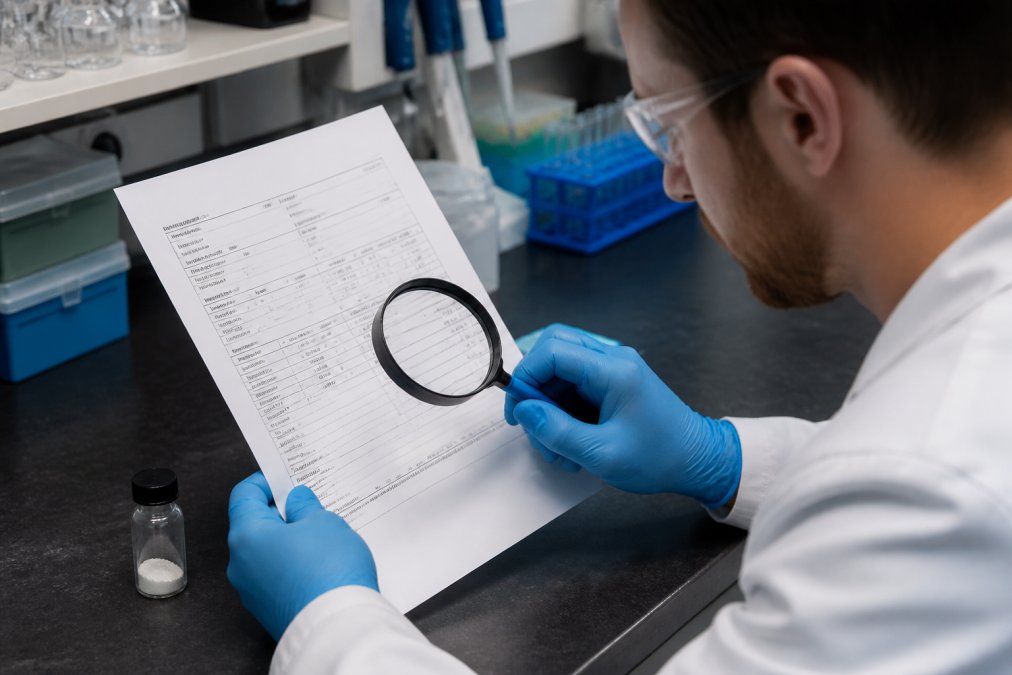
The test date matters. Peptides degrade over time, especially if stored improperly. Request CoAs dated within the last three months, or ask the vendor to run fresh testing if purchasing older stock.
Verifying CoA Authenticity and Independence
Contact the testing laboratory directly using their official website, not details from the CoA itself. Ask whether they tested the specific batch number and date listed. Legitimate labs maintain records and can confirm or deny testing.
Ask whether the lab is independent from the peptide supplier. Some vendors own their testing facilities, creating a conflict of interest. Third-party labs with ISO 17025 accreditation are more trustworthy because accreditation requires regular audits and proficiency testing.
Request the full chromatogram data, not just the summary percentage. It's harder to fabricate than a single number. Cross-reference multiple batches from the same vendor, if every batch shows identical purity percentages, that's unrealistic and suggests copy-paste documentation rather than actual testing.
Common Contaminants and Health Risks
Endotoxins are bacterial lipopolysaccharides that trigger inflammatory responses, measured in endotoxin units (EU) per milligram. For research use, levels below 1 EU/mg are generally acceptable. Above that, you risk confounding immune-related outcomes.
Heavy metals accumulate in tissues over time. Lead interferes with neurological function. Cadmium damages kidneys and bones. Mercury crosses the blood-brain barrier. A CoA should specify heavy metal testing results using inductively coupled plasma mass spectrometry (ICP-MS).
Residual solvents come from peptide synthesis. Dimethylformamide (DMF) and N-methylpyrrolidone (NMP) are neurotoxic. Acetonitrile is metabolised to cyanide. These should be tested and reported in parts per million.
Incomplete synthesis byproducts are peptides missing amino acids or with incorrect sequences. These interfere with binding assays and cell-based experiments. HPLC purity testing should detect these because they have different retention times.
Research-Grade vs Pharmaceutical-Grade: What the Labels Mean
Research-grade peptides are manufactured under looser standards with less stringent quality controls and minimal documentation. They're acceptable for many applications, cell culture studies, binding assays, in vitro screening, where absolute purity is less critical.
Pharmaceutical-grade peptides follow Good Manufacturing Practice (GMP) standards. Manufacturing occurs in controlled environments with documented procedures, regular audits, and traceability for every batch. Testing is more rigorous and frequent. These peptides meet standards for potential human use and cost significantly more but offer consistency and safety assurance that research-grade cannot.
For your research, the choice depends on your application. If you're running dose-response curves where batch-to-batch consistency is essential, pharmaceutical-grade makes sense. If you're screening for activity in a high-throughput format, research-grade may suffice. Be wary of vendors using "research-grade" as a euphemism for "untested." Legitimate research-grade products still have CoAs with real testing data.
Storage and Handling Protocols to Prevent Degradation
Peptides degrade through hydrolysis, oxidation, and microbial growth. Proper storage slows these processes dramatically.
Temperature is the primary factor. Peptides are most stable frozen at -20°C or colder. At room temperature, degradation accelerates exponentially. A peptide stored at 4°C degrades roughly twice as fast as one stored at -20°C.
Lyophilised (freeze-dried) peptides are more stable than liquid solutions. Lyophilised peptides can be stored at -20°C for months or years. Liquid peptides degrade faster because water promotes hydrolysis.
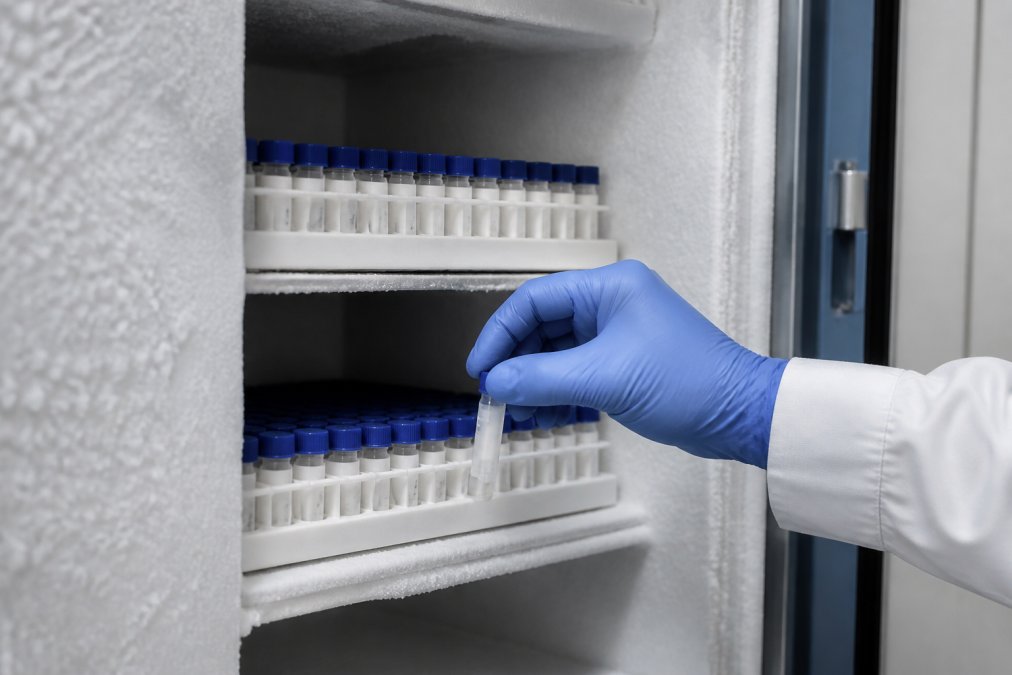
Humidity and light accelerate degradation. Store peptides in a dark freezer, not on a lit shelf. Use opaque vials or wrap vials in foil. Desiccant packets inside storage containers help control humidity.
Minimise thaw cycles. Each time you thaw and refreeze, ice crystals form and damage peptide structures. Aliquot peptides into smaller portions when you first receive them. Use one aliquot at a time, then discard it.
Reconstitution introduces new risks. Use sterile, pyrogen-free water or buffered solutions. Use glass or certified plastic containers. If making a solution that will sit for days or weeks, add antimicrobial agents to prevent bacterial growth, unless your downstream application prohibits this.
Identifying Red Flags in Peptide Vendor Practices
Vendors that resist providing detailed CoAs are hiding something. Legitimate suppliers provide CoAs with every order or make them immediately accessible.
Unusually low pricing is suspicious. Peptide synthesis is expensive and requires specialised equipment, trained chemists, and rigorous quality control. A vendor offering peptides significantly below market rates is likely cutting corners.
Vendors with no verifiable history or online presence should concern you. Legitimate peptide suppliers have established reputations, published research, and customer reviews. Check whether the company has been in business for at least several years.
Vendors making health claims beyond "for research use only" are violating regulations. This signals a company willing to break rules, which extends to quality and documentation.
Poor communication is a practical red flag. If emails go unanswered or the vendor becomes defensive when you ask for verification, that's a problem. A vendor should welcome your scrutiny and answer detailed questions readily.
Check shipping and packaging. Peptides should arrive in insulated packaging with ice packs or gel packs, especially during warm months. Vendors who skimp on shipping risk your product and your results.
Conclusion
Verifying peptide purity isn't optional if you're serious about reproducible research. The process requires checking documentation, understanding testing methods, and assessing vendor credibility. HPLC purity percentages matter, but so do impurity profiles, Certificate of Analysis authenticity, and storage conditions.
At Everform Research, we've built our reputation on rigorous third-party testing, cGMP-compliant manufacturing, and transparent documentation. Every peptide comes with a verified CoA that includes full chromatogram data, detailed impurity profiles, and independent laboratory confirmation. We understand that your research depends on consistency, which is why we maintain batch-to-batch quality standards and provide the documentation you need to verify our claims yourself.
Use discount code EVER15 for 15% off your first order. Shop Compounds and experience the difference that genuine quality verification makes in your research outcomes.
Frequently Asked Questions
How can I verify the purity of a peptide through analytical documentation?
Request the Certificate of Analysis (CoA) from your vendor and verify it includes HPLC results showing purity percentage (typically 95% or higher for research-grade). Check that the CoA is dated recently, lists the batch number matching your vial, and includes the testing laboratory's contact information. Third-party testing from an independent lab, not the manufacturer, provides stronger verification. Look for endotoxin, heavy metals, and solvent residue testing as additional quality markers.
What does 'research use only' actually mean for peptide safety?
'Research use only' indicates the peptide has not undergone FDA approval for human consumption and lacks the rigorous safety testing required for pharmaceutical-grade compounds. This label does not guarantee purity or quality control, it simply denotes regulatory status. Many vendors use this label to avoid liability whilst selling impure or contaminated batches. Always demand third-party CoA verification regardless of labelling, as this is your primary safeguard against adulteration and contaminants.
What are the most common contaminants in low-quality research peptides?
Impure peptides frequently contain endotoxins (bacterial fragments causing adverse reactions), heavy metals (cadmium, lead, mercury from synthesis), residual solvents from chemical synthesis, and microbial growth from poor sterile conditions. Synthetic byproducts from incomplete purification and peptide degradation fragments also appear in low-quality batches. These contaminants compromise experimental reproducibility and pose health risks including infections and allergic reactions. Third-party testing for these specific contaminants should be standard practice.
Why is third-party testing critical when sourcing research peptides?
Third-party laboratories operate independently from manufacturers, eliminating conflicts of interest and rubber-stamping of poor-quality batches. Independent testing verifies molecular weight, purity levels, and the presence of endotoxins, heavy metals, and solvents without bias. This transparency builds confidence in batch consistency and allows you to compare vendors objectively. Everform Research uses independent third-party verification to ensure every batch meets documented quality standards, giving you reliable data for reproducible research.
This article was written using GrandRanker