 ultimate-guide
Benefits of Transparent Peptide Sourcing: A 2026 Guide
Table of Contents
- Why Transparent Peptide Sourcing Matters for Research Integrity
- Third-Party Peptide Testing: The Foundation of Confidence
- Understanding Peptide Certificate of Analysis Explained
- cGMP Peptide Manufacturing Standards and What They Mean
- Chain of Custody and Batch-Level Documentation
- Red Flags: Identifying Unreliable Peptide Suppliers
- How Transparency Impacts Experimental Reproducibility
- Conclusion: Making the Case for Transparent Sourcing
Last Updated: August 30, 2026
Why Transparent Peptide Sourcing Matters for Research Integrity
When your research depends on the purity of a single compound, everything changes. A peptide that's 98% pure versus 96% pure might seem like a small difference until that variance destroys your dataset across 50 experiments. This is why transparent peptide sourcing has become non-negotiable for serious researchers.
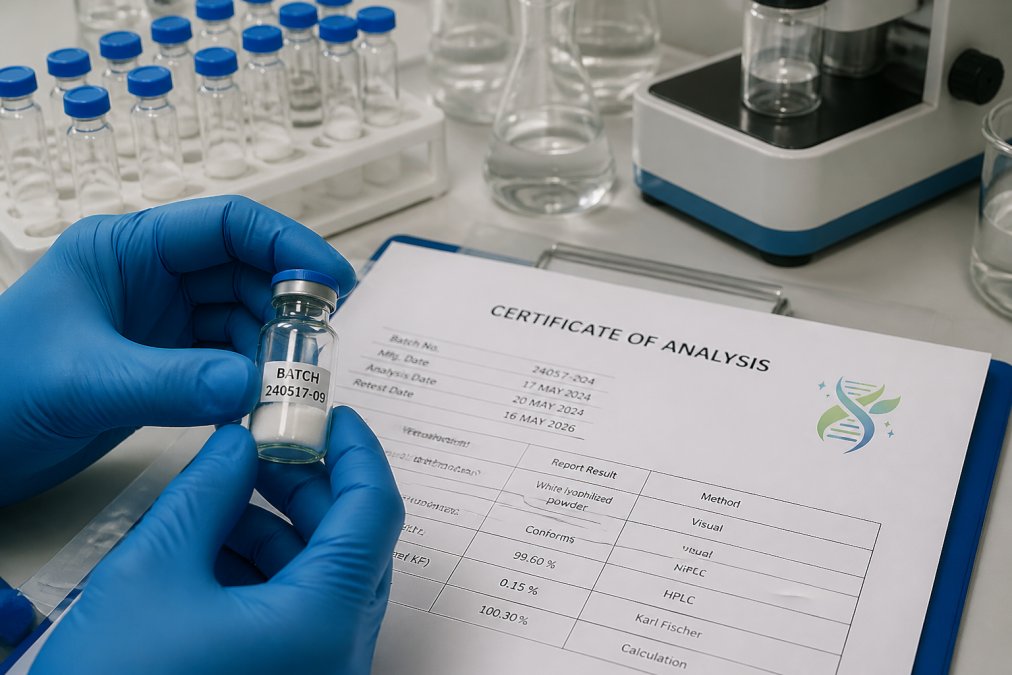
According to PeptideTrust's 2026 vendor analysis, whilst 80% of active research-peptide vendors publish a Certificate of Analysis, only 30% publish one that can be verified at the testing lab itself. That gap matters. It's the difference between holding a document and holding proof.
The stakes are higher now than ever. Fortune Business Insights reports that the global peptide synthesis market is projected to grow from USD 800.16 million in 2026 to USD 1,640.52 million by 2034, with North America commanding 48.59% of that market share. As demand surges, so does the pressure on quality control. Sourcing from vendors who embrace transparency isn't a luxury, it's the foundation of research integrity.
Below, we'll walk you through exactly what transparent sourcing looks like, how to evaluate it, and why it changes everything about your results.
Third-Party Peptide Testing: The Foundation of Confidence
Third-party peptide testing is independent analytical validation performed by a laboratory with no financial stake in the sale. It's the clearest signal that a vendor's quality claims are genuine.
Here's what separates confidence from guesswork: when a vendor tests their own product, they have an incentive to report favourable results. When an external lab does it, they don't. That independence is everything.
The most rigorous vendors publish batch-specific Certificates of Analysis (CoAs) from accredited third-party labs. These documents include high-performance liquid chromatography (HPLC) chromatograms and mass spectrometry confirmation, the analytical gold standard for purity verification. According to research from BioLongevity Labs, batch-specific CoAs with HPLC chromatograms and mass spectrometry confirmation represent the minimum documentation standard for research-grade compounds, with triple third-party testing setting the highest bar for purity confidence.
What does this mean in practice? A vendor claiming 98% purity is just a number. A vendor providing the actual HPLC chromatogram showing that purity, verified by an independent lab, is proof. You can see the peaks. You can verify the data yourself if needed. That transparency eliminates doubt.
Most researchers don't realise they can request access to CoAs before purchase. If a vendor hesitates or claims they can't share testing data until after you've bought, that's a red flag. Reputable vendors, including Everform Research, make this documentation available upfront because they have nothing to hide.
Understanding Peptide Certificate of Analysis Explained
A peptide certificate of analysis is a formal document that reports the results of quality testing performed on a specific batch of peptide. It's your proof of what you're actually buying.
The structure matters. A complete CoA includes:
- Batch identification number - ties the results to your specific vial
- Purity percentage - typically reported as a range (e.g., 97.2-98.5%)
- HPLC chromatography data - visual confirmation of what's in the sample
- Mass spectrometry results - molecular weight verification
- Endotoxin levels - critical for research where bacterial contamination could skew results
- Solubility and stability information - how the peptide behaves under storage conditions
- Testing date and lab accreditation - proof the work was current and performed by a qualified facility
The difference between a minimal CoA and a comprehensive one is substantial. A minimal report might state "Purity: 98%" with no supporting data. A comprehensive report shows you the analytical methods, the equipment used, the exact chromatogram, and the lab's accreditation status.
When you're evaluating a CoA, look for these quality signals:
- The lab's ISO 17025 accreditation (this is the standard for testing laboratories)
- Batch-specific data (not a generic "all batches are this pure" claim)
- Multiple analytical techniques confirming identity and purity
- A verifiable lab contact or website where you can confirm the results independently
cGMP Peptide Manufacturing Standards and What They Mean
cGMP stands for current Good Manufacturing Practice, a regulatory framework enforced by the FDA that sets minimum standards for how pharmaceuticals and research compounds are produced. For peptides, cGMP compliance means documented processes, validated equipment, trained staff, and rigorous quality control at every step.
What does cGMP actually require? The standard covers facility design, equipment maintenance, raw material verification, production documentation, and contamination control. Every batch must be produced following written protocols. Every critical step must be recorded. Every deviation must be investigated and documented.
The catch: cGMP is mandatory for FDA-regulated drugs, but research peptides exist in a regulatory gray area. Most "research use only" (RUO) peptides aren't subject to cGMP requirements because they're not marketed as therapeutic agents. This means a vendor can claim to follow cGMP practices without being legally required to do so, and without external audits to verify it.
That's why transparency becomes crucial. A vendor that voluntarily adopts cGMP standards and submits to third-party audits is signalling something important: they've chosen the harder path because quality matters more than cost savings.
When evaluating a vendor's manufacturing claims, ask for:
- Documentation of facility audits (not just self-assessments)
- Evidence of equipment qualification and validation
- Records showing how they handle deviations from standard procedures
- Training records for their synthesis and quality teams
- Details on their contamination control protocols
Everform Research maintains cGMP-compliant manufacturing practices as a core commitment to consistency and reliability. This isn't a regulatory requirement for research peptides, it's a choice to exceed industry expectations.
Chain of Custody and Batch-Level Documentation
Chain of custody is the documented trail showing who handled a peptide sample, when, and under what conditions from synthesis through delivery to you. It's the audit trail that proves your vial hasn't been compromised, mislabelled, or mixed with another batch.
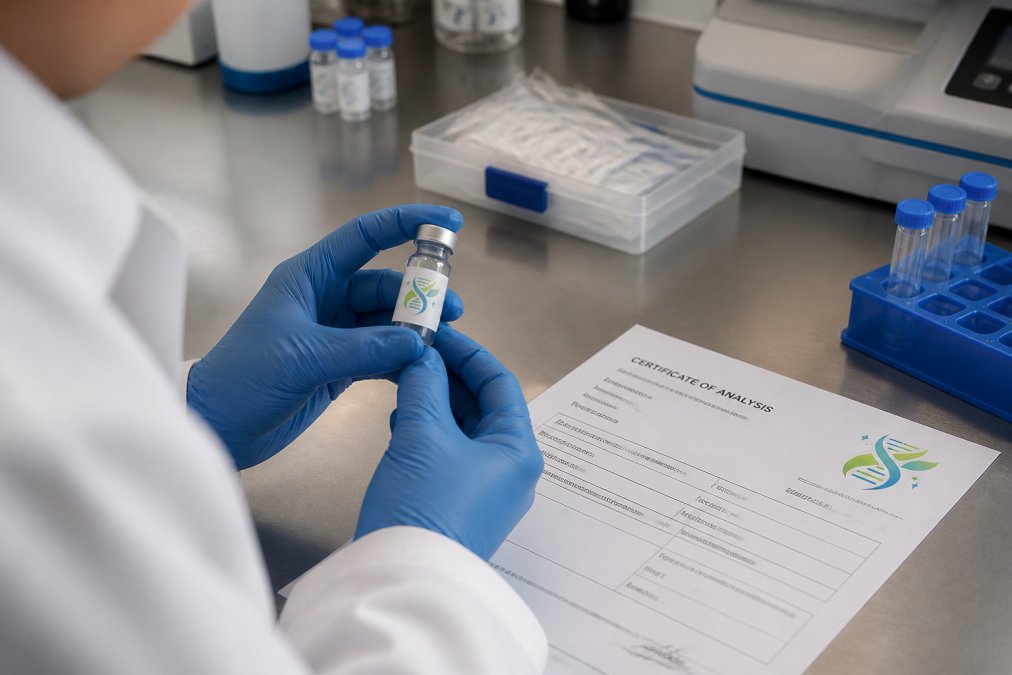
Why does this matter? Contamination can happen anywhere: during synthesis, during storage, during shipping, or during handling before testing. A complete chain of custody document shows exactly where your peptide has been and who verified it at each step. If something went wrong, the documentation tells you where.
A strong chain of custody includes:
- Unique batch identifier linked to synthesis date and synthesis parameters
- Temperature and humidity records during storage (critical for stability)
- Shipping conditions documentation (was it kept refrigerated? Inert atmosphere?)
- Receiving inspection records at each transfer point
- Storage location and conditions at your facility
- Any handling notes or deviations from standard procedure
The most transparent vendors provide this information proactively. They don't wait for you to ask, they include it with every order. This level of documentation is what separates premium sourcing from commodity sourcing.
Red Flags: Identifying Unreliable Peptide Suppliers
Not all peptide vendors operate with the same standards. Knowing what to look for can save you months of wasted research and thousands in failed experiments.
The clearest red flags:
No accessible Certificate of Analysis. If a vendor says they test their peptides but won't share the results until after purchase, they're hiding something. Reputable vendors share CoAs upfront. Full stop.
Generic or undated testing documentation. A CoA that says "typical purity: 98%" without batch-specific data, testing dates, or lab accreditation is worthless. It tells you nothing about what you're actually receiving.
Inability to verify testing claims. Ask a vendor for the name and contact information of their testing lab. If they can't provide it or the lab doesn't exist, you've found your answer.
Vague sourcing information. Where did the raw materials come from? Who synthesised the peptide? Where was it tested? If a vendor is evasive about sourcing, that's a signal they're sourcing from unreliable suppliers themselves.
Pricing that seems too low. Rigorous third-party testing, cGMP-compliant manufacturing, and detailed documentation cost money. If a vendor's prices are significantly lower than established competitors, ask why. The answer often reveals corners being cut.
No published recall or complaint policy. According to PeptideTrust's 2026 analysis, none of the 20 active research-peptide vendors analysed publish a complete recall or complaint policy. This is a systemic gap. Vendors that do publish one are ahead of the curve.
Pressure to buy without inspection. "Limited stock, order now" or "can't guarantee availability if you wait for documentation" are pressure tactics. Legitimate vendors understand that researchers need time to verify quality before committing.
How Transparency Impacts Experimental Reproducibility
Here's where transparency stops being abstract and becomes concrete: reproducibility is impossible without it.
Reproducibility means running the same experiment twice and getting the same results. It's the foundation of science. But reproducibility depends entirely on using identical materials. If batch one of your peptide is 98% pure and batch two is 96% pure, your experimental conditions aren't actually identical anymore, even though everything else is the same.
This is why batch-level documentation matters so much. When you source from a vendor who provides detailed, verifiable documentation for every batch, you can track whether purity, solubility, or stability changed between orders. If results drift unexpectedly, you can check whether the peptide itself changed or whether your protocol did.
An audit by MDConsultingNY found a 3.77x imbalance between benefit-focused marketing and essential safety disclosures on peptide therapy provider websites. Whilst 100% of sites discussed benefits, only 26.5% included critical transparency signals like regulatory status or sourcing information. This gap directly undermines reproducibility because researchers can't assess material quality without that information.
The practical impact: teams using transparent sourcing report fewer unexplained experimental failures. They spend less time troubleshooting whether the problem is their protocol or their materials. They publish results with higher confidence because they can document exactly what they used.
Everform Research's commitment to transparency, third-party testing, cGMP manufacturing, batch-level documentation, directly supports your ability to reproduce results across time and across team members. When your peptide is consistent and documented, your science is reproducible.
Conclusion: Making the Case for Transparent Sourcing
The evidence is clear: transparent peptide sourcing isn't a premium feature. It's a requirement for serious research.
When you source peptides with rigorous third-party testing, verifiable certificates of analysis, and complete batch-level documentation, you're not paying extra for marketing. You're investing in reproducibility, consistency, and research integrity. You're eliminating the variables that derail experiments and waste months of work.
The peptide market is growing fast. As demand increases, so does the pressure to cut corners. The vendors that stand out, the ones worth trusting, are those that embrace transparency as standard practice, not an afterthought.
At Everform Research, we've built our entire operation around this principle. Third-party analytical validation, cGMP-compliant manufacturing, detailed batch documentation, and accessible customer support aren't nice-to-haves, they're foundational. We believe researchers deserve materials they can trust completely, backed by documentation they can verify themselves.
Ready to experience the difference transparent sourcing makes? Explore Everform Research's full range of peptide compounds, all backed by rigorous third-party testing and comprehensive documentation. Use discount code EVER15 for 15% off your first order and see why leading researchers choose Everform Research for compounds they can depend on.
| Quality Signal | What It Means | Why It Matters |
|---|---|---|
| Batch-specific CoA | Testing results tied to your exact vial | Proves your peptide matches the documented purity |
| Third-party testing | Independent lab verification | Eliminates vendor bias in quality reporting |
| HPLC chromatogram | Visual confirmation of purity | You can see the analytical data yourself |
| cGMP manufacturing | Documented, validated production processes | Ensures consistency across batches |
| Chain of custody | Complete handling documentation | Confirms your peptide hasn't been compromised |
| Verifiable lab contact | You can confirm results independently | Eliminates fake or inflated testing claims |
=== FAQ ANSWERS (audit these too, same rules) ===
[1] Q: Why is third-party testing critical for peptide purity? A: Third-party testing provides independent verification that peptides meet stated purity specifications. According to PeptideTrust's 2026 analysis, whilst 80% of active research-peptide vendors publish a Certificate of Analysis, only 30% publish one that can be verified at the testing laboratory itself. Independent testing eliminates conflicts of interest and ensures researchers receive compounds suitable for reproducible experiments. Mass spectrometry and HPLC analysis confirm peptide identity and detect contaminants that could compromise research outcomes.
[2] Q: What should I look for in a transparent peptide sourcing partner? A: Reliable peptide suppliers provide batch-specific Certificates of Analysis with verifiable third-party testing, maintain cGMP-compliant manufacturing standards, publish chain of custody documentation, and offer accessible quality-control information. Ask suppliers whether their CoAs can be verified directly at the testing laboratory and whether they publish complete recall and complaint policies.
[3] Q: How does transparent peptide sourcing reduce research risks? A: Sourcing from vendors with rigorous documentation and third-party testing directly reduces contamination and identity risk. Transparent suppliers reveal manufacturing standards, testing protocols, and batch consistency data, allowing researchers to evaluate quality before purchase. The 2026 PeptideTrust dataset found the average transparency score for research-peptide vendors was 76.4 out of 100, with transparency serving as the clearest quality signal. This visibility helps researchers identify potential issues early and prevents costly experimental failures.
[4] Q: What is the difference between a vendor-issued CoA and a third-party-verified CoA? A: A vendor-issued CoA is generated by the manufacturer's own laboratory and may lack independent oversight. A third-party-verified CoA comes from an independent testing facility with no financial stake in the sale, providing unbiased results. As of 2026, batch-specific third-party Certificates of Analysis with HPLC chromatograms and mass spectrometry confirmation represent the minimum standard for research-grade compounds. Triple third-party testing sets the highest bar for purity confidence. Verifiable CoAs allow you to confirm results by contacting the testing laboratory directly, ensuring authenticity.
Frequently Asked Questions
Q: Why is third-party testing critical for peptide purity?
Third-party testing provides independent verification that peptides meet stated purity specifications. According to PeptideTrust's 2026 analysis, whilst 80% of active research-peptide vendors publish a Certificate of Analysis, only 30% publish one that can be verified at the testing laboratory itself. Independent testing eliminates conflicts of interest and ensures researchers receive compounds suitable for reproducible experiments. Mass spectrometry and HPLC analysis confirm peptide identity and detect contaminants that could compromise research outcomes.
Q: What should I look for in a transparent peptide sourcing partner?
Reliable peptide suppliers provide batch-specific Certificates of Analysis with verifiable third-party testing, maintain cGMP-compliant manufacturing standards, publish chain of custody documentation, and offer accessible quality-control information. Ask suppliers whether their CoAs can be verified directly at the testing laboratory and whether they publish complete recall and complaint policies.
Q: How does transparent peptide sourcing reduce research risks?
Sourcing from vendors with rigorous documentation and third-party testing directly reduces contamination and identity risk. Transparent suppliers reveal manufacturing standards, testing protocols, and batch consistency data, allowing researchers to evaluate quality before purchase. The 2026 PeptideTrust dataset found the average transparency score for research-peptide vendors was 76.4 out of 100, with transparency serving as the clearest quality signal. This visibility helps researchers identify potential issues early and prevents costly experimental failures.
Q: What is the difference between a vendor-issued CoA and a third-party-verified CoA?
A vendor-issued CoA is generated by the manufacturer's own laboratory and may lack independent oversight. A third-party-verified CoA comes from an independent testing facility with no financial stake in the sale, providing unbiased results. As of 2026, batch-specific third-party Certificates of Analysis with HPLC chromatograms and mass spectrometry confirmation represent the minimum standard for research-grade compounds. Triple third-party testing sets the highest bar for purity confidence. Verifiable CoAs allow you to confirm results by contacting the testing laboratory directly, ensuring authenticity.
This article was written using GrandRanker