 how-to
Best Practices for Peptide Storage: A Complete Guide
Table of Contents
- Understanding Peptide Stability in Solution
- Temperature Requirements for Best Practices in Peptide Storage
- Best Containers for Peptide Storage
- How to Reconstitute Peptides Correctly
- Peptide Degradation Factors and Prevention
- Handling and Aliquoting Procedures
- Shipping and Transport Best Practices
- Troubleshooting Degraded Peptides
Last Updated: August 4, 2026
Understanding Peptide Stability in Solution
Peptides degrade through hydrolysis, oxidation, and aggregation, processes that accelerate under improper storage conditions. Hydrolysis occurs when water molecules attack peptide bonds, breaking the chain. Oxidation happens when oxygen reacts with amino acid side chains, particularly those containing sulphur or aromatic rings. Aggregation occurs when peptide molecules clump together, rendering them unusable.
The difference between a peptide that remains stable for months and one that degrades in weeks comes down to controlling four variables: temperature, moisture, light exposure, and freeze-thaw cycles.
Common degradation mechanisms
Hydrolysis is the most common degradation pathway. Water molecules cleave peptide bonds, shortening the chain and destroying biological activity. This process accelerates dramatically at higher temperatures and neutral pH values. A peptide stored at room temperature in aqueous solution degrades measurably within days; the same peptide at -80°C can remain stable for years.
Oxidation targets methionine and cysteine residues, causing irreversible chemical changes that alter the peptide's structure and function. Lyophilised peptides are more resistant to oxidation than dissolved ones, since the absence of water slows reaction kinetics dramatically.
Aggregation occurs when individual peptide molecules bond together, forming larger clumps that precipitate out of solution. Prevention through proper pH, ionic strength, and surfactant selection is far more effective than attempting recovery.
Temperature Requirements for Best Practices in Peptide Storage
Storage temperature is the single most important variable you control. Most peptides fall into two categories: short-term storage at -20°C and long-term storage at -80°C.
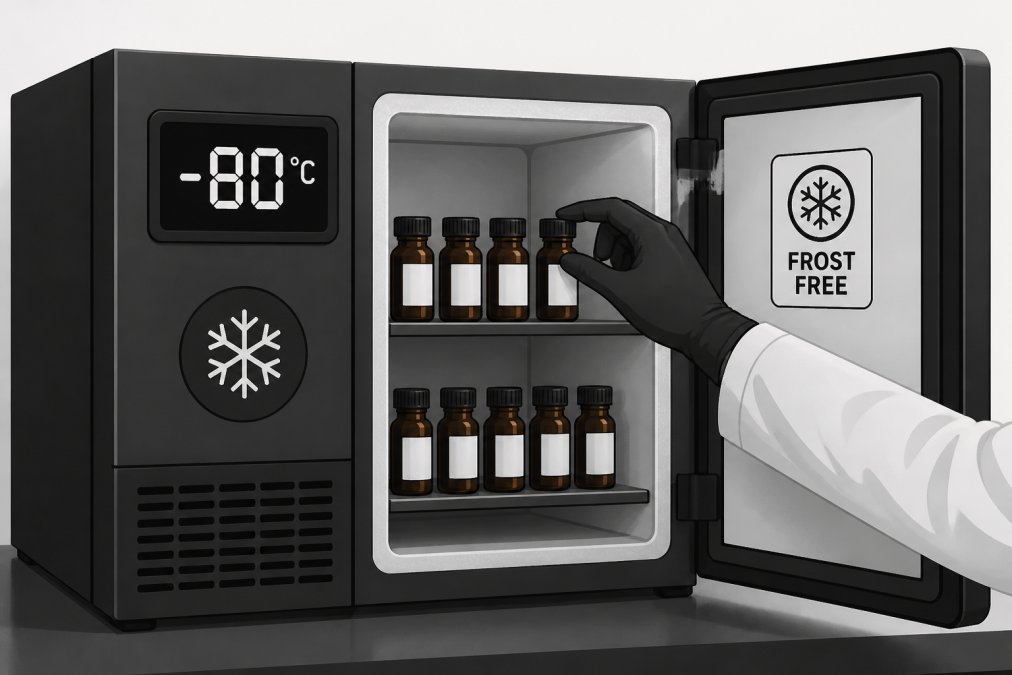
Short-term storage at -20°C
Short-term storage at -20°C is suitable for peptides you plan to use within 3-6 months. Chemical reaction rates drop by roughly 50% for every 10-degree decrease, so the jump from 4°C to -20°C provides substantial protection. However, peptides with labile functional groups or high hydrophobicity may degrade faster than expected. Test your specific peptide under your specific storage conditions.
Long-term storage at -80°C
Long-term storage at -80°C is the standard for peptides you need to preserve for 6 months to several years. Most peptides remain stable for 1-3 years at -80°C, and many remain usable for 5+ years if properly packaged. Temperature stability matters as much as absolute temperature. A freezer that fluctuates between -75°C and -85°C is less protective than one maintaining -80°C consistently. Monitor your freezer's temperature with a dedicated thermometer; many labs discover their freezer runs 5-10 degrees warmer than the dial indicates.
Avoiding frost-free freezers
Never store peptides in a frost-free freezer. Frost-free freezers automatically cycle through warming phases to prevent ice buildup, introducing repeated thaw-refreeze events that devastate peptide stability. Standard manual-defrost freezers are the correct choice. If your facility has only frost-free freezers available, store your most valuable peptides in a desiccator cabinet with dry ice or liquid nitrogen.
Best Containers for Peptide Storage
The container you choose affects peptide stability as much as temperature does. Amber glass with polytetrafluoroethylene-lined caps is the gold standard for most applications.
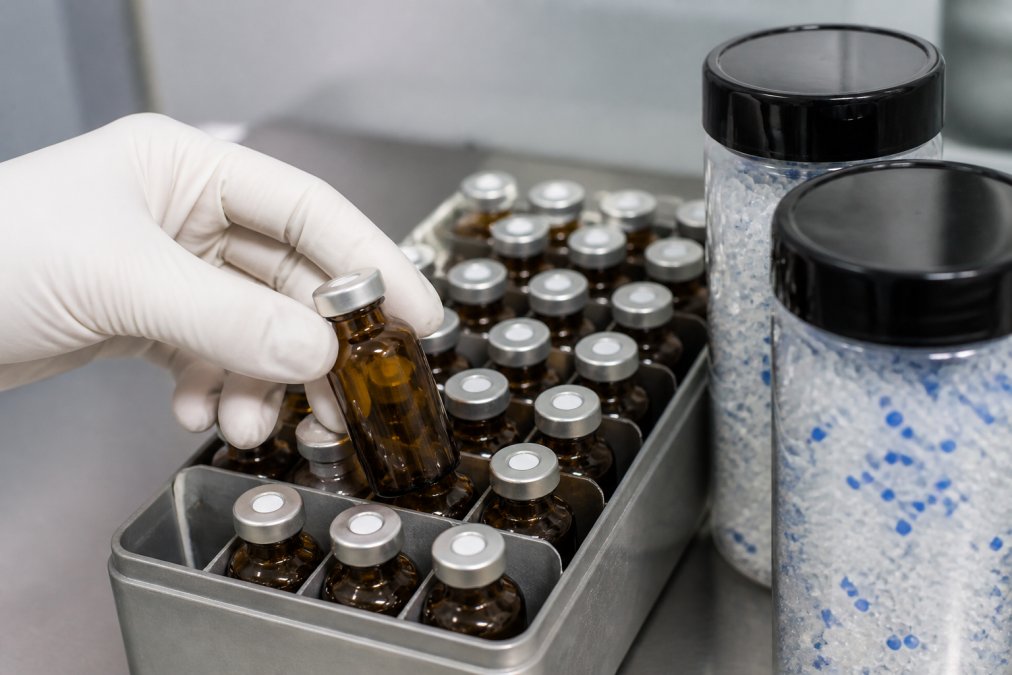
Amber glass vials and polytetrafluoroethylene-lined caps
Amber glass vials are the standard container because amber glass blocks ultraviolet light whilst remaining transparent enough to see your sample. This protects peptides from photodegradation without requiring you to open the vial to check its contents. The cap is equally important. Polytetrafluoroethylene (PTFE) lining is essential because PTFE is chemically inert and won't interact with your peptide or solvent. Standard plastic caps can leach chemicals into your sample or absorb components from your buffer. Use a cap crimper or torque wrench to ensure consistent, adequate sealing without over-tightening.
Desiccant protection and vacuum-sealed vials
For lyophilised peptides, desiccant protection is essential. Silica gel canisters absorb moisture from the air inside the vial, maintaining a dry environment. Vacuum-sealed vials take protection further by removing air from the headspace, eliminating oxygen and reducing moisture ingress. This is valuable for archival storage of expensive or irreplaceable peptides.
How to Reconstitute Peptides Correctly
Reconstitution, dissolving a lyophilised peptide in solvent, is where many researchers introduce errors that compromise their experiments. Start by understanding your peptide's solubility properties. Hydrophobic peptides resist dissolving in water and require organic solvents or surfactants. Your peptide's datasheet should specify recommended solvents.
Buffer selection and pH sensitivity
The buffer you choose determines the pH of your dissolved peptide, which directly affects stability. Most peptides are stable across a pH range of 3-8, but many have an optimal pH where they're most stable. Common buffers include phosphate-buffered saline (PBS), Tris, and acetate buffers. Most researchers use 10-50 mM buffers as a compromise between buffering capacity and ionic strength.
Adding surfactants like Tween-20 or Triton X-100 can prevent hydrophobic peptides from aggregating. Carrier proteins like bovine serum albumin (BSA) provide a protein-rich environment that stabilises peptides. Check your experimental protocol before adding these, as they can interfere with downstream applications.
Dissolution steps and sterile technique
Dissolve your peptide slowly, adding solvent incrementally and allowing time for dissolution between additions. For hydrophobic peptides, gentle warming (to 37°C or 40°C, never higher) can help dissolution without causing degradation.
Use sterile technique if you're storing the reconstituted peptide for more than a few days. Work in a biosafety cabinet or use aseptic technique with sterile syringes and filters. Divide your peptide into aliquots if possible to minimise freeze-thaw cycles.
Peptide Degradation Factors and Prevention
Multiple factors interact to determine how quickly a peptide loses potency. The primary degradation factors are light exposure, oxidation, freeze-thaw cycles, hydrolysis, moisture, and microbial contamination.
Light exposure and oxidation
Light-induced degradation occurs through direct photodegradation, where photons break chemical bonds, and photosensitised oxidation, where light energy excites molecules and triggers oxygen-dependent reactions. Aromatic amino acids (tryptophan, tyrosine, phenylalanine) are particularly susceptible. Amber glass vials reduce light exposure by 90-95% compared to clear glass.
Oxidation is closely related to light exposure but can occur independently. Oxygen in the headspace of your vial reacts with susceptible amino acids, particularly methionine and cysteine. Preventing oxidation requires either removing oxygen or adding antioxidants. Vacuum-sealed vials remove oxygen entirely. Alternatively, purge your vial with nitrogen gas before sealing. Antioxidant buffers containing reducing agents like dithiothreitol (DTT) or tris(2-carboxyethyl)phosphine (TCEP) protect against oxidation.
Freeze-thaw cycles and hydrolysis
Every time you freeze and thaw a peptide solution, you risk degradation. Ice crystal formation during freezing can physically damage peptide molecules. Minimising freeze-thaw cycles is straightforward: aliquot your peptide into small portions before freezing, so you thaw only what you need.
The rate of hydrolysis depends on temperature, pH, and the peptide's sequence. At -80°C, hydrolysis is negligible. At -20°C, it's measurable but slow. At 4°C, it accelerates noticeably. At room temperature, hydrolysis becomes the dominant degradation pathway within days for many peptides.
Moisture and microbial contamination
Moisture is the enemy of lyophilised peptides. Water initiates hydrolysis and enables microbial growth. Desiccant protection is the primary defence. Microbial contamination can devastate a peptide stock because bacteria and fungi produce proteases that cleave peptide bonds. Prevention through sterile technique during reconstitution and storage in a clean environment is far more effective than attempting to eliminate contamination after it occurs. Sterilisation through filtration (0.22 μm filters) removes most microorganisms.
Handling and Aliquoting Procedures
How you handle your peptide during storage and use determines whether degradation accelerates or remains minimal.
Minimising freeze-thaw cycles
The best strategy is to aliquot your peptide before freezing it the first time. Divide a 10 mL vial into 1 mL aliquots immediately and freeze each separately. When you need peptide, thaw only one aliquot. This way, each aliquot experiences only one freeze-thaw cycle, protecting the rest of your stock.
Some researchers use a "working stock" strategy: maintain a large stock at -80°C and a smaller working stock at -20°C. The working stock is used regularly and thawed frequently. The main stock is touched rarely, minimising its degradation. For dissolved peptides, you can minimise thawing by keeping your working aliquot at 4°C during active use.
Using microcentrifuge tubes and proper labelling
Store aliquots in microcentrifuge tubes (1.5 mL or 2 mL tubes) rather than large vials. Smaller tubes freeze and thaw faster, reducing the time your peptide spends at intermediate temperatures where degradation accelerates. Use amber or opaque tubes if available. If not, wrap your tubes in aluminium foil to block light.
Label every vial with:
- Peptide name or identifier
- Concentration and volume
- Reconstitution date (if applicable)
- Expiration date
- Storage temperature
- Any special conditions (e.g., "contains DTT", "vacuum sealed")
Organise your freezer logically by project or stability class.
Shipping and Transport Best Practices
Transporting peptides introduces new challenges. Temperature fluctuations during shipping, vibration, and changes in humidity all threaten peptide stability. Proper packaging is essential to maintain the cold chain.
Maintaining cold chain integrity
Cold chain integrity means the peptide never reaches a temperature where degradation accelerates significantly. For most peptides, this means keeping them at -20°C or colder during transport. Dry ice is the standard choice for overnight shipping, maintaining temperatures around -78°C.
Pack your peptide vials in the centre of the box, surrounded by dry ice or ice packs. Do not allow vials to contact dry ice directly; the extreme cold can crack glass vials. Use cardboard or foam as a barrier between vials and dry ice. Include a temperature monitor (a small data logger that records temperature over time) in your shipment.
Packaging for temperature stability
Use a high-quality insulated box, not a standard cardboard box. Styrofoam coolers provide good insulation. Specialty shipping boxes designed for biological samples offer even better protection. Seal the box with strong tape to prevent accidental opening during handling. Include a label indicating the contents are frozen and must be kept cold.
Ship early in the week to avoid weekend delays. A peptide sitting in a warm warehouse over a weekend can degrade significantly.
Troubleshooting Degraded Peptides
Despite your best efforts, you may encounter degraded peptides. Recognising the signs of degradation and understanding your options prevents wasted experiments.
Identifying signs of degradation
Visual inspection is the first step. Lyophilised peptides should be a light powder, typically white or off-white. Discoloration (browning, yellowing, or darkening) suggests oxidation or contamination. Clumping or caking suggests moisture has been absorbed. Dissolved peptides should be clear or slightly coloured. Cloudiness or precipitation indicates aggregation or contamination.
Functional testing is more definitive. Run your peptide through a standard assay or activity test. Compare the result to a fresh reference sample. A significant difference indicates degradation. Mass spectrometry can identify specific degradation products.
Recovery and quality assessment
Some degradation is reversible. Methionine oxidation can be reduced back to methionine using reducing agents. Aggregated peptides can sometimes be redissolved by adjusting pH or adding surfactants. However, hydrolysed peptides (those with broken backbone bonds) cannot be repaired.
Before attempting recovery, assess whether it's worthwhile. If recovery would require significant reagents and labour, it may not be economical. For oxidised peptides, add a reducing agent like DTT or TCEP to your buffer and incubate at room temperature for 1-2 hours. Test the recovered peptide to confirm restoration of activity.
| Storage Condition | Temperature | Duration | Best For | Key Consideration |
|---|---|---|---|---|
| Short-term | -20°C | 3-6 months | Active research projects | Monitor for aggregation-prone peptides |
| Long-term | -80°C | 1-3 years | Archival storage, expensive peptides | Requires manual-defrost freezer |
| Dissolved in buffer | 4°C | 2-4 weeks | Working stock during experiments | Minimise freeze-thaw cycles |
| Lyophilised with desiccant | -20°C or -80°C | 6 months to 5+ years | Long-term preservation | Replace desiccant periodically |
| Vacuum-sealed vials | -80°C | 5+ years | Premium peptides, irreplaceable samples | Highest protection level |
Conclusion
Peptide storage isn't complicated, but it does require attention to the variables that matter. Temperature, moisture, light, and freeze-thaw cycles are the primary drivers of degradation. Control these four factors, and your peptides remain stable for months or years.
At Everform Research, we've built our quality standards around these principles. Every peptide we provide is supported by third-party testing and cGMP-compliant manufacturing, ensuring consistency across batches. Our commitment to transparent documentation and quality verification means you can trust that the peptide you receive today will perform as expected when you use it in your research or therapeutic application.
The best practices outlined here work because they're based on chemistry, not opinion. Apply them to your own peptide storage, and you'll see measurably better results. Your experiments will be more reproducible, your data more reliable, and your research more efficient.
Ready to work with peptides you can trust? Shop Compounds at Everform Research and experience the difference that rigorous quality standards and transparent testing make.
Frequently Asked Questions
What is the best temperature for storing peptides long-term?
Long-term peptide storage requires -80°C for maximum stability, which slows degradation and hydrolysis significantly. Short-term storage (weeks to a few months) can use -20°C, but this accelerates oxidation and protein aggregation compared to ultra-low freezing. Avoid frost-free freezers entirely, as automatic defrost cycles cause temperature fluctuations that degrade peptides rapidly. For research requiring reproducible results across experiments, -80°C is the gold standard.
How do you prevent peptide degradation during storage?
Prevention depends on multiple factors. Store peptides in amber glass vials with PTFE-lined caps to block light and prevent solvent evaporation. Minimise freeze-thaw cycles by aliquoting into smaller portions before freezing. Use desiccant canisters to control moisture, which triggers hydrolysis. Maintain consistent temperature without fluctuations, and keep vials vacuum-sealed or in inert nitrogen atmosphere when possible. For dissolved peptides, select buffers with appropriate pH to prevent covalent modification and aggregation.
Should peptides be stored in lyophilised or dissolved form?
Lyophilised (freeze-dried) peptides are generally more stable for long-term storage because they contain no water, eliminating hydrolysis risk. They can be stored for years at -20°C when kept in a desiccator with desiccant protection. Dissolved peptides require -80°C and have shorter shelf lives (typically months to a year), but they're convenient for immediate use. Your choice depends on storage duration, frequency of access, and whether you can tolerate reconstitution time before experiments.
How long can peptides be stored in a freezer before they degrade?
Lyophilised peptides stored at -80°C can remain stable for 2-5 years or longer with proper desiccant protection and vacuum sealing. At -20°C, stability drops to 6-12 months. Dissolved peptides are more time-sensitive: at -80°C they typically last 6-12 months; at -20°C, only 1-3 months. Ambient temperature storage accelerates degradation to days or weeks depending on the peptide sequence and buffer pH. Always verify stability with your supplier's documentation, as specific peptides vary in degradation rates based on amino acid composition and susceptibility to oxidation.
This article was written using GrandRanker