 how-to
cGMP Peptide Manufacturing for Biotech Startups: A 2026 Guide
Table of Contents
- What You'll Need Before Selecting a cGMP Manufacturer
- FDA 21 CFR Part 210 and 211 Compliance for Peptide Startups
- Peptide Process Validation for Clinical Trials
- Selecting a cGMP Contract Development and Manufacturing Organization
- Quality Control and Analytical Testing in cGMP Peptide Manufacturing
- Scaling cGMP Peptide Manufacturing from Pilot to Commercial Batches
- Cost-Benefit Analysis and Risk Mitigation for Startups
- Conclusion
- Frequently Asked Questions
Last Updated: September 21, 2026
What You'll Need Before Selecting a cGMP Manufacturer
The global peptide API contract manufacturing market is valued at USD 4.4 billion in 2026, and it's heading toward USD 7.0 billion by 2035, according to Roots Analysis peptide therapeutics manufacturing report. That growth is driven by startups like yours.
But cGMP peptide manufacturing for biotech startups isn't something you figure out on the fly.
Here's the good news: a little prep work now saves you a lot of pain later.
Before you talk to any manufacturer, get these in order:
- Your target indication and phase (preclinical, Phase I, or beyond)
- Required purity level (typically 95%+ for early research, higher for clinical work)
- Scale estimate (milligrams for early studies, grams for clinical supply)
- Timeline and budget range
- Documentation needs (COAs, batch records, stability data)
FDA 21 CFR Part 210 and 211 Compliance for Peptide Startups
FDA 21 CFR Part 210 and 211 set the current Good Manufacturing Practice rules for drugs in the United States. Part 210 covers general manufacturing, processing, packing, and holding requirements. Part 211 covers finished pharmaceuticals, and it applies to peptide drug substances and drug products intended for clinical or commercial use.
The FDA enforces these rules through routine and for-cause inspections, documentation reviews, and sampling. For a startup, the practical consequence is simple: your manufacturing partner's compliance posture becomes your compliance posture. If their batch records are incomplete, your IND can stall.
What does compliance actually require for a peptide operation?
- Written procedures for every production step, including synthesis, cleavage, purification, and lyophilization
- Batch records that trace each lot from raw materials to release
- Equipment calibration and maintenance logs for reactors, HPLC systems, and freeze-dryers
- Personnel training documentation, including gowning and aseptic technique where applicable
- Deviation reporting and corrective and preventive action (CAPA) systems
- Stability programs with defined storage conditions and retest intervals
A common pattern among first-time filers is to treat these as paperwork. They are not. The FDA expects the documentation to reflect what actually happened in the suite, and inspectors will cross-check records against physical evidence such as equipment logs and raw material certificates.
For peptide startups, two areas tend to draw the most scrutiny. The first is raw material control, because amino acid derivatives and resins vary in quality and traceability. The second is impurity control, because deletion peptides and truncated sequences can be difficult to separate and must be characterized. A robust supplier will have written procedures for both and will share them during due diligence.
If you are preparing a first IND, build a compliance binder early. Include the vendor's registration status, quality agreement, batch records for the lots you intend to use, and analytical methods with validation summaries. This is the same material the FDA will request, and having it ready shortens review cycles.
Peptide Process Validation for Clinical Trials
Process validation proves your manufacturing method consistently produces the peptide you intend. For clinical trials, this isn't optional. It's the backbone of your IND filing.
The validation process typically follows three stages:
- Process design - Define critical quality attributes and parameters
- Process qualification - Run multiple batches to confirm reproducibility
- Continued verification - Monitor ongoing production for drift
Each stage generates documentation the FDA will review. Missing data means delays.
| Validation Stage | Key Deliverable | Typical Timeline |
|---|---|---|
| Process design | Critical parameter list | 4-8 weeks |
| Process qualification | 3 consecutive successful batches | 8-16 weeks |
| Continued verification | Ongoing monitoring plan | Continuous |
A ScienceDirect review of cGMP peptide manufacturing notes that both chemical and recombinant methods require this validation rigor. The method matters less than the proof.
Selecting a cGMP Contract Development and Manufacturing Organization
Not every CDMO fits every startup. The peptide CDMO market is valued at USD 5.52 billion in 2026 and projected to reach USD 29.14 billion by 2035, per Business Research Insights peptide CDMO market report. You have options. The challenge is comparing them on criteria that matter to an early-stage company rather than criteria designed for large pharmaceutical buyers.
Most vendor selection guides focus on capacity and certifications. Those matter, but for a startup the deciding factors are often different. Use the rubric below and score each vendor from 1 to 5 on every line. A total below 30 out of 50 is a warning sign.
| Criterion | What to Look For | Weight |
|---|---|---|
| Regulatory status | FDA registration, current inspection outcome, no unresolved Form 483 observations | 5 |
| Peptide class experience | Prior work with your sequence length, modifications, and purity targets | 5 |
| Small-scale willingness | Willing to run milligram to gram batches without punitive minimums | 4 |
| Analytical depth | In-house HPLC, mass spectrometry, amino acid analysis, and impurity methods | 4 |
| Documentation quality | Sample COA, batch record template, and stability protocol available on request | 4 |
| IP protection | Clear confidentiality terms, no use of your sequence in marketing without consent | 4 |
| Communication | Named project manager, defined response times, regular status updates | 3 |
| Pricing transparency | Itemized quote with no hidden tech-transfer or method-development fees | 3 |
| Lead time realism | Recent examples of comparable projects delivered on schedule | 3 |
| Exit terms | Clear process for tech transfer if you later change vendors | 2 |
A few practical notes on using this rubric.
First, ask for a sample COA and a redacted batch record before you sign anything. A vendor that hesitates or sends a generic template is telling you something. Real cGMP facilities produce batch-specific documentation as standard practice.
Second, test communication during the quoting process. If responses are slow or vague before you have a contract, they will be slower after. A common pattern is for startups to accept poor communication because the science looks strong, then lose weeks chasing updates during a clinical supply run. Clear expectations regarding transparency must also extend to technical documentation, as adherence to FDA regulatory guidelines remains the primary benchmark for ensuring that your peptide purity meets the necessary clinical standards.
Third, protect your intellectual property. Your peptide sequence is your asset.
Finally, plan for the possibility of switching vendors. Ask upfront how tech transfer works, what documentation you will receive, and whether there are any restrictions on taking your process elsewhere. A vendor that makes exit difficult is a vendor that has not earned your long-term business.
Quality Control and Analytical Testing in cGMP Peptide Manufacturing
Quality control separates real cGMP peptide manufacturing from marketing claims. Every batch needs testing for purity, identity, and impurities before release.
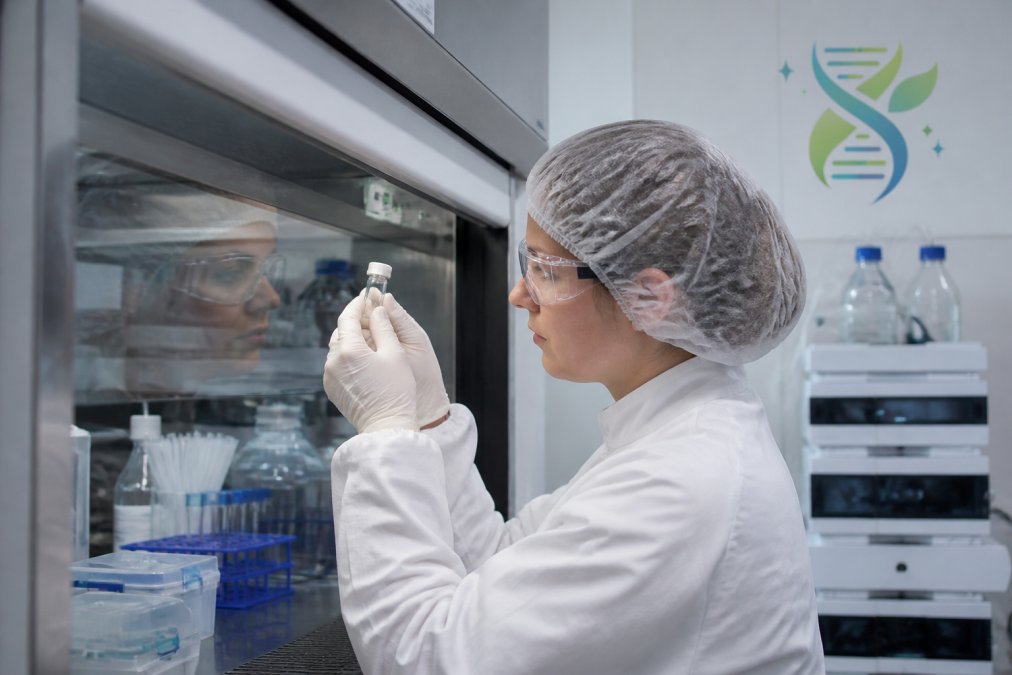
Standard tests include:
- HPLC for purity profiling
- Mass spectrometry for identity confirmation
- Amino acid analysis for composition
- Stability testing under stress conditions
- Impurity analysis for related substances
Scaling cGMP Peptide Manufacturing from Pilot to Commercial Batches
Scale-up is where promising molecules die. A process that works at 10 grams often fails at 10 kilograms.
Watch for these scale-up risks:
- Mixing and heat transfer problems in larger reactors
- Yield drops as batch size increases
- Impurity profiles that shift unexpectedly
- Equipment limitations at your target scale
Cost-Benefit Analysis and Risk Mitigation for Startups
Outsourcing to a CDMO usually costs less than building your own cGMP facility. The equipment, staff, and compliance overhead for an in-house operation runs into the millions before you produce a single batch.
But cheap outsourcing carries its own risks.
Mitigation strategies that work:
- Dual-source critical peptides to avoid single-vendor lock-in
- Build quality agreements into every contract
- Audit your CDMO before the first batch, not after
- Budget 15-20% contingency for rework or retesting
Conclusion
Finding the right cGMP peptide manufacturing partner is one of the highest-stakes decisions an early-stage biotech makes. Get it wrong, and you lose months and six figures. Get it right, and your path to clinical trials gets a lot smoother.
Frequently Asked Questions
When does a biotech startup need to transition to cGMP-grade peptides?
You need cGMP-grade peptides before your first-in-human clinical trial, typically when preparing an IND filing. Research-grade peptides lack the documentation, purity consistency, and manufacturing controls required by the FDA. The peptide API contract manufacturing market is projected to reach USD 7.0 billion by 2035, reflecting this growing demand. Start planning your cGMP transition at least 12-18 months before your target IND submission date.
What are the FDA requirements for cGMP peptide manufacturing?
The FDA requires compliance with 21 CFR Parts 210 and 211, covering facility standards, process validation, quality control testing, batch documentation, and stability studies. Your CDMO must maintain written procedures, conduct analytical validation, and provide certificates of analysis for each batch. For clinical trials, you also need an IND filing that includes CMC data. The peptide synthesis market was valued at USD 732.58 million in 2026, with regulatory compliance being a key driver of outsourcing to specialized CDMOs.
How do you verify a contract manufacturer's cGMP compliance?
Request their FDA registration, recent inspection reports, and quality manual. Audit their facility or review a third-party audit report. Check that they perform analytical validation, stability testing, and impurity analysis for each batch. Ask for certificates of analysis from previous clients and confirm their documentation meets 21 CFR Part 211. A vendor selection checklist should include these items before you commit to a contract.
What documentation is required for cGMP peptide batches?
Each batch requires a certificate of analysis, batch production records, analytical test results (purity, identity, impurity profile), stability data, and deviation reports. You also need process validation reports, equipment qualification records, and raw material certificates. For clinical trials, these documents support your IND filing and must be maintained for FDA inspection. Proper documentation ensures batch traceability and supports regulatory compliance.