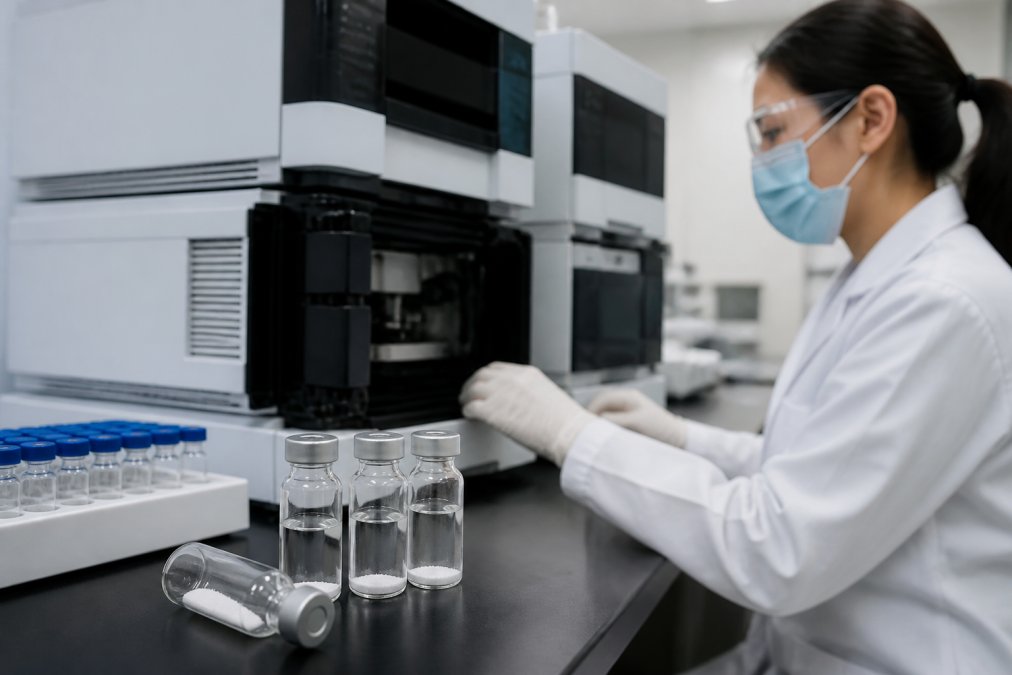
 how-to guide
How to Verify Peptide Purity: HPLC, MS & COA Guide
Table of Contents
- Why Peptide Purity Matters for Reproducible Research Outcomes
- What You'll Need Before You Start Verifying Peptide Purity
- Step 1, Read the Certificate of Analysis for Your Peptide
- Step 2, Use HPLC to Quantify Peptide Purity
- Step 3, Confirm Molecular Identity with Mass Spectrometry
- Step 4, Assess Peptide Impurities and Degradation Products
- Step 5, DIY Verification vs. Professional Laboratory Validation
- Common Mistakes to Avoid When Verifying Peptide Purity
Last Updated: July 31, 2026
Knowing how to verify peptide purity is one of the most consequential decisions a researcher makes before running a single experiment. Impure peptides don't just produce noisy data, they invalidate entire studies and waste months of work. This guide from Everform Research walks through every verification method that matters, from reading a Certificate of Analysis to interpreting a chromatogram, so you can source and use peptides with genuine confidence. Rigorous verification is a layered process combining documentary review, chromatographic analysis, and mass confirmation. Skip any layer and you're flying partially blind.
Why Peptide Purity Matters for Reproducible Research Outcomes
Reproducibility is the foundation of credible science, and peptide purity sits directly underneath it. A peptide sample with synthesis by-products, truncated sequences, or oxidized residues does not behave the same way as a pure compound, even if the difference in purity percentage looks small on paper.
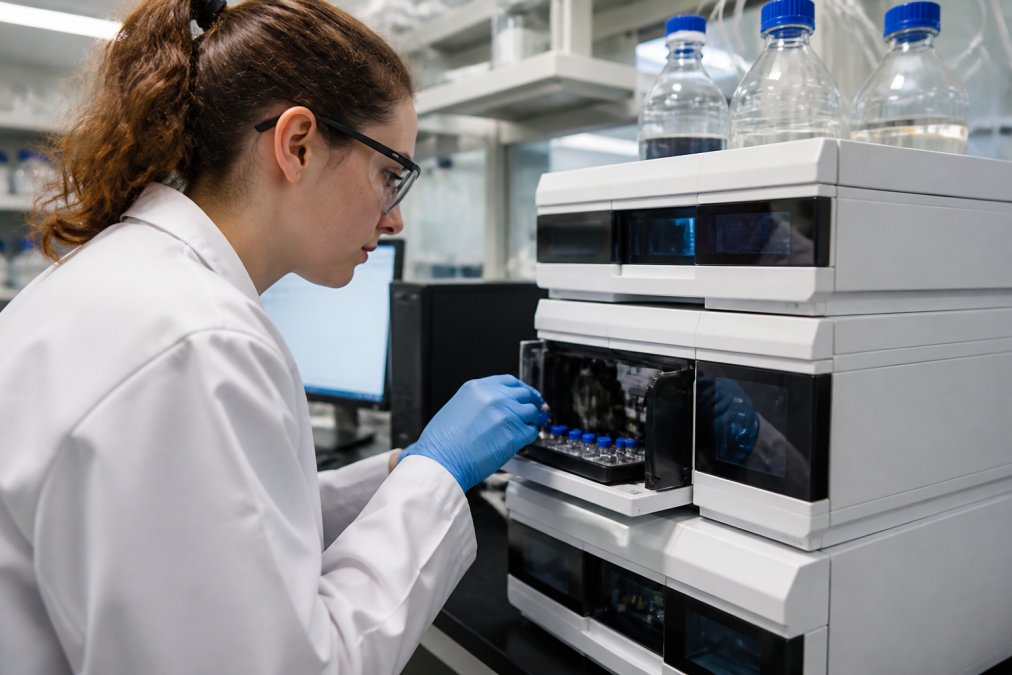
A 95% pure peptide means roughly 5% of the material is something else entirely. In a high-throughput screening assay running 50 or more experiments, that 5% becomes a systematic variable that corrupts every data point. The biological response you're measuring may be partially or wholly driven by the contaminant, not the target peptide.
Researchers working in receptor binding studies, enzyme kinetics, or in vivo models depend on knowing exactly what they're administering. According to NIH guidelines on research reproducibility and rigor, reagent characterization is one of the primary factors contributing to irreproducible results across biomedical research. Batch consistency compounds the issue: a peptide that tests at 98% purity in one batch and 94% in the next introduces an uncontrolled variable between experimental runs.
What You'll Need Before You Start Verifying Peptide Purity
Before you begin, gather the supplier-provided Certificate of Analysis for the specific batch, access to HPLC data or a third-party analytical report, mass spectrometry confirmation data (ideally ESI-MS or MALDI-TOF), knowledge of the expected molecular weight and peptide sequence, and solubility testing data if the peptide is lyophilized powder. You don't need to perform every test in-house; many researchers rely on supplier-provided analytical data and cross-reference it against independent laboratory validation. The key is knowing what each document should contain and what red flags look like.
Visual Inspection and Its Limitations
Visual inspection is the first step most researchers take and the one most likely to mislead them. Lyophilized powder can look identical regardless of purity. A white, fluffy, uniform powder does not confirm anything about peptide sequence fidelity, the presence of synthesis by-products, or degradation products from improper storage.
Visual inspection can reveal gross contamination: unusual color, clumping from moisture exposure, or visible particulates that suggest storage failure. These are disqualifying signs. But a visually clean sample is not a pure sample. The impurities that matter most, truncated sequences, deletion peptides, and oxidized residues, are invisible to the naked eye and require chromatographic separation and mass confirmation to detect.
Step 1, Read the Certificate of Analysis for Your Peptide
The Certificate of Analysis is the primary documentation of peptide purity and deserves more scrutiny than most researchers give it. A COA should report the peptide sequence, molecular weight, purity percentage determined by HPLC, and mass spectrometry confirmation. It should also identify the specific batch and the date of analysis.
Purity reported on a COA is typically expressed as a percentage of the total peak area at 214 nm wavelength in the HPLC chromatogram. This absorbance wavelength targets the peptide bond, making it a reliable measure of relative quantification across the sample. A COA that reports purity without specifying the detection wavelength or the analytical method used is incomplete.
How to Spot a Rubber-Stamped vs. Genuinely Independent COA
The most important question to ask about any COA is who performed the analysis. An in-house COA generated by the same laboratory that synthesized the peptide carries significantly less weight than one produced by an independent third-party laboratory.
Signs of a rubber-stamped COA include: no laboratory name or accreditation number listed, generic chromatogram images that don't match the reported batch number, suspiciously round purity values (e.g., exactly 99.0% on every compound), no mass spectrometry data, and no date of analysis or analyst signature.
A genuinely independent COA will name the testing laboratory, reference the specific analytical instrument used, include the raw chromatogram with peak integration data, and provide mass spectrometry confirmation with the observed versus theoretical molecular weight. Everform Research provides third-party COA documentation with each batch, giving researchers the traceability needed for institutional compliance and protocol documentation.
Step 2, Use HPLC to Quantify Peptide Purity
HPLC, or High-Performance Liquid Chromatography, is the gold standard analytical method for peptide purity quantification. The technique separates compounds in a sample based on their interaction with a stationary phase and a mobile phase, producing a chromatogram where each compound appears as a distinct peak.
For peptide analysis, reverse-phase HPLC is the standard approach. The peptide and any impurities are separated by hydrophobicity, with detection typically set at 214 nm to capture absorbance at the peptide bond. The area under each peak represents the relative amount of that compound in the sample. Purity is calculated as the percentage of the target peptide peak area relative to the total peak area.
Interpreting Chromatograms: Retention Time, Peak Area, and 214 nm Absorbance
Retention time is the time it takes for a compound to travel through the HPLC column and reach the detector. For a given peptide under standardized conditions, the retention time is reproducible and serves as an identity confirmation. Peak area drives the purity calculation; the target peptide should produce the largest peak by a significant margin. Synthesis by-products, truncated sequences, and deletion peptides will appear as smaller peaks at different retention times.
Detection at 214 nm is deliberate. The peptide bond absorbs strongly at this wavelength, making it sensitive to all peptide-containing species in the sample. This is why HPLC at 214 nm is considered a reliable method for relative quantification.
How HPLC Detects Synthesis By-Products and Common Impurities
Peptide synthesis is a stepwise process, and each step carries a small probability of error. Common synthesis by-products include deletion peptides (sequences missing one or more amino acids), truncated sequences (where synthesis terminated prematurely), oxidized residues (particularly methionine and cysteine), racemized amino acids, and aggregated peptides.
HPLC separates these species based on their physical properties. A well-resolved chromatogram with a single dominant peak and a flat baseline confirms that these impurities are either absent or present below the detection limits of the instrument. According to USP guidelines on peptide characterization and analytical methods, chromatographic purity testing is the primary method recommended for peptide quality control in pharmaceutical and research applications.
Step 3, Confirm Molecular Identity with Mass Spectrometry
Mass spectrometry provides molecular weight verification that HPLC alone cannot give. Where HPLC tells you what percentage of your sample is the target compound, mass spectrometry confirms that the dominant peak is actually the peptide you ordered, not a co-eluting impurity with similar chromatographic behavior.
For peptide verification, electrospray ionization mass spectrometry is the most widely used approach. The observed molecular weight is compared against the theoretical molecular weight calculated from the peptide sequence. A match within acceptable tolerance, typically within a few millimass units, confirms molecular identity.
How HPLC and Mass Spectrometry Work Together
HPLC and mass spectrometry are complementary, not interchangeable. HPLC quantifies purity by separating and measuring all species present. Mass spectrometry confirms the identity of the target compound. The combination, often called LC-MS, runs the HPLC separation directly into the mass spectrometer, providing both quantitative purity data and molecular identity confirmation in a single analytical run. This is the standard approach in cGMP-compliant manufacturing environments and is what researchers should expect from a quality supplier's documentation package.
Step 4, Assess Peptide Impurities and Degradation Products
The impurity profile of a peptide tells a more complete story than the purity percentage alone. Two peptides can both report 97% purity but have very different impurity profiles. One might have a single minor by-product from synthesis, while the other has multiple degradation products from poor storage or inadequate lyophilization.
Degradation products are particularly relevant for researchers working with sensitive assays. Oxidized peptides can show altered binding affinity, reduced biological activity, or off-target effects. Aggregated peptides may trigger non-specific immune responses in cell-based or in vivo models.
Reviewing the full impurity profile means looking at the chromatogram, not just the purity number. Key questions include: How many peaks are present in addition to the main peak? What are the relative areas of those peaks? Are any impurity peaks co-eluting with the main peak? Has the supplier characterized any of the impurity peaks?
Step 5, DIY Verification vs. Professional Laboratory Validation
Most academic and independent research labs don't have access to calibrated HPLC systems or mass spectrometers dedicated to peptide analysis. The cost of maintaining these instruments, including column replacements, mobile phase reagents, and instrument calibration, is substantial.
For most researchers, the practical approach is a hybrid model: source from suppliers who provide genuinely independent third-party COAs and make full chromatographic data available on request. This shifts the burden of validation to the supplier while still giving the researcher the documentation needed for protocol reproducibility.
Stability Testing and Batch Consistency Checks
A peptide can arrive at 98% purity and degrade to 90% within weeks if stored incorrectly or if the lyophilization process was inadequate. Researchers running longitudinal studies need to know not just the initial purity but how stable the peptide is under expected storage conditions.
Batch consistency is equally critical. For labs running multi-experiment studies, a supplier's ability to deliver the same peptide at the same purity across multiple production runs is as important as the initial purity specification. Ask suppliers for historical batch data across multiple lots of the same compound. Consistent purity, consistent retention time, and consistent impurity profiles across batches are the markers of a manufacturing process under real quality control.
Common Mistakes to Avoid When Verifying Peptide Purity
Accepting purity at face value without reviewing the underlying data. A purity percentage without a chromatogram is a claim, not evidence. Always request the supporting analytical data.
Confusing HPLC purity with peptide content. HPLC purity measures the relative proportion of the target peptide among all UV-absorbing species. It does not measure the actual mass of peptide in the vial. For quantitative work, additional assays may be needed.
Ignoring the detection wavelength. Purity measured at 220 nm or 254 nm gives different results than purity at 214 nm. Always confirm which wavelength was used; 214 nm is the standard for peptide bond detection.
Skipping mass spectrometry confirmation. HPLC purity without MS confirmation leaves molecular identity unverified. This is a critical gap for any research where the specific peptide sequence drives the biological effect being studied.
Not checking batch-to-batch consistency. Single-batch verification is a starting point, not a complete quality assurance process. Researchers who rely on a compound across multiple experiments need batch-level documentation for every lot received.
As documented in FDA guidance on analytical procedures and methods validation, validation protocols for analytical methods used in research and pharmaceutical contexts require demonstrated specificity, linearity, and reproducibility, principles that apply directly to how researchers should evaluate the analytical methods used to characterize their peptide samples.
Sourcing peptides without a rigorous verification process is a risk that compounds over time. Every unverified batch is a potential source of irreproducible results, wasted resources, and conclusions that can't withstand scrutiny. Everform Research addresses this directly through rigorous third-party testing and cGMP-compliant manufacturing, with clear documentation provided for every batch so researchers can verify purity, confirm molecular identity, and maintain batch consistency without chasing down their supplier. Visit the Everform Research website to review current compound availability and pricing, and shop compounds backed by the analytical transparency your research demands.
Frequently Asked Questions
What is the best method for peptide purity analysis?
Reversed-phase HPLC is the most widely used method for peptide purity analysis because it separates compounds based on hydrophobicity and quantifies each peak relative to the total area. Detection at 214 nm wavelength captures the peptide bond absorbance, making it sensitive to nearly all peptide-containing peaks. When combined with mass spectrometry for molecular weight verification, the two methods together provide both quantitative purity data and sequence confirmation, the gold standard for research-grade compounds.
What is a Certificate of Analysis (COA) for peptides, and what should it include?
A Certificate of Analysis for a peptide is a formal document from the testing laboratory that reports the results of analytical methods performed on a specific batch. A credible COA should include the peptide sequence, molecular weight, HPLC purity percentage, mass spectrometry confirmation, lot or batch number, testing date, and the name of the independent third-party laboratory that conducted the analysis. COAs generated in-house by the same supplier that manufactured the peptide carry a higher risk of bias and should be verified against independent data.
What are common impurities found in research peptides?
Common peptide impurities include deletion sequences (peptides missing one or more amino acids), truncated fragments, oxidized residues, particularly at methionine or tryptophan, residual protecting groups left from solid-phase peptide synthesis, and aggregation products. Reagent residues and solvent contaminants can also appear in the final lyophilized powder. HPLC chromatography detects these as additional peaks alongside the main compound peak, while mass spectrometry can identify their molecular weights and help characterize the full impurity profile.
What is the minimum acceptable purity for research peptides?
The minimum acceptable purity depends on the application. For general in vitro assays, many researchers consider 95% HPLC purity a practical floor. For highly sensitive biological assays, receptor binding studies, or high-throughput screening where batch consistency is critical, 98% or greater is typically preferred. Purity below 90% introduces a higher risk that impurities will interfere with results, making data reproducibility difficult. Always confirm the purity specification matches your specific experimental requirements before sourcing a compound.
How can I tell if a peptide supplier's third-party testing is genuinely independent?
Look for a COA that names a specific, identifiable external laboratory, not a generic internal quality department. The report should include the lab's contact information, accreditation details, analyst signature, and a unique sample ID traceable to your batch. Ask the supplier whether the testing laboratory has any financial or ownership relationship with them. Truly independent third-party testing means the analytical lab has no commercial incentive to pass a failing sample, which is the verification standard that protects your research data.
Can I verify peptide purity myself without sending it to a lab?
Basic checks, such as reviewing the supplied COA, inspecting the lyophilized powder for color and solubility, and confirming the molecular weight against the peptide sequence, can be done in-house. However, these steps cannot replace instrumental analysis. Without access to HPLC and mass spectrometry equipment, you cannot independently quantify purity or confirm molecular identity. Researchers without in-house analytical instrumentation should rely on verified third-party COA documentation and, for critical experiments, consider sending a sample to an independent contract analytical laboratory.
This article was written using GrandRanker