 ultimate-guide
Identifying Reliable Peptide Research Suppliers: A 2026 Guide
Table of Contents
- Why Identifying Reliable Peptide Research Suppliers Matters
- Understanding Peptide Certificate of Analysis (CoA) Verification
- How to Read a Peptide CoA: Key Data Points You Cannot Ignore
- Third-Party Peptide Testing Labs: Independence and Credibility
- Red Flags: What Separates Unreliable Suppliers from Trustworthy Partners
- Supply Chain Traceability and Batch Consistency
- GMP Manufacturing and Regulatory Compliance Standards
- Conclusion
Last Updated: August 15, 2026
Why Identifying Reliable Peptide Research Suppliers Matters
The difference between a successful research project and a failed one often comes down to a single factor: the quality and consistency of your compounds. When you're running experiments that depend on precise molecular composition, batch-to-batch variability can invalidate months of work. That's why identifying reliable peptide research suppliers has become essential for anyone serious about reproducible science.
At Everform Research, we've worked with hundreds of researchers across academic institutions, independent biotech labs, and performance science communities. What we've learned is this: most researchers spend more time vetting their lab equipment than they do vetting their peptide suppliers. That's backwards. Your compounds are as critical as your instruments, sometimes more so.
The stakes are real. A contaminated batch, inconsistent purity levels, or inflated potency claims don't just waste money. They compromise your data integrity, delay publications, and erode trust in your research pipeline. For teams managing multiple projects simultaneously, one unreliable supplier can create a cascade of problems across your entire operation.
This guide walks you through the exact criteria that separate trustworthy suppliers from those cutting corners. We'll show you how to read the documentation that matters, what independent testing actually means, and the red flags that signal trouble before you commit to a vendor.
Understanding Peptide Certificate of Analysis (CoA) Verification
A Certificate of Analysis (CoA) is the document that proves what you're actually buying. It's not a marketing claim or a promise, it's a third-party record of what was tested and what the results showed. For peptide research suppliers, the CoA is your primary tool for verifying that a batch meets your specifications before it arrives at your lab.
The problem is that not all CoAs are created equal. Some suppliers issue in-house CoAs that lack independence. Others provide documents that look official but contain incomplete data. Learning to read a legitimate CoA separates suppliers you can trust from those that are hiding something.
A credible CoA should come from an independent laboratory, not from the supplier's own quality control department. It should include specific analytical methods (HPLC, mass spectrometry), exact purity percentages, contaminant profiles, and batch-specific lot numbers. When you see vague language like "meets specifications" without supporting data, that's a warning sign.
The best suppliers make their CoA interpretation easy. They highlight the key metrics, explain what each result means for your application, and provide contact information for the testing laboratory so you can verify the results independently if needed. This transparency signals confidence in their product and commitment to your success.
How to Read a Peptide CoA: Key Data Points You Cannot Ignore
When a CoA lands in your inbox, most researchers scan it quickly and move on. That's a mistake. The document contains specific data points that determine whether this batch is suitable for your work. Knowing what to look for, and what to question, is the difference between a reliable supplier and one that's cutting corners.

HPLC Purity Results
High-Performance Liquid Chromatography (HPLC) is the standard method for measuring peptide purity. When you see a CoA listing "98% purity," that number came from HPLC analysis. But the number alone doesn't tell you everything.
Look for the actual chromatogram, the graphical output showing peak separation. A single sharp peak indicates high purity; multiple peaks suggest impurities or degradation products. The CoA should specify the HPLC method used (reverse-phase, ion-exchange) and the detection wavelength, because different methods can yield different results for the same sample.
A common mistake is assuming that 98% from one supplier equals 98% from another. The testing conditions, column chemistry, and analytical standards all affect the result. Reliable suppliers specify their exact methodology so you can compare apples to apples across vendors.
Pay attention to the lot-specific data. If a supplier provides the same purity percentage for every batch they've ever produced, that's suspicious. Real manufacturing shows natural variation within acceptable ranges.
Mass Spectrometry and Molecular Weight Confirmation
Mass spectrometry (MS) provides a second layer of verification that you're getting the peptide you ordered. The test confirms the exact molecular weight and identifies the peptide's amino acid sequence through fragmentation patterns.
When reviewing an MS report, look for the molecular ion peak, the m/z value that matches your expected peptide mass. If the peak is offset by more than 0.1 Daltons from the theoretical mass, something's wrong. The CoA should also show isotope patterns, which confirm the presence of expected elements like carbon, hydrogen, nitrogen, and oxygen in the correct ratios.
Some suppliers skip MS analysis to save costs. That's a red flag. MS is the gold standard for confirming identity; purity alone doesn't prove you have the right compound. A peptide could be 99% pure and still be the wrong peptide if MS wasn't performed.
Contaminant and Endotoxin Profiles
Beyond purity and identity, the CoA should detail what contaminants were detected and at what levels. Common contaminants include residual synthesis reagents, trifluoroacetic acid (TFA) from purification, and trace metals from manufacturing equipment.
Endotoxin testing is critical if your peptides will be used in any cellular or in vivo work. Endotoxins are bacterial fragments that trigger immune responses even in tiny quantities. A reliable supplier tests for endotoxins and reports the results in endotoxin units per milligram (EU/mg). If the CoA doesn't mention endotoxin testing, ask why before placing an order.
The CoA should also specify storage conditions and stability data. How long has this batch been tested to remain stable? Under what temperature and light conditions? If the supplier can't answer these questions with data, their quality assurance process is incomplete.
Third-Party Peptide Testing Labs: Independence and Credibility
Here's where many suppliers fail the trust test: they use their own in-house labs to generate CoAs. That's not independent testing. It's self-reporting with a fancy label.
A truly independent third-party peptide testing lab has no financial relationship with the supplier. They're paid by the supplier to test the batch, but they have no incentive to pass a bad batch or inflate results. They maintain accreditation standards, participate in proficiency testing, and face liability if their reports are inaccurate.
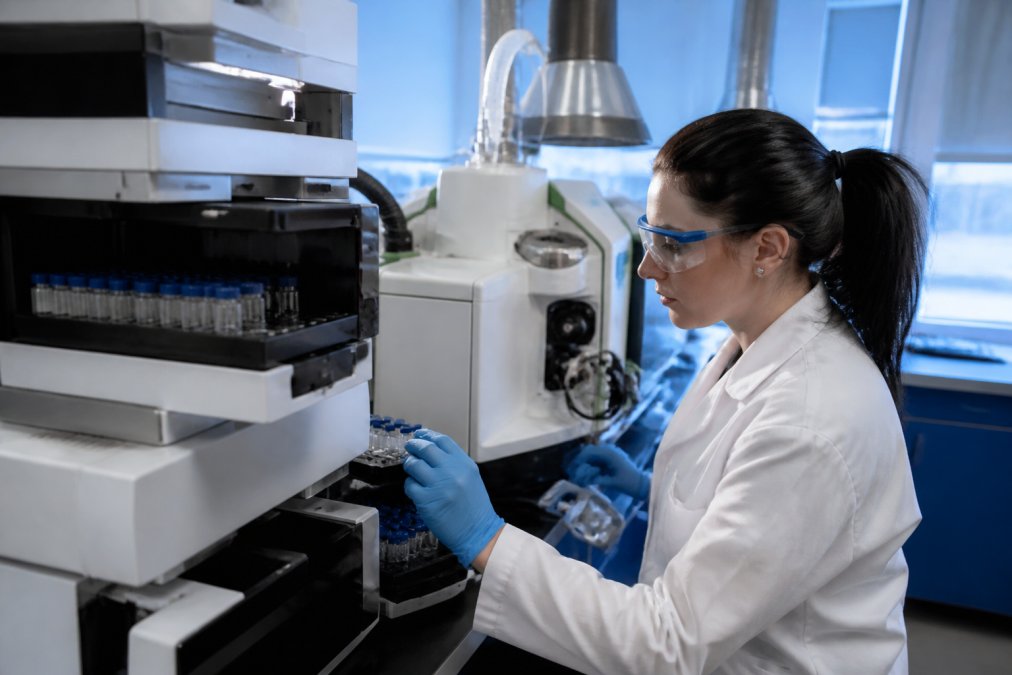
When evaluating a supplier, ask which labs they use for testing. Reputable names in the analytical chemistry space include labs accredited by ISO 9001 or ISO/IEC 17025 standards. These accreditations mean the lab has been independently audited for technical competence and quality management.
The best suppliers rotate between multiple independent labs or use labs that are geographically separate from their manufacturing facilities. This reduces the risk of collusion or systematic bias. If a supplier uses the same lab for every batch, that's acceptable, but verify that lab's independence and accreditation status directly.
Ask for the lab's contact information and don't hesitate to reach out with questions. A legitimate testing laboratory will answer your queries about their methodology, accreditation, and quality standards. If they're evasive or refuse to discuss their processes, that's your signal to move on.
Red Flags: What Separates Unreliable Suppliers from Trustworthy Partners
Certain warning signs appear consistently with suppliers who cut corners. Learning to spot them before you order saves time, money, and research delays.
The first red flag is vague or missing CoA documentation. If a supplier says "CoA available upon request" or provides documents without specific lot numbers, purity percentages, or testing methodology, walk away. Legitimate suppliers make CoAs readily available because they're proud of their quality.
Suspiciously consistent results across all batches is another warning. Real manufacturing produces natural variation. If every batch from a supplier is exactly 99.2% pure or has identical impurity profiles, someone's rounding or fabricating data.
Pricing that seems too good to be true usually is. Reliable peptide synthesis, independent testing, and quality control cost money. Suppliers offering prices 30-40% below market rates are likely cutting corners somewhere, usually on testing, purity standards, or manufacturing conditions.
Unresponsive customer support is a practical red flag that matters more than you might think. When you have questions about a CoA, need clarification on specifications, or discover an issue with a batch, you need fast, knowledgeable responses. Suppliers who are slow to reply or dismissive of technical questions are signalling that customer success isn't a priority.
Be wary of suppliers who pressure you to order large quantities upfront or who discourage you from requesting independent verification of their testing. Confidence in product quality shows in transparency, not in pressure tactics.
Supply Chain Traceability and Batch Consistency
Understanding where your peptides come from and how they're tracked through manufacturing is essential for reproducibility. Supply chain traceability means you can follow a specific batch from synthesis through purification, testing, packaging, and delivery.
A supplier with genuine traceability can tell you the exact synthesis date, the lot number of raw materials used, which technician performed the synthesis, and which independent lab tested the final product. They maintain this information for years, so if you encounter an issue with a batch, you can investigate the root cause.
Batch consistency is the practical outcome of good traceability. When you reorder the same peptide, you should receive a product that performs identically to your previous batches. Consistency allows you to run longer studies without revalidating your protocols for each new batch.
Suppliers using GMP (Good Manufacturing Practice) principles maintain detailed batch records, implement change control procedures, and conduct stability testing across multiple storage conditions. These practices cost more upfront but deliver the consistency that serious research requires.
Ask your supplier how long they retain batch records and whether they can provide historical data if you need to troubleshoot results from experiments conducted months or years ago. Everform Research maintains comprehensive batch documentation and can trace any product back to its source materials and testing records.
GMP Manufacturing and Regulatory Compliance Standards
GMP manufacturing isn't optional for suppliers you should trust, it's the foundation of quality assurance. GMP standards, established by the FDA and adopted internationally, define how pharmaceutical and research-grade compounds should be manufactured, tested, and documented.
A GMP-compliant facility maintains controlled environments, validates equipment, trains personnel, and documents every step of production. They conduct stability testing to ensure products remain potent and pure throughout their shelf life. They implement corrective action procedures when something goes wrong.
When evaluating a supplier, ask directly about their GMP status. Do they manufacture in a GMP-compliant facility? Are they certified by an independent auditor? Can they provide documentation of their GMP certification? Legitimate suppliers have nothing to hide on this front.
GMP compliance also means the supplier follows regulatory requirements for their market. In the United States, research-grade peptides fall under specific FDA guidelines regarding purity, testing, and labelling. Suppliers who understand and follow these requirements are less likely to encounter regulatory issues that could disrupt your supply.
The distinction between research-grade and pharmaceutical-grade peptides matters here. Research-grade compounds meet high purity and testing standards but aren't intended for human consumption or clinical use. Pharmaceutical-grade compounds meet even stricter standards and require additional regulatory approvals. Understanding which grade you need prevents overpaying for unnecessary specifications or underpaying for inadequate quality.
Identifying reliable peptide research suppliers requires due diligence, but it's an investment that pays dividends in data quality and research consistency. The criteria covered here, CoA verification, independent testing, supply chain traceability, and GMP compliance, form the foundation of supplier evaluation.
At Everform Research, we've built our reputation on these principles. Our commitment to third-party testing, transparent documentation, and batch-specific quality assurance means you can trust that what's on the label is what's in the vial. We maintain cGMP-compliant manufacturing, provide detailed CoA documentation with every order, and stand behind our products with responsive customer support.
When you're ready to work with a supplier that prioritizes your research success, explore Everform Research's peptide selection and quality standards. Use discount code EVER15 for 15% off your first order and experience the difference that genuine quality assurance makes in your research pipeline.
Frequently Asked Questions
What documentation should a reliable peptide research supplier provide?
A trustworthy supplier must provide a Certificate of Analysis (CoA) for every batch, including HPLC purity data, mass spectrometry confirmation of molecular weight, endotoxin levels, and contaminant profiles. They should also supply batch-specific lot numbers, synthesis dates, and storage stability data. Third-party testing verification from an independent laboratory is essential. Reputable suppliers like Everform Research offer complete documentation transparency and cGMP manufacturing certifications to support your institutional compliance requirements.
How can researchers verify the purity of peptides using a CoA?
HPLC (High-Performance Liquid Chromatography) results on a CoA show the percentage purity by measuring the peak area of your target peptide against total peaks. Look for purity readings of 95% or higher for research-grade compounds. Mass spectrometry confirms the exact molecular weight matches your expected amino acid sequence. Contaminant profiles detail any synthetic byproducts or degradation products present. Cross-reference the lot number and testing date to ensure the CoA matches your actual shipment. Independent third-party testing labs provide unbiased verification that the supplier's claims are accurate.
What are the red flags of an unreliable peptide supplier?
Avoid suppliers who cannot provide independent third-party CoAs, offer vague or missing documentation, lack batch consistency data, or fail to disclose manufacturing standards. Red flags include no visible quality assurance protocols, absence of endotoxin testing, refusal to provide lot-specific stability data, and unresponsive customer support. Be cautious of suppliers with no verifiable track record, unclear supply chain transparency, or pricing that seems unrealistically low compared to GMP-compliant manufacturers. Legitimate suppliers invest in quality control and are transparent about their testing protocols and certifications.
Why is third-party testing critical for peptide research?
Third-party peptide testing labs provide independent verification that a supplier's claims about purity, potency, and safety are accurate. In-house testing can be biased or lack rigorous standards. Independent laboratories use validated analytical methods (HPLC, mass spectrometry) and follow standardised protocols to detect impurities, endotoxins, and contaminants. This independence protects your research integrity by ensuring your results are based on genuinely verified compounds. For reproducible experiments across multiple batches, third-party verification confirms batch consistency and prevents costly protocol failures caused by contaminated or mislabelled peptides.
How do I know if a peptide supplier is legitimate?
Legitimate suppliers maintain ISO 9001 or cGMP certifications, provide independent third-party CoAs for every batch, and demonstrate supply chain traceability. Check whether they offer detailed documentation, respond promptly to technical questions, and have verifiable customer references from research institutions. Review their stability testing protocols and cold chain logistics documentation. Request proof of regulatory compliance from your institutional procurement team. Established suppliers like Everform Research provide transparent quality assurance, batch-specific testing reports, and responsive customer support, hallmarks of a trustworthy research partner.
What is the difference between research-grade and pharmaceutical-grade peptides?
Research-grade peptides meet high purity standards (typically 95%+) suitable for laboratory experiments but are not intended for human consumption or clinical use. Pharmaceutical-grade peptides undergo additional regulatory scrutiny, stability testing, and sterility assurance required for clinical applications. Research-grade compounds focus on analytical validation and batch consistency for reproducible results. Both require third-party testing and quality documentation, but pharmaceutical-grade involves stricter manufacturing oversight and regulatory compliance. For academic and independent biotech research, research-grade peptides from GMP-compliant manufacturers provide the reliability needed without unnecessary clinical-level costs.
How tight is batch consistency control at reliable suppliers?
Reliable suppliers maintain batch consistency through validated GMP manufacturing processes and lot-specific quality testing. Each batch should have documented HPLC purity within a tight range (ideally ±2% variation between lots). Reputable suppliers provide stability data showing how purity holds over time under standard storage conditions. They track amino acid sequence accuracy, molecular weight confirmation, and contaminant profiles across multiple batches to demonstrate process control. If you require identical purity across 50+ experiments, verify that your supplier publishes batch-to-batch consistency data and offers lot-hold agreements to secure multiple vials from the same production run.
This article was written using GrandRanker