 listicle
Peptide Sourcing for Academic Labs: 2026 Vendor Guide
Table of Contents
- Peptide Sourcing for Academic Labs: Quick Vendor Comparison
- Peptide Purity Analysis Methods That Matter
- Third-Party Peptide Testing Requirements for Institutional Procurement
- Research-Grade Peptide Quality Standards and Certificates of Analysis
- Mass Spectrometry Interpretation for Lab Managers
- Storage, Stability, and Reconstitution Protocols
- Legal and Regulatory Considerations for Academic Peptide Sourcing
- Conclusion
- Frequently Asked Questions
Last Updated: September 12, 2026
Peptide Sourcing for Academic Labs: Quick Vendor Comparison
Peptide sourcing for academic labs has become a procurement minefield in 2026. According to Loyola Marymount University's procurement cycle study, only four of eleven evaluated suppliers consistently met quality and documentation standards across three university core facilities. That is a 36% pass rate, and it should worry anyone signing off on reagent purchases. (Source: FDA's guidance on Good Manufacturing Practices (cGMP))
This guide from Everform Research breaks down how to vet suppliers, interpret analytical data, and build procurement protocols that survive audit. Below, we show you exactly how to separate documentation from marketing.
Quick Picks:
- Best Overall: Everform Research, rigorous third-party testing and cGMP-compliant manufacturing
- Best for Custom Synthesis: GenScript, scalable production with comprehensive QC documentation
- Best for Transparency: Core Peptides, strong educational resources and batch testing protocols
| Supplier | Third-Party CoA | Purity Standard | Best For |
|---|---|---|---|
| Everform Research | Yes, every batch | cGMP-compliant | Long-term research partnerships |
Peptide Purity Analysis Methods That Matter
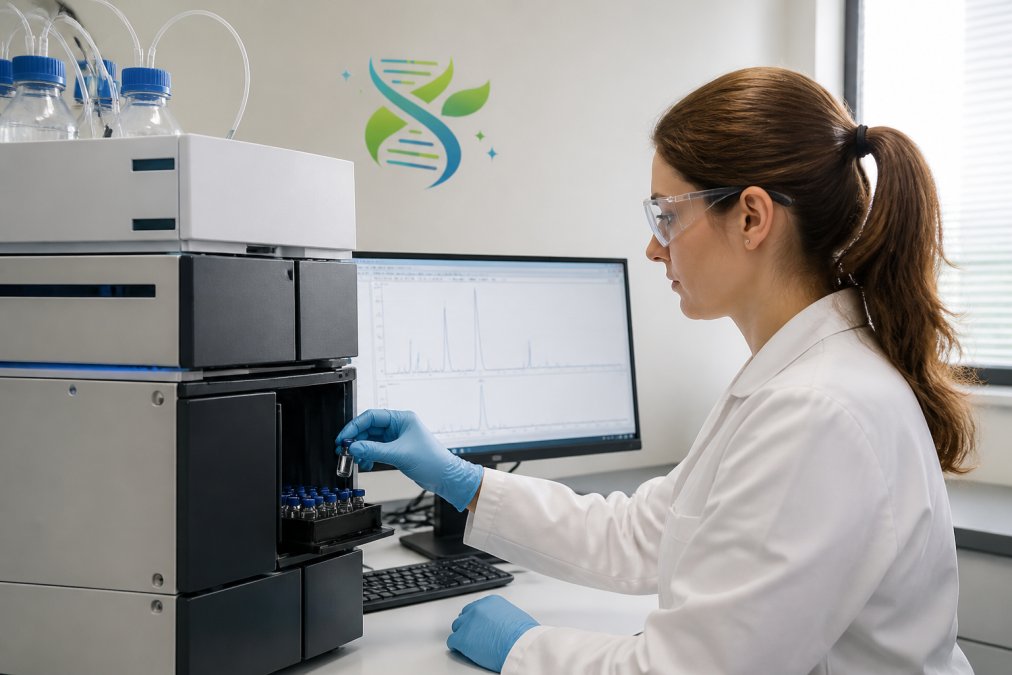
The two methods that actually decide whether your peptide is what the label claims are high-performance liquid chromatography (HPLC) and mass spectrometry. HPLC separates compounds by retention time and reports purity as a percentage of peak area. Mass spectrometry confirms molecular weight, which catches sequence errors HPLC alone will miss.
A certificate showing 98% purity by HPLC means nothing if nobody verified the molecular weight. Ask for both. Purity verification without molecular weight validation is half a dataset.
What most guides miss is that HPLC purity figures are method-dependent. A supplier running a shallow gradient can report 99% on a peptide that a rigorous method would score at 92%. Request the chromatogram, not just the number.
Third-Party Peptide Testing Requirements for Institutional Procurement
Third-party peptide testing requirements for institutional procurement means independent verification by a laboratory with no financial relationship to the supplier. The keyword there is independent. In-house testing by the vendor is not third-party testing, no matter how the CoA is formatted.
Independent laboratory testing of peptides sold online revealed significant variability in product quality and purity across the market. That variability is exactly why institutional buyers need analytical testing from an accredited external lab, with chain of custody documented from synthesis through delivery.
What "Accredited" Actually Means
An ISO 17025 accreditation is not a single badge. It is scoped. A lab can be accredited for one assay family, say, residual solvents, and not for peptide purity by HPLC. When a supplier claims "ISO 17025 tested," the purchasing department should request the lab's scope document and confirm the specific assays on the CoA fall inside it. A common pattern is a CoA citing an accredited lab whose scope does not cover the method reported.
Chain of Custody From Synthesis to Freezer
Chain of custody is the paper trail that ties a specific vial in your freezer to a specific synthesis lot and a specific test result. For institutional buyers, that trail usually includes:
- A lot or batch number printed on the vial label and repeated on the CoA
- The date of synthesis and the date of testing
- The name and scope of the testing laboratory
- The shipping record linking the lot to your receiving dock
- Your internal sample retention log
If any link is missing, the CoA is not traceable to your material, and an auditor will treat it as unverified.
Building the Purchase Order
Institutional procurement teams should write testing requirements into the purchase order itself, not into a side email. A workable template includes:
- Require a batch-specific CoA from an ISO 17025-accredited lab, with the scope document attached
- Demand mass spectrometry and HPLC raw data, not summaries
- Verify endotoxin levels for any cell-culture application, with the assay method named
- Confirm peptide sequence integrity against your reference standard
- Retain a sample from each lot for your own quality assurance records
- Specify the remedy if a lot fails, replacement, credit, or rejection at the dock
Vendor Onboarding as a Standing Process
Most competitor guides stop at the checklist. The gap they miss is that university purchasing departments do not buy peptides the way an individual researcher does. They onboard vendors. That means a W-9, a certificate of insurance, a signed terms document, and often a standing purchase agreement before the first order ships. Building the testing requirements into that onboarding packet, rather than re-litigating them per order, is what separates a lab that passes audit from one that scrambles for paperwork.
A practical pattern is to maintain an approved-vendor list with a documented re-evaluation interval, typically annual or whenever a lot fails. When a supplier changes synthesis sites or subcontracts testing, the vendor should notify the institution, and the re-evaluation clock resets.
Research-Grade Peptide Quality Standards and Certificates of Analysis
A certificate of analysis is a document stating the tested identity, purity, and composition of a specific batch of material. It is not a marketing brochure. A valid CoA names the batch, the analytical methods, the testing laboratory, and the results, and it should be traceable to the exact vial in your freezer.
Research-grade peptide quality standards vary by institution, but most core facilities now require a minimum of 95% purity by HPLC, confirmed molecular weight, and documented batch consistency across lots. Anything below that threshold introduces variables you cannot control in a publication-grade experiment.
Mass Spectrometry Interpretation for Lab Managers
Mass spectrometry interpretation starts with one question: does the observed mass match the theoretical mass of your intended sequence? For most research peptides, an observed value within 0.1% of theoretical is acceptable. Outside that window, you are looking at a synthesis error, a truncation, or a salt form you did not order.
Lab managers should check three things on every MS report. First, the ionization method, since ESI and MALDI produce different adduct patterns. Second, the mass accuracy of the instrument. Third, whether the reported value accounts for counterions such as acetate or trifluoroacetate.
Lyophilized powder weight includes counterions and residual moisture. A peptide supplied as a TFA salt can carry a mass shift large enough to confuse anyone reading the spectrum without that context. Ask the supplier which salt form they ship, then confirm it appears in the MS interpretation.
Storage, Stability, and Reconstitution Protocols
Storage and stability protocols determine whether the peptide you validated on day one still performs on day ninety. Most lyophilized peptides hold stability for extended periods at -20°C, and longer at -80°C, provided they stay sealed and dry. Once reconstituted, the clock runs faster.
Reconstitution protocols should use the solvent the supplier specifies. Bacteriostatic water suits many applications, but some sequences require dilute acetic acid or a small amount of DMSO for solubility. Getting this wrong produces aggregates that ruin solubility testing results and waste the batch.
| Stage | Storage Condition | Typical Handling |
|---|---|---|
| Lyophilized, sealed | -20°C or lower | Desiccated, protected from light |
| Lyophilized, opened | -20°C or lower | Reseal, minimize moisture exposure |
| Reconstituted | 2-8°C | Use within days to weeks |
| Aliquoted, frozen | -20°C or lower | Avoid repeated freeze-thaw cycles |
Legal and Regulatory Considerations for Academic Peptide Sourcing
Legal and regulatory considerations for academic peptide sourcing centre on where the material comes from and how it is classified. Compounding pharmacy channels operate under 503a and 503b frameworks that carry inspection and documentation obligations. Research-use-only suppliers sit outside those frameworks, which is why regulatory compliance falls on the purchasing institution.
The Three Channels, Side by Side
It helps to separate the supply channels before comparing them:
- 503a compounding pharmacies prepare patient-specific prescriptions under state board oversight. They are not set up to supply bulk research reagent.
- 503b outsourcing facilities operate under federal registration and cGMP expectations, and they can supply larger volumes without patient-specific prescriptions. Documentation is heavier and pricing reflects it.
- Research-use-only (RUO) suppliers sell material labelled for laboratory research only. They are not regulated as drugs, and the compliance burden shifts to the institution that buys from them.
For an academic lab, the practical question is not which channel is "best" but which channel matches the intended use. Material destined for a cell-culture assay is a different compliance conversation from material destined for analytical method development.
What the SAFE Drugs Act Would Change
The SAFE Drugs Act, introduced in early 2026, proposes federal restrictions barring the sale of research chemicals biologically identical to FDA-approved drugs. Analysis of the 2026 peptide market shakeout notes this legislation is expected to reshape sourcing for labs relying on RUO suppliers. Track the bill through its official congressional record before your next procurement cycle, and check whether your institution's office of research compliance has issued interim guidance.
What a Compliance Office Will Actually Ask For
When an institutional compliance team reviews a peptide purchase, the questions tend to be predictable:
- What is the intended use, and does it fall under research or clinical categories?
- Which regulatory channel does the supplier operate in, and can they document it?
- Is there a current certificate of analysis traceable to the lot?
- Has the supplier signed the institution's terms and provided insurance documentation?
- What is the plan if a lot fails or a supplier is delisted mid-project?
Preparing answers to those five questions before the order is what keeps a procurement file audit-ready.
Standard Operating Procedures That Hold Up
Institutional research buyers should treat supply chain vetting as a standing process, not a one-time check. Document your supplier's certifications, retain CoAs for the life of the project, and write standard operating procedures that specify what happens when a batch fails. A workable SOP names the responsible role, the retention period, and the escalation path.
Conclusion
The market has seen significant changes, leaving academic labs seeking vendors they can actually verify. Everform Research builds the answer around rigorous third-party testing, cGMP-compliant manufacturing, and clearer documentation so your procurement file stands up to scrutiny. Every batch ships with quality signals you can hand straight to compliance, backed by educational resources that help your team interpret them.
Use code EVER15 for 15% off your first order and see what documented quality looks like.
Frequently Asked Questions
Who is the most trusted peptide supplier for academic labs?
There is no single trusted supplier. A procurement cycle across three university core facilities found only 4 of 11 suppliers consistently met quality and documentation standards. Trust comes from batch-specific third-party testing, complete certificates of analysis, and a documented chain of custody. Labs should vet every vendor against these requirements rather than relying on brand recognition.
Can academic labs legally buy peptides for research purposes?
Research-use-only peptides are generally legal for laboratory work, but the landscape is shifting. The SAFE Drugs Act proposes barring sales of research chemicals biologically identical to FDA-approved drugs. Labs should confirm current federal status and follow their institution's procurement rules before placing orders.
What quality standards should academic labs require from peptide suppliers?
Require batch-specific certificates of analysis showing purity by HPLC, molecular weight confirmation by mass spectrometry, and endotoxin levels where relevant. Ask for documentation of third-party testing, cGMP-compliant manufacturing, and traceability from synthesis to shipment. Suppliers who cannot provide these documents for each batch should not pass institutional review.
How do you verify the purity of peptides for research applications?
Independent laboratory testing has revealed significant variability in online peptide quality, so verification matters. Request the raw HPLC chromatogram and mass spectrometry data, not just a summary percentage. Confirm the testing lab is genuinely independent, check that the reported molecular weight matches the expected sequence, and consider sending a sample to your own core facility for confirmatory analysis.
Why is third-party testing critical in peptide procurement?
Supplier-run testing can be rubber-stamped. Independent third-party testing confirms that the peptide in the vial matches the certificate of analysis. A study across three university core facilities found most tested suppliers failed to consistently meet quality standards, which shows how common batch inconsistency is. Third-party verification protects experimental reproducibility.
Peptide sourcing for academic labs rewards the buyer who reads the chromatogram, not the sales page. If your institution needs a supplier that leads with third-party COA verification and cGMP-compliant manufacturing, Everform Research is built for exactly that. Get started with Everform Research and give your lab a sourcing partner that treats documentation as a deliverable, not a formality.