 ultimate-guide
Why Peptide Stability Is Critical for Research
Table of Contents
- What Is Peptide Stability and Why It Matters
- Peptide Degradation Pathways: Understanding How Peptides Break Down
- Factors Affecting Peptide Shelf Life
- Best Practices for Peptide Storage and Handling
- How Peptide Instability Affects Experimental Reproducibility
- Strategies for Improving Peptide Shelf-Life and Stability
- Troubleshooting Degraded Samples and Ensuring Data Integrity
- Frequently Asked Questions
Last Updated: September 2, 2026
What Is Peptide Stability and Why It Matters
Peptide stability refers to a peptide's ability to maintain its structural integrity, biological activity, and chemical composition over time under various storage and environmental conditions. In research settings, unstable peptides degrade into inactive fragments, rendering experimental work unreliable or completely invalid. (Source: predicted to exceed $60 billion by 2026)
The global peptide drug market is predicted to exceed $60 billion by 2026, driven largely by advances in diabetes, obesity, and oncology treatments. Yet most peptides have short half-lives of 2-30 minutes in the body, and even in controlled laboratory conditions, peptides degrade rapidly without optimised storage. At Everform Research, we understand that peptide stability is the foundation of experimental reproducibility. A degraded peptide sample invalidates your results, wastes reagent costs, and delays publication timelines.
Peptide Degradation Pathways: Understanding How Peptides Break Down
Peptides degrade through several distinct chemical and enzymatic mechanisms. Understanding these pathways helps you identify which storage conditions matter most for your specific compounds.
Hydrolysis and Oxidation
Hydrolysis is the breakdown of peptide bonds through reaction with water molecules. This process accelerates dramatically when peptides are dissolved in aqueous solution, exposed to elevated temperatures, or stored at non-optimal pH levels. According to research on peptide stability challenges, hydrolysis becomes the dominant degradation pathway in reconstituted peptide solutions.
Oxidation occurs when peptides react with dissolved oxygen or reactive oxygen species. Amino acids with susceptible side chains, particularly methionine, tryptophan, and cysteine, are vulnerable to oxidative damage, resulting in covalent modification that alters the peptide's three-dimensional structure and renders it biologically inactive.
Lyophilised peptides stored at room temperature (20-25°C) showed minimal degradation over 30-90 day periods in controlled studies, primarily because the absence of water eliminates hydrolysis. This is why freeze-drying remains the gold standard for long-term peptide storage.
Proteolytic Cleavage and Enzymatic Breakdown
Proteolytic cleavage is the enzymatic breakdown of peptide bonds by proteases present in biological samples, buffer solutions, and some commercial reagents. Research on gut hormone peptides (GLP-1, GIP, Glucagon, OXM) in ex vivo blood specimens revealed that proteolytic instability was primarily due to DPP-IV cleavage of N-terminal residues. Peptides with N-terminal amines were almost entirely degraded by 48 hours in solution when tested with mesenchymal stem/stromal cells, endothelial cells, and macrophages.
This finding challenges the assumption that peptide degradation in biological systems is slow and predictable. Nonspecific proteolysis can eliminate your compound within hours without appropriate protease inhibitors or storage buffers.
Factors Affecting Peptide Shelf Life
Multiple environmental and chemical factors influence how quickly peptides degrade. Controlling these variables is the primary lever for extending shelf-life and ensuring reproducibility.
Temperature and Storage Conditions
Temperature is the single most influential factor in peptide stability. A 10°C increase in ambient temperature can double the rate of chemical degradation for most synthetic peptides. Lyophilised peptides can maintain stability for 2-3 years at −20°C, but for longer-term studies, storage at −80°C is necessary to virtually eliminate thermal degradation.
However, freeze-thaw cycles introduce risk. Each thaw creates ice crystals and localised high concentrations of solutes, accelerating aggregation and proteolysis. Best practice is to aliquot reconstituted peptides into single-use portions so you thaw only what you need for one experiment.
pH, Light, and Moisture Exposure
pH is critical because it influences the ionisation state of amino acid side chains, affecting peptide solubility and susceptibility to hydrolysis. Most peptides are most stable in slightly acidic buffers (pH 3-5), though optimal pH varies by sequence.
Light exposure, particularly UV radiation, causes photodegradation. Store all peptides in amber vials or wrapped in foil to prevent light-induced cleavage.
Moisture, even in trace amounts, can initiate hydrolysis in lyophilised peptides. Lyophilised vials must be sealed tightly and stored away from humid air. If you open a vial and leave it exposed to room-temperature air for extended periods, it will absorb moisture and begin to degrade.
Amino Acid Composition and Sequence
Not all peptides are equally stable. Peptides rich in hydrophobic amino acids tend to aggregate more readily than hydrophilic sequences. Peptides containing free cysteine residues are prone to disulphide bond formation and cross-linking, which can lead to irreversible aggregation.
Peptides with N-terminal serine or threonine are more susceptible to deamidation, a spontaneous chemical modification that can eliminate biological activity without obvious visual degradation. Longer peptides (>20 amino acids) are generally more prone to aggregation than shorter ones because they have more surface area and more opportunities for intramolecular interactions.
Best Practices for Peptide Storage and Handling
Implementing these practices will dramatically extend peptide viability and protect your research investment.
Lyophilised Versus Solution Storage
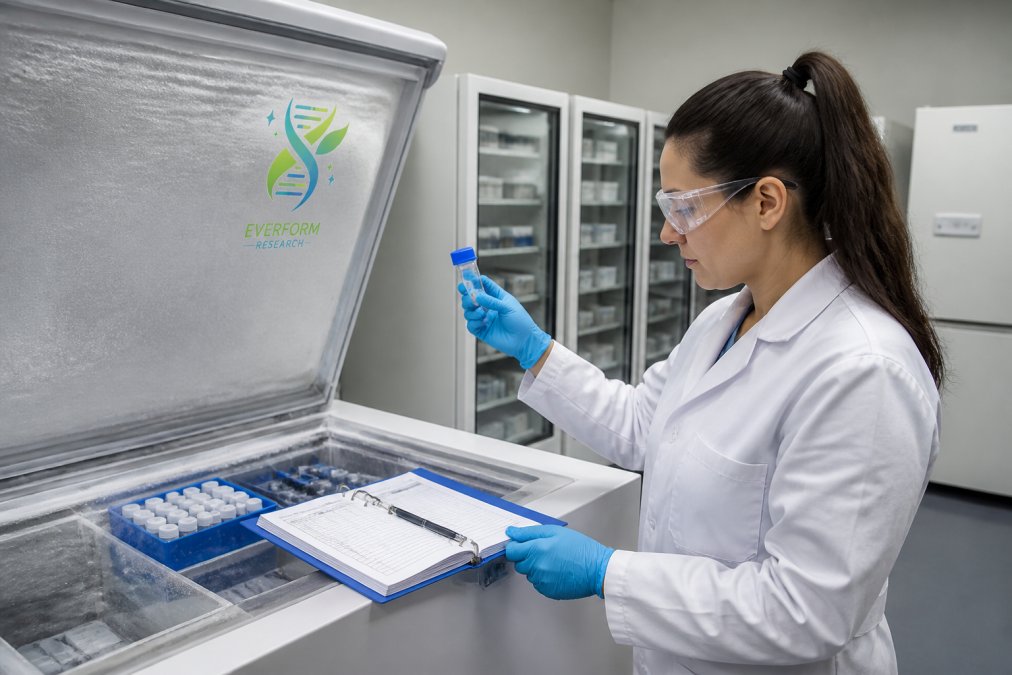
Lyophilised peptides are superior for long-term storage. The freeze-drying process removes water, which is essential for most degradation pathways. A lyophilised peptide stored in a sealed vial at −20°C can remain viable for 2-3 years; at −80°C, stability often extends to 5+ years.
Solution-phase peptides are far more vulnerable. Most peptides in solution are viable for 30-60 days at 2-8°C, though some sequences may degrade within 14 days. When you reconstitute lyophilised peptides, use sterile, pyrogen-free water or a buffer specifically formulated for peptide solubility. Avoid phosphate-buffered saline (PBS) unless your peptide is known to be stable in it; instead, use acetate buffer (pH 4-5) or 0.1% trifluoroacetic acid (TFA).
Reconstitution and the 24-Hour Rule
Once you reconstitute a lyophilised peptide in solution, its stability window shrinks dramatically. Researchers are advised to adhere to a "24-hour rule" for maximum experimental consistency: use reconstituted peptides within a single day to avoid the accumulation of degradation products that can confound your results.
Even under ideal conditions (4°C, dark, sterile), proteolysis and hydrolysis begin immediately upon reconstitution. By 48 hours, most peptides show measurable loss of potency. If you must store reconstituted peptide solutions, always add protease inhibitors (EDTA, phenylmethylsulphonyl fluoride, or a cocktail inhibitor) and store at 2-8°C in sterile, sealed containers. Plan to use the solution within 14 days.
How Peptide Instability Affects Experimental Reproducibility
Unstable peptides are a silent killer of reproducibility. You may not realise your peptide has degraded until you've completed an entire experiment and your results don't match your previous work.
Conformational stability of a peptide is paramount because any break in its amino acid chain can render its biological message unreadable to cellular receptors. If your peptide has a 10% degradation product by the time you add it to cells, you're effectively running your experiment with a 10% lower dose of active compound. This shifts your dose-response curve and invalidates any quantitative comparisons with previous experiments.
The Accelerated Stability Assessment Program (ASAP) successfully predicted the shelf-life of the peptide antibiotic bacitracin, with predictions consistent with longer-term measured values at various storage conditions. This demonstrates that rigorous stability testing during peptide manufacturing is essential. When you source peptides from suppliers that employ accelerated stability protocols, you gain confidence that the peptide will perform as expected throughout your planned experiments.
Strategies for Improving Peptide Shelf-Life and Stability
Beyond storage temperature and pH, several chemical and formulation strategies can extend peptide viability.
Cyclisation involves linking the N-terminus and C-terminus of a peptide with a covalent bond, creating a cyclic structure. This eliminates free termini vulnerable to exopeptidase cleavage and often improves resistance to proteolysis.
Excipient selection is critical. Trehalose, a disaccharide, is widely used to stabilise lyophilised peptides because it forms a glassy matrix that restricts molecular motion.
Chelation agents like EDTA bind metal ions that can catalyse oxidation reactions. Adding EDTA to your buffer reduces oxidative degradation, particularly for peptides containing methionine or cysteine.
Antioxidants such as ascorbic acid or butylated hydroxytoluene scavenge reactive oxygen species and prevent photodegradation.
Peptide conjugation to polyethylene glycol (PEG) or albumin can reduce enzymatic degradation by sterically hindering protease access to cleavage sites.
Troubleshooting Degraded Samples and Ensuring Data Integrity
If your peptide has degraded, how do you know? And what can you do to recover your experiment?
Visual inspection is your first line of defence. Lyophilised peptides that have absorbed moisture will appear wet or clumpy rather than powdery. Reconstituted peptides that have aggregated will appear turbid or show visible particles.
HPLC analysis is the gold standard for detecting degradation. High-performance liquid chromatography separates the intact peptide from degradation products by molecular weight and polarity. A purity drop from 99% to 96% indicates significant degradation has occurred.
Mass spectrometry confirms the molecular weight of your peptide and detects unexpected modifications (oxidation, deamidation, cross-linking).
Biological activity assays are more sensitive than chemical analysis for detecting loss of function. If your peptide passes HPLC but shows reduced activity in your cell-based assay, the peptide may have undergone a subtle conformational change.
When you discover degradation: stop using the batch immediately, contact your supplier, review your storage protocol, and repeat the experiment with fresh peptide.
Peptide stability is the bedrock of experimental integrity. Degraded peptides produce unreliable results that waste time, money, and research momentum. The good news is that stability is entirely controllable through proper storage, handling, and sourcing.
When you source peptides from a supplier committed to rigorous quality standards and third-party testing, you eliminate guesswork. Everform Research provides peptides backed by transparent stability data, cGMP-compliant manufacturing, and exceptional customer support. Our commitment to quality means you can focus on your research with confidence that your compounds will perform as expected.
Use code EVER15 for 15% off your first order and experience the difference that genuine quality control makes.
FDA guidance on peptide drug stability
ICH guidelines for accelerated stability testing
Peptide Stability in Formulations
Frequently Asked Questions
How long do peptides stay stable under standard laboratory conditions?
Stability depends on storage form and temperature. Lyophilised peptides maintain integrity for 2-3 years at −20 °C and much longer at −80 °C. Once reconstituted in solution, most peptides remain viable for 30-60 days at 2-8 °C, though some sequences degrade within 14 days. The 24-hour rule is recommended for maximum experimental consistency when using reconstituted peptide solutions to avoid accumulation of degradation products that compromise data reproducibility.
Why is temperature control critical for maintaining peptide integrity?
Temperature directly governs the rate of chemical degradation in peptides. A 10 °C increase in ambient temperature can double the degradation rate for most synthetic peptides. Lyophilised peptides at room temperature (20-25 °C) show minimal degradation over 30-90 days, but thermal energy accelerates hydrolysis, oxidation, and proteolytic cleavage. Storage at −80 °C virtually eliminates thermal degradation, making it essential for long-term studies and maintaining conformational stability that ensures biological activity remains unchanged.
What are the primary chemical pathways that lead to peptide degradation?
Peptide degradation occurs through three main pathways: hydrolysis (water-induced cleavage of peptide bonds), oxidation (chemical modification of amino acid side chains), and proteolytic cleavage (enzyme-mediated breakdown). Peptides with N-terminal amines are particularly vulnerable, degrading almost entirely within 48 hours in solution. Metabolic stability is also critical, most peptides have half-lives of 2-30 minutes in the body due to peptidases. Understanding these pathways allows researchers to select appropriate buffers, antioxidants, and storage conditions to preserve structural integrity.
How does peptide instability affect the reproducibility of research data?
Peptide degradation directly undermines experimental reproducibility because even minor changes in purity, potency, or conformational stability alter how a peptide interacts with cellular receptors. Degradation products accumulate over time, introducing variables that confound results across experiments. The conformational stability of a peptide is paramount, any break in its amino acid chain renders its biological message unreadable to target receptors. Batch-to-batch inconsistency in peptide quality is why third-party testing and rigorous storage protocols are essential for reliable, repeatable research outcomes.
This article was written using GrandRanker