 listicle
cGMP Compliant Peptides for Drug Discovery: A 2026 Guide
Table of Contents
- What Are cGMP Compliant Peptides?
- When Is cGMP Compliance Required for Peptide Drug Development?
- FDA Guidance for Peptide Drug Development
- Analytical Testing for Therapeutic Peptides: Quality Assurance Standards
- Research-Grade vs cGMP-Grade Peptides: Key Differences
- How to Verify Manufacturer cGMP Compliance
- Cost-Benefit Analysis: Early-Stage cGMP Adoption
- Conclusion
Last Updated: August 8, 2026
What Are cGMP Compliant Peptides?
cGMP compliant peptides are synthetic amino acid chains manufactured under Current Good Manufacturing Practice standards set by the FDA. These peptides meet rigorous quality, purity, and consistency requirements designed to ensure they're suitable for clinical trials and therapeutic applications. Research-grade peptides, often used in academic labs, follow looser standards and cannot be used in human studies.
cGMP (Current Good Manufacturing Practice) is a regulatory framework governing how active pharmaceutical ingredients and finished drugs are manufactured, tested, and documented. For peptides, cGMP compliance means your manufacturer follows standardised procedures from raw material sourcing through final quality control testing.
If you're moving a peptide candidate toward clinical development, FDA guidance requires cGMP manufacture before filing an Investigational New Drug (IND) application. Switching manufacturers late introduces risk: different facilities produce slightly different batches, and inconsistency can derail your trials. At Everform Research, we make the transition to cGMP-grade peptides smoother by providing transparent documentation, third-party analytical testing, and batch consistency.
When Is cGMP Compliance Required for Peptide Drug Development?
cGMP becomes mandatory at specific inflection points in your development pathway.
For preclinical studies: cGMP is optional. Most researchers use research-grade peptides during discovery and early animal testing. These are cheaper and faster to source, though purity guarantees and batch documentation are limited.
For IND applications: cGMP becomes non-negotiable. The FDA requires that any peptide tested in humans must be manufactured under cGMP standards. You'll submit manufacturing protocols, analytical methods, stability data, and batch records as part of your IND dossier.
For Phase I clinical trials and beyond: All drug substance and drug product must be cGMP-manufactured. The FDA expects completed stability testing showing your peptide remains within specifications over intended shelf life. If you change manufacturers later, you must re-validate your process and retest stability.
Many teams shift to cGMP-compliant peptides during late preclinical work, even though not yet required. The reasoning is practical: batch-to-batch variability from switching materials mid-development can muddy your data. Starting with cGMP-compliant peptides eliminates that risk.
FDA Guidance for Peptide Drug Development
The FDA provides specific guidance documents that shape peptide therapeutic development and manufacturing.
ICH Guidelines: The International Council for Harmonisation sets global standards for pharmaceutical development. ICH Q6A and Q6B define acceptance criteria for drug substances and products, including purity thresholds, impurity profiling methods, and stability testing protocols.
FDA Peptide Guidance: Key requirements include amino acid sequence confirmation using mass spectrometry, impurity profiling (identifying all impurities above 0.1%), purity testing via HPLC, and stability testing under accelerated and long-term conditions to establish shelf life.
Process Validation: The FDA expects you to demonstrate reproducible manufacturing by running at least three consecutive batches at commercial scale, showing all batches meet specifications.
Analytical Testing: Your peptide must be tested for identity, purity, potency, and safety. You must establish acceptance criteria before manufacturing, not after measuring results.
Analytical Testing for Therapeutic Peptides: Quality Assurance Standards
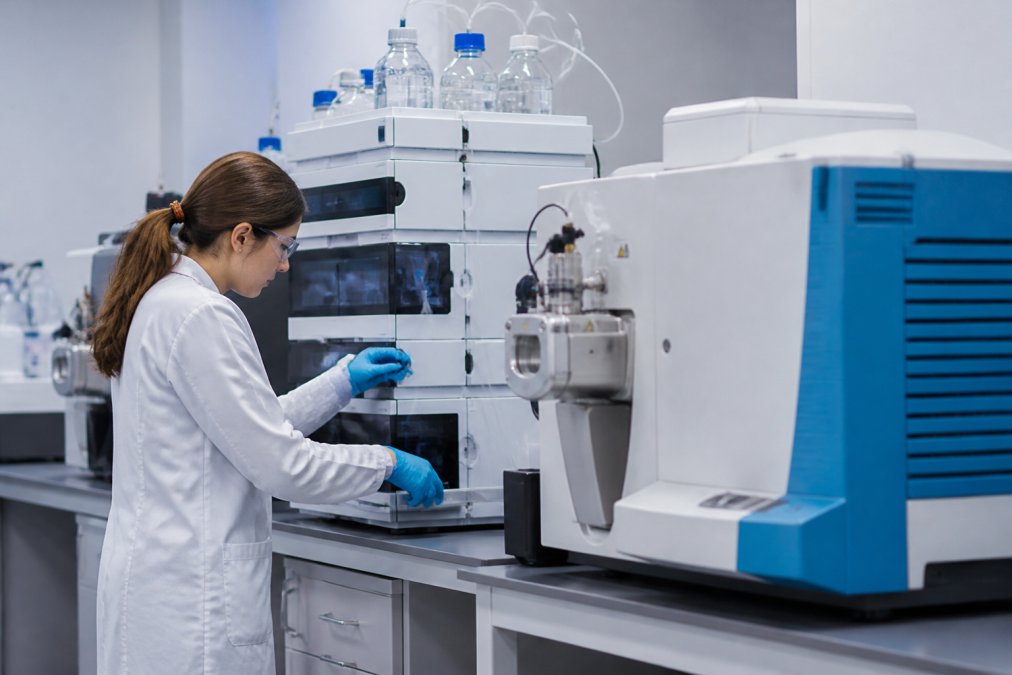
Identity Testing: Mass spectrometry confirms exact molecular weight and amino acid sequence. Peptide mapping creates a unique fingerprint by digesting your peptide with specific enzymes and running HPLC.
Purity Analysis: HPLC separates your main peptide from impurities. Regulatory bodies typically expect 95% purity or higher for therapeutic use; 90% is acceptable for preclinical research.
Impurity Profiling: You must identify what comprises the remaining 5-10%. Expected byproducts include truncated peptides, oxidised variants, or residual solvents. The FDA requires characterisation of impurities above 0.1%.
Stability Testing: Standard protocols test at 25°C/60% relative humidity (long-term) and 40°C/75% relative humidity (accelerated). Purity, identity, and potency are measured at multiple time points to establish shelf life and storage requirements.
Microbial Testing: Your final product must be tested for bacterial and fungal contamination, with endotoxin testing required for injectable formulations.
Choosing a manufacturer with strong analytical capabilities, like Everform Research, ensures quality from the start.
Research-Grade vs cGMP-Grade Peptides: Key Differences
The gap between research-grade and cGMP-grade peptides extends beyond purity to documentation, consistency, and regulatory defensibility.
| Aspect | Research-Grade | cGMP-Grade |
|---|---|---|
| Purity | 70-90% typical | 95%+ required |
| Documentation | Minimal; basic COA | Full batch records, process validation, stability data |
| Analytical Testing | Basic HPLC, limited impurity characterisation | Comprehensive: identity, purity, impurity profiling, stability |
| Traceability | Limited raw material documentation | Complete supply chain traceability |
| Batch Consistency | Variable | Tight specifications; verified reproducibility |
| Lead Time | 2-4 weeks | 4-8 weeks |
| Regulatory Use | Preclinical studies only | IND applications, clinical trials, commercial production |
For dose-escalation studies in mice, research-grade peptides are acceptable. But for pharmacokinetics studies or IND applications, research-grade material introduces risk. Batch-to-batch variability can obscure your drug's actual behaviour. cGMP-grade peptides eliminate that uncertainty through consistency and documentation.
How to Verify Manufacturer cGMP Compliance

Verifying cGMP compliance requires more than accepting a manufacturer's claim.
Request a Current Certificate of Analysis: A legitimate COA lists molecular weight, purity percentage, and testing methods used. It should include batch number, manufacturing date, and expiration date, referencing specific analytical methods. Vague or incomplete COAs are warning signs.
Ask for Third-Party Analytical Testing: Independent lab verification adds credibility. Everform Research uses third-party labs to verify purity and identity, providing an independent check on our own testing.
Request Manufacturing Documentation: Legitimate cGMP manufacturers maintain detailed batch records showing raw materials, synthesis conditions, purification steps, and all testing results. Manufacturers refusing to share batch records are not operating under cGMP.
Check FDA Registrations: Manufacturers of pharmaceutical ingredients must register with the FDA's Drug Establishment Registration system. You can search the FDA database to confirm registration.
Verify Stability Data: Ask whether the manufacturer has completed stability testing showing purity retention over time at standard storage conditions.
Request References: Contact other research teams or biotech companies using the supplier's peptides for peer validation.
Understand cGMP vs ISO Certification: ISO 9001 is a general quality management standard, not equivalent to cGMP compliance. cGMP is specific to pharmaceutical manufacturing.
Genuine cGMP compliance is transparent. Manufacturers following cGMP are comfortable sharing documentation.
Cost-Benefit Analysis: Early-Stage cGMP Adoption
Shifting to cGMP-compliant peptides early costs more upfront but saves money and risk later.
Costs of Early Adoption:
cGMP-grade peptides typically cost more per milligram than research-grade material. Smaller orders incur higher per-unit costs because manufacturing setup and analytical testing are fixed expenses. Lead times are longer, and you'll need to validate your analytical methods against the new batch.
Benefits of Early Adoption:
If your preclinical data uses the same cGMP-grade peptide for clinical trials, you eliminate major variability. The FDA views this favourably, strengthening your IND application. Early adoption also prevents costly mid-development surprises: synthesis routes may need optimisation, impurity profiles may change, or stability may be worse than expected.
For budget-conscious teams, a practical compromise is using research-grade peptides for initial screening, then switching to cGMP-grade material once you've narrowed candidates to your top 2-3 peptides.
Timeline Considerations:
cGMP manufacturing and analytical testing require time. If you're planning an IND application 18 months away, start cGMP manufacturing 6-9 months before filing to allow stability data collection and manufacturing validation.
Conclusion
cGMP compliant peptides are a regulatory requirement the moment you move toward human testing. The decision is not whether to use them, but when to make the switch.
Starting with cGMP-grade material early eliminates batch-to-batch variability, strengthens your regulatory narrative, and prevents costly surprises. Analytical testing, process validation, and traceability documentation prove your peptide is safe and effective.
Everform Research provides cGMP-compliant peptides with rigorous third-party testing, transparent batch documentation, and consistent quality your research team can depend on. Our commitment to quality standards keeps your data clean, timelines on track, and regulatory path clear.
Ready to move your peptide programme forward with confidence? Explore Everform Research's cGMP-compliant peptide options and request a batch with full analytical documentation. Use code EVER15 for 15% off your first order.
Frequently Asked Questions
What are the FDA requirements for cGMP peptide synthesis?
The FDA requires cGMP-compliant peptide manufacturing to follow Current Good Manufacturing Practice guidelines, which mandate quality control protocols, batch records, process validation, stability testing, and traceability documentation. Manufacturers must establish standard operating procedures, conduct analytical testing using validated methods such as high-performance liquid chromatography and mass spectrometry, and maintain detailed records of all production steps. For therapeutic peptides intended for clinical trials, these standards ensure consistency, purity, and safety across batches.
Why is cGMP compliance critical for peptide-based drug discovery?
cGMP compliance ensures reproducibility, safety, and regulatory acceptance. During preclinical studies and clinical trials, inconsistent peptide quality can invalidate results and delay development. cGMP-compliant peptides have documented purity, impurity profiles, and batch-to-batch consistency, allowing researchers to isolate variables and draw reliable conclusions. Additionally, regulatory bodies require cGMP documentation before approving investigational new drug applications, making early compliance essential for accelerating the path to therapeutic approval.
What is the difference between research-grade and cGMP-grade peptides?
Research-grade peptides are suitable for exploratory work but may have variable purity and incomplete documentation. cGMP-grade peptides meet rigorous manufacturing standards with certified purity levels, comprehensive analytical testing results, batch-specific certificates of analysis, and full traceability records. cGMP-grade peptides cost more but provide the consistency and documentation required for regulatory submissions, clinical trials, and institutional procurement compliance.
How do I verify a manufacturer's cGMP compliance status?
Request third-party certifications, audit reports, and certificates of analysis for specific batches. Verify that the manufacturer follows ICH guidelines and FDA guidance for peptide synthesis. Ask for documentation of process validation, stability testing protocols, and quality control methods. Confirm that raw material sourcing is traceable and that the manufacturer maintains standard operating procedures. Reputable suppliers provide transparent documentation and can submit compliance evidence directly to your institution's procurement or compliance team.
This article was written using GrandRanker