 how-to
Ideal Temperature for Peptide Storage: A Complete Guide
Table of Contents
- Understanding Peptide Storage Temperature Requirements
- How to Store Lyophilised Peptides at Optimal Temperatures
- Peptide Shelf Life After Reconstitution: Temperature Essentials
- Best Practices for Peptide Storage and Handling
- Step-by-Step Peptide Storage Protocol
- Recognising Peptide Degradation and Stability Indicators
- Conclusion
- Frequently Asked Questions
Last Updated: August 31, 2026
Understanding Peptide Storage Temperature Requirements
The peptide synthesis market was valued at USD 1.79 billion in 2025 and is projected to reach USD 2.59 billion by 2031, growing at a compound annual growth rate of 6.39% (mordorintelligence.com). This expansion reflects the critical importance of maintaining peptide integrity throughout the supply chain, and it all starts with proper storage temperature.
Getting the peptide storage temperature right isn't optional. It's the difference between a viable research compound and degraded waste. Yet many researchers and fitness enthusiasts treat storage as an afterthought, only to discover months later that their peptides have lost potency.
The challenge is that peptide stability depends on multiple factors working in concert: temperature, moisture, light exposure, and handling protocols. What works for lyophilised powder won't work for reconstituted solutions. What preserves a peptide for one year may not protect it for three. This guide from Everform Research cuts through the complexity and gives you the exact temperatures and protocols that keep your peptides stable.
How to Store Lyophilised Peptides at Optimal Temperatures
Lyophilised peptides, freeze-dried powders, are remarkably stable when stored correctly. The removal of water through lyophilisation arrests chemical degradation and creates a shelf-stable product that can last months or years depending on storage conditions.
For lyophilised peptides, temperature is your primary control lever. The colder the environment, the slower the chemical reactions that degrade your compound. A 10°C increase in ambient temperature can double the rate of chemical degradation for most synthetic sequences (peer-reviewed research).
Long-term Storage: -80°C vs -20°C
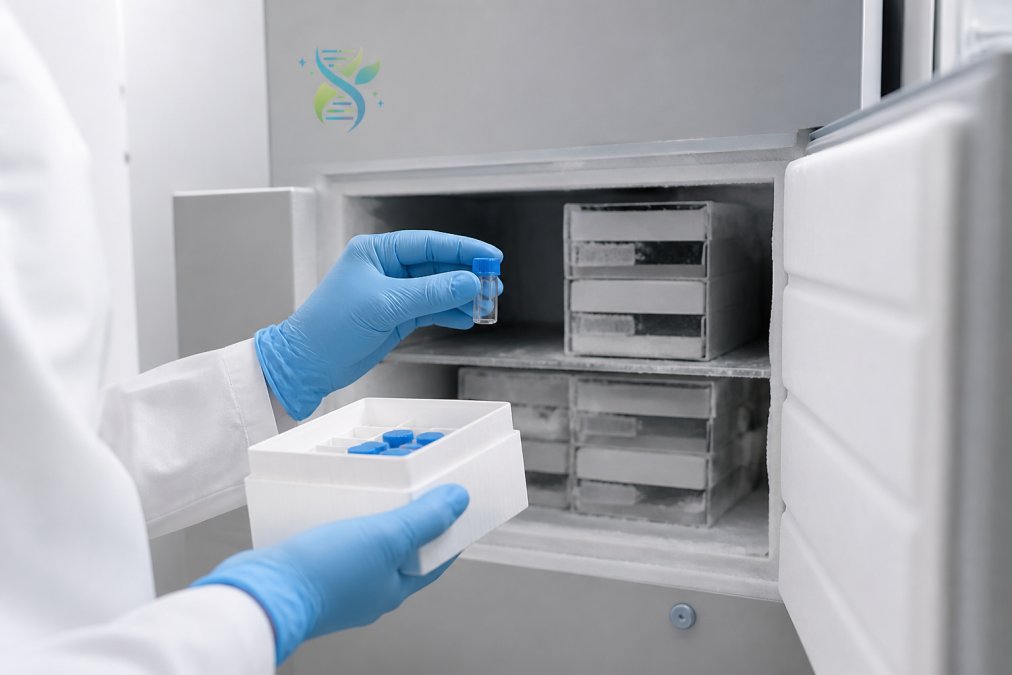
Ultra-low freezers at -80°C are the gold standard for long-term peptide storage spanning two to three years or longer. At this temperature, molecular vibration essentially halts. The peptide structure becomes locked in place, and chemical kinetics slow to a crawl. If you're running longitudinal studies or working with highly sensitive sequences, -80°C is where you want your compounds.
However, -80°C equipment is expensive and energy-intensive. For most research applications, -20°C (standard laboratory freezers) delivers excellent stability over one to two years. The vast majority of lyophilised peptides stored at -20°C show minimal degradation within this window. Many researchers find this temperature a practical sweet spot: affordable equipment, reliable stability, and straightforward logistics.
The choice between -20°C and -80°C ultimately depends on your timeline. Storing at -20°C for 18 months? You're fine. Planning a five-year longitudinal study? Go ultra-low.
One critical detail: avoid frost-free freezers. These units cycle temperatures to prevent ice buildup, creating repeated warm-cold cycles that damage peptide structure. A standard -20°C freezer without frost-free technology is better than a frost-free unit set to -80°C.
Short-term Storage and Room Temperature Handling
Lyophilised peptides can tolerate room temperature (15-25°C) for brief periods, typically 30 to 60 days during transit or short-term handling. This flexibility makes peptides more practical than many assume. You can receive a shipment, store it on a bench for a few weeks whilst you prepare your experiment, and still maintain acceptable potency.
However, minimise room-temperature exposure. Each day at 20°C is chemically equivalent to roughly one week at 4°C in terms of degradation rate (peer-reviewed research). If you're storing beyond 60 days, move the peptide to refrigeration (2-8°C) or freezing immediately.
Refrigeration at 2-8°C is acceptable for lyophilised peptides stored for up to 12 months, though freezing is preferred for anything longer. The key principle: cooler is always better, but room temperature is acceptable for short windows.
Peptide Shelf Life After Reconstitution: Temperature Essentials
Reconstituted peptides, dissolved in aqueous solution, are a different beast entirely. Once you dissolve your lyophilised powder in water or buffer, you've created an environment where hydrolysis and oxidation accelerate dramatically.
Reconstituted peptides must be stored at 2-8°C immediately after preparation. This is non-negotiable. Room-temperature storage of a reconstituted peptide will degrade it within days. Most reconstituted peptides remain viable for 30 to 60 days under refrigeration, though some sequences show significant degradation within 14 days. Always check your Certificate of Analysis (CoA) for stability data specific to your compound.
Freezing reconstituted peptides is generally not recommended. When you freeze an aqueous solution, ice crystals form and expand, physically disrupting the peptide structure. If freezing is absolutely necessary, for example, to preserve single-use aliquots, do it carefully and accept that repeated freeze-thaw cycles will degrade your compound.
The practical approach: reconstitute only what you'll use within your stability window. If you need peptide solution over several months, reconstitute fresh batches every 30 days rather than attempting to preserve a single large batch.
Using bacteriostatic water (water containing a preservative agent) for multi-use applications extends the stability window slightly by inhibiting microbial growth. However, bacteriostatic water doesn't prevent chemical degradation, it only slows microbial proteolytic breakdown.
Best Practices for Peptide Storage and Handling
Temperature is foundational, but it's only one piece of the storage puzzle. Light, oxygen, moisture, and handling technique all influence how long your peptides remain potent.
Preventing Freeze-Thaw Cycle Damage
Freeze-thaw cycles are insidious. A single freeze-thaw cycle won't destroy your peptide, but repeated cycles will. Here's what happens: when you freeze a solution, water forms ice crystals and the remaining liquid becomes increasingly concentrated. Solutes, including your peptide, become crowded and stressed. Osmotic pressure rises. Upon thawing, the peptide unfolds slightly as it transitions back into dilute solution. Repeated cycles compound this mechanical stress.
The fix is aliquoting. Before your first use, divide your reconstituted peptide into small, single-use portions. Freeze each aliquot separately. Use one aliquot, then discard it. Never refreeze a thawed solution. This approach eliminates freeze-thaw damage entirely and is standard practice in research laboratories.
For lyophilised peptides, freeze-thaw cycles are less problematic because you're not creating ice crystals in a solution. However, if you reconstitute a lyophilised peptide and then freeze it, you're back to the same problem.
Protecting Against Light, Oxygen and Moisture
Peptides contain amino acids susceptible to photodegradation and oxidation. Methionine, cysteine, tryptophan, and tyrosine are particularly vulnerable. Exposure to ultraviolet or visible light breaks down these residues, reducing peptide potency.
Store peptides in dark conditions or in opaque, amber-coloured vials. If your peptides arrive in clear glass vials, transfer them to amber containers before long-term storage. This simple step can extend shelf life by months.
Oxygen accelerates oxidation of sensitive amino acids. Minimise headspace in your vial by using appropriately sized containers. For long-term storage, some researchers use inert gas (nitrogen or argon) to displace oxygen in the vial before sealing. This is especially important for peptides containing multiple methionine or cysteine residues.
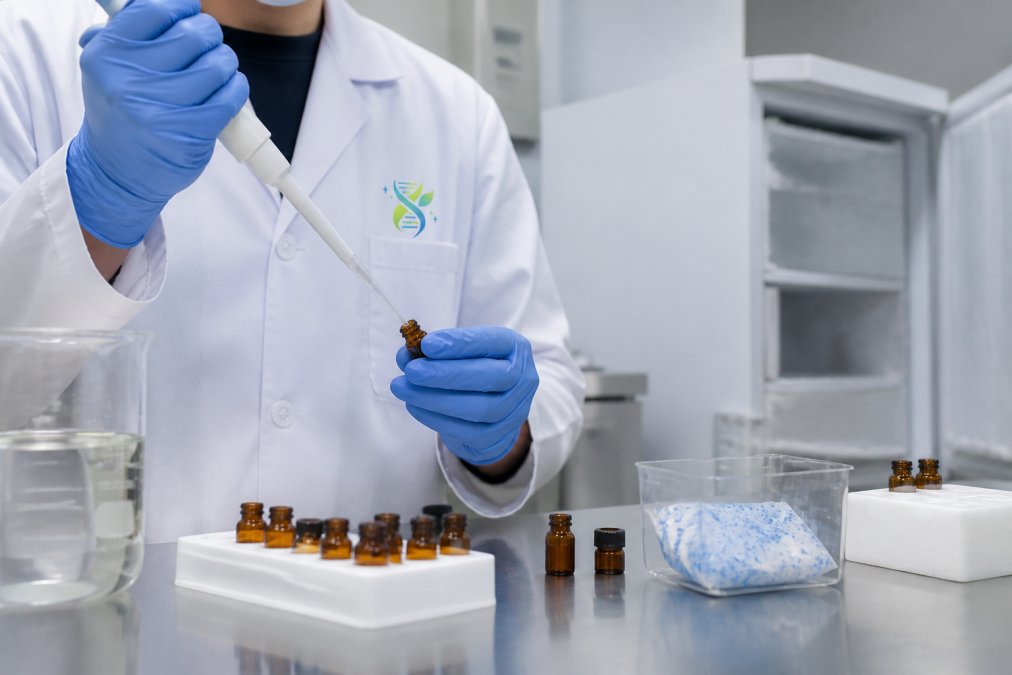
Moisture is the primary driver of hydrolysis. Lyophilisation removes water, but lyophilised peptides can reabsorb moisture from humid air. Use desiccants, silica gel packets or molecular sieves, inside your storage container. Replace desiccants periodically, especially if you live in a humid climate.
Allow sealed lyophilised vials to reach room temperature before opening. If you open a cold vial in a warm room, condensation forms inside. Water droplets on your peptide powder trigger hydrolysis immediately.
Step-by-Step Peptide Storage Protocol
Follow this protocol to maximise peptide stability from receipt through use.
Step 1: Inspect and Document (Time: 5 minutes) Upon receipt, inspect vials for damage and verify the label matches your order. Photograph the vial and CoA for your records. Note the storage instructions on the CoA, manufacturer recommendations take precedence over general guidance.
Step 2: Prepare Your Storage Environment (Time: 10 minutes) Ensure your freezer or refrigerator is clean and functioning properly. If using -20°C storage, verify the freezer maintains consistent temperature (use a thermometer). Place desiccant packets in your storage container. For -80°C storage, confirm the unit is running and has backup power or alarm systems.
Step 3: Transfer to Appropriate Container (Time: 10 minutes) If peptides arrive in clear vials, transfer them to amber-coloured containers to block light. Use appropriately sized vials, minimise headspace to reduce oxygen exposure. Label clearly with the peptide name, concentration, date received, and expiration date.
Step 4: Store Immediately (Time: 2 minutes) Place lyophilised peptides in your designated freezer (-20°C or -80°C) immediately. Do not leave at room temperature. If you need to reconstitute, proceed directly to the next step.
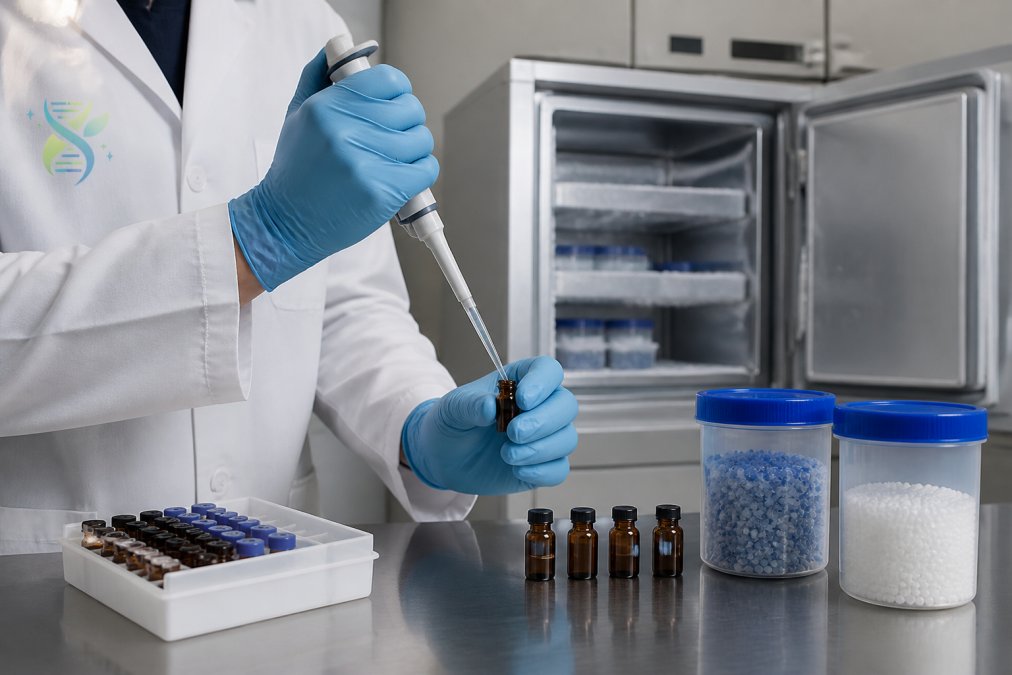
Step 5: Reconstitute Carefully (Time: 15 minutes) If reconstituting, use sterile technique to prevent contamination. Add bacteriostatic water or your specified buffer slowly, allowing the powder to dissolve gradually. Avoid vigorous shaking, which introduces air bubbles and oxygen. Aliquot into single-use portions immediately. Store aliquots at 2-8°C in a refrigerator.
Step 6: Monitor and Document (Ongoing) Track storage temperatures daily if possible. Note any changes in appearance (colour, cloudiness, precipitation). Before use, visually inspect the peptide and smell for off-odours, signs of contamination or degradation.
Recognising Peptide Degradation and Stability Indicators
How do you know if your peptide has degraded? Visual and chemical signs provide clues.
Visual Indicators of Degradation: Lyophilised peptides should appear as a white or off-white powder. Discolouration, yellowing, browning, or darkening, suggests oxidation or thermal degradation. Clumping or caking indicates moisture ingress. Cloudiness in a reconstituted solution suggests aggregation or precipitation.
Stability Testing: Accelerated stability testing evaluates peptide products under controlled environmental stress, elevated temperature, light exposure, or humidity, to identify degradation pathways months or years faster than long-term studies. If you're running high-throughput research or clinical trials, accelerated testing provides early warning of stability issues.
Individual Heterogeneity: Individual heterogeneity accounts for approximately 32% of the variance in peptide clinical trial outcomes. This means that even perfectly stored peptides will show some batch-to-batch variation. This isn't degradation, it's inherent biological variability. However, proper storage minimises additional degradation on top of this baseline variation.
Certificate of Analysis Review: Your CoA provides baseline purity and potency data. Before use, compare your results to the CoA. If your peptide shows significantly lower potency than the CoA baseline, degradation has occurred. Proper storage should keep potency loss below 5% per year at -20°C.
| Storage Condition | Lyophilised Stability | Reconstituted Stability | Best For |
|---|---|---|---|
| -80°C | 3+ years | Not recommended | Long-term research, sensitive sequences |
| -20°C | 1-2 years | Not recommended | Standard research storage |
| 2-8°C (refrigeration) | Up to 12 months | 30-60 days | Short-term storage, active use |
| 15-25°C (room temperature) | 30-60 days | Not recommended | Transit only, minimal exposure |
Conclusion
Proper peptide storage temperature is the foundation of research integrity and product efficacy. Lyophilised peptides thrive at -20°C or -80°C with protection from light and moisture. Reconstituted peptides demand refrigeration and single-use aliquoting to avoid freeze-thaw damage. Individual heterogeneity will always introduce some variation, but meticulous storage eliminates unnecessary degradation.
At Everform Research, we're committed to providing premium-quality peptides backed by rigorous third-party testing and transparent documentation. Our cGMP-compliant manufacturing ensures consistency across batches, and our educational resources help you maintain that quality through proper storage and handling. When you source from Everform Research, you're not just buying a compound, you're gaining a partner invested in your research success.
Ready to experience the difference that quality and transparency make? Shop our compounds today and use code EVER15 for 15% off your first order.
Frequently Asked Questions
What is the ideal temperature for peptide storage to maintain stability?
The ideal peptide storage temperature depends on the peptide form. Lyophilised peptides should be stored at -20°C for standard long-term storage (1-2 years) or -80°C for extended storage beyond 2-3 years. Reconstituted peptides must be refrigerated at 2-8°C (36-46°F) immediately after preparation and remain viable for 30-60 days, though some sequences degrade within 14 days. Always follow the manufacturer's specific storage instructions and check the Certificate of Analysis for stability data.
How long does peptide shelf life last after reconstitution?
After reconstitution, most peptides remain stable for 30-60 days when stored at 2-8°C in a refrigerator. However, individual peptide sequences vary significantly, some may show substantial degradation within 14 days. Using bacteriostatic water for multi-use applications and aliquoting into smaller portions before initial reconstitution can extend usable shelf life by minimising repeated freeze-thaw cycles and atmospheric exposure.
Should I freeze reconstituted peptides, and what happens if I do?
Freezing reconstituted peptides is generally not recommended. Freeze-thaw cycles form ice crystals that disrupt peptide structure and can reduce potency by 20-50%. If freezing is absolutely necessary for single-use aliquots, do so carefully to avoid repeated cycles. Instead, store reconstituted peptides continuously at 2-8°C.
What factors most affect peptide stability during storage?
Four primary factors control peptide stability: temperature (a 10°C increase doubles the degradation rate), moisture (water is the primary reactant for hydrolysis), light (UV and visible light cause photodegradation), and oxygen (which oxidises sensitive amino acid residues). Additionally, freeze-thaw cycles, pH changes, and microbial contamination accelerate breakdown. Minimise exposure to ambient temperatures and humidity, store in dark or opaque containers, maintain inert gas or desiccants in sealed vials, and use sterile handling techniques to prevent proteolytic degradation.
This article was written using GrandRanker