 listicle
5 Trusted Peptide Vendors in the US for Labs
Table of Contents
- What Makes a Peptide Vendor Trusted for Laboratory Use
- Comparison of 5 Trusted Peptide Vendors in the US for Labs
- Peptide Certificate of Analysis Requirements
- How to Verify Third-Party Peptide Testing
- Biotech Lab Procurement Best Practices
- Red Flags in Vendor Marketing and Supply Chain Transparency
- Frequently Asked Questions
Last Updated: September 30, 2026
What Makes a Peptide Vendor Trusted for Laboratory Use
A trusted peptide vendor gives you verifiable proof of purity, identity, and consistency for every batch it ships. That proof matters more than ever: a market "shakeout" has pushed labs toward suppliers with transparent testing records.
Third-Party Testing and the Certificate of Analysis
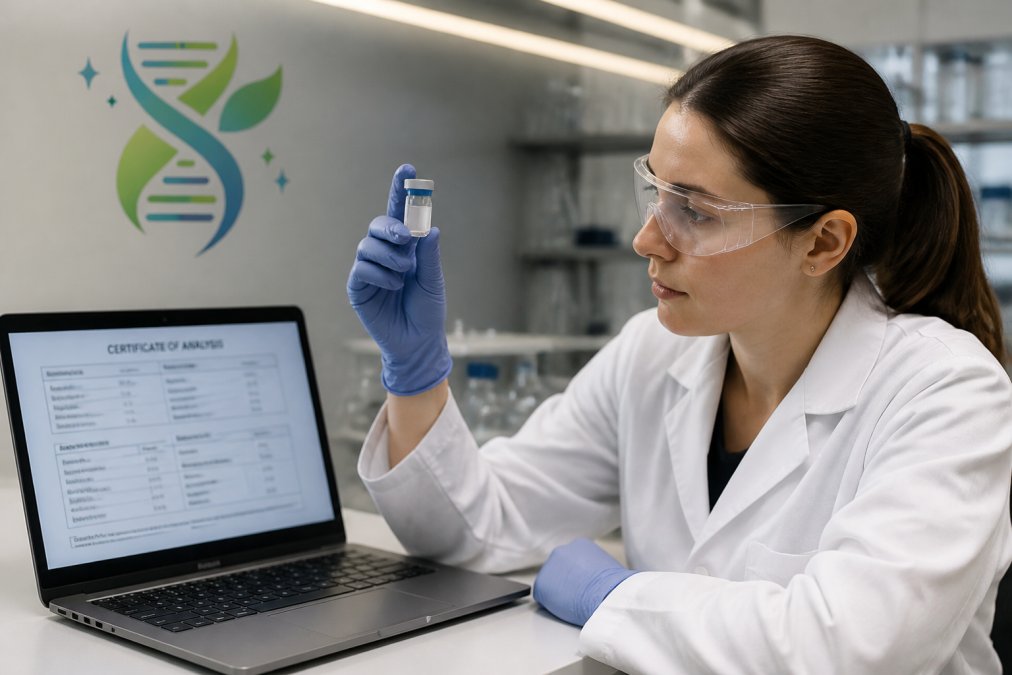
Third-party testing means an independent laboratory, not the vendor's own bench, confirms what is in the vial. The output is a Certificate of Analysis (CoA): a lot-specific document listing purity percentage, molecular weight, and the analytical methods used.
Research-Grade vs. Pharmaceutical-Grade Peptides
Research-grade peptides are synthesized and tested for laboratory and analytical use only. They are not manufactured under the same controls as pharmaceutical-grade material and are not intended for human use.
Comparison of 5 Trusted Peptide Vendors in the US for Labs
These suppliers stand out for documentation quality, catalog depth, and verifiable testing practices.
| Vendor | Catalog Size | Testing Documentation | Best For |
|---|---|---|---|
| Everform Research | Growing catalog | Third-party COA verification, cGMP-compliant manufacturing | Labs needing batch consistency and clear documentation |
| Biotech Peptides | Standardized QC protocols | Broad selection of research materials | |
| Core Peptides | Regularly updated testing reports | Reliable domestic supply chains | |
| Peptide Sciences | Established range | Independent third-party validation | Labs prioritizing reputation |
| Limitless Life | Batch-dependent | HPLC and LC-MS testing with every order | Immediate access to analytical data |
Everform Research
Everform Research is a strong choice for labs that need documented consistency across batches. The company backs its compounds with rigorous third-party testing and cGMP-compliant manufacturing, so every order arrives with the quality signals procurement teams ask for.
Biotech Peptides
A San Diego-based supplier with one of the larger verified catalogs in the research space, currently listing 330+ products (2026 peptide company comparison(https://pspeptides.com/blog/best-peptide-companies-2026/)). Domestic operations and standardized QC protocols make it a reasonable fit for labs that need variety without importing.
Core Peptides
Pros: Strong consistency track record, wide peptide variety. Cons: The site is built for direct sales rather than institutional bulk procurement.
Peptide Sciences
Pros: Rigorous QC standards, widely recognized. Cons: Premium pricing relative to smaller vendors.
Limitless Life
Pros: Testing documentation included, reliable methodology. Cons: Inventory fluctuates with batch availability.
Peptide Certificate of Analysis Requirements
A compliant peptide certificate of analysis must include the lot number, test date, purity percentage, molecular weight, the analytical method used, and the identity of the testing laboratory. Anything less is a marketing document, not a quality record. But a checklist tells you what to look for, not what the numbers mean, and a CoA that passes every box can still describe a vial that fails your assay.
- Lot number that matches the vial label exactly. This is the chain-of-custody anchor. If the CoA lot number does not match the vial in your hand, the document describes a different batch and tells you nothing about your material.
- Purity percentage from HPLC, typically reported to two decimals. Purity is measured by peak area on a reversed-phase column, usually at 214 nm or 220 nm. A single number without the chromatogram behind it is unverifiable, you are trusting a summary of a test you cannot see.
- Molecular weight verification via mass spectrometry. This confirms the peptide is the correct sequence, not just a peptide of roughly the right size. A purity figure alone cannot catch a truncated or substituted sequence.
- Endotoxin levels where your application requires them. Endotoxin testing is separate from purity testing and is often omitted on research-grade CoAs. If your downstream work is sensitive to lipopolysaccharide contamination, request it explicitly.
- Testing lab name you can independently contact. An unnamed lab is not a third party, it is an assertion.
Reading the HPLC Trace, Not Just the Number
A purity percentage is a summary of a chromatogram. Ask for the chromatogram itself. On a legitimate trace you should see a single dominant peak, with any impurity peaks small and clearly resolved. Watch for these patterns:
- A broad or shouldered main peak, which can indicate a closely eluting impurity the purity number hides
- A purity figure reported to one decimal place or rounded up, which is common on repackaged material
- A trace with no retention time, column, or wavelength stated, which cannot be reproduced or audited
Common Contaminants in Low-Quality Peptides
Contaminant screening matters here. Common issues in low-quality peptides include residual solvents from synthesis and purification, truncated sequences from incomplete coupling, deletion sequences from failed amino acid additions, and incorrect sequences from a mis-ordered synthesis batch. Each can pass a purity check while failing your experiment. A CoA that reports purity but not identity testing is only half a document.
Spotting a Recycled or Forged CoA
A common pattern is a CoA that is real but recycled, a genuine report from one lot, reused across many. Signs include a test date far older than the shipping date, a lot number that does not match the vial, or a purity figure identical across every product in a catalog.
How to Verify Third-Party Peptide Testing
Verifying third-party peptide testing means confirming the lab named on the CoA is real, independent of the vendor, and actually ran the test. Start by contacting the testing laboratory directly to confirm the report number.
Then run these checks:
- Confirm the testing lab is not owned by or affiliated with the vendor
- Match the CoA lot number to the vial in your hand
- Request raw chromatograms, not just a summary page
- Cross-check purity claims against your own in-house analysis
- Ask whether testing happens per batch or per product line
Biotech Lab Procurement Best Practices
Sound biotech lab procurement rests on documented specifications, qualified suppliers, and lot-level traceability. Build your vendor file before you place the first order, not after a failed experiment. What most vendor guides rarely cover is the handling and storage layer, the part that determines whether the peptide you bought is still the peptide you tested when it reaches your bench.
A workable process looks like this:
- Define minimum purity and testing requirements in writing, including the analytical methods you will accept
- Request sample CoAs from at least three vendors, and request the raw chromatograms alongside them
- Verify one CoA independently before approving the vendor
- Set up standard operating procedures for receipt, storage, and reconstitution
- Log every lot number against the experiment it supports
Cold-Chain Logistics and Receipt
Lyophilized powder is generally stable at controlled room temperature, provided it stayed dry and was not exposed to repeated temperature swings. Ask vendors how they ship, whether temperature excursions are documented, and whether shipments include a temperature indicator. On receipt, inspect the vial for cracks, discoloration, or a loose or damaged stopper before logging it into inventory.
Storage of Lyophilized Powder
Store lyophilized peptide in a sealed container, protected from light and moisture, at the temperature the vendor specifies, commonly -20°C for long-term storage. Desiccant packs in the storage container help control humidity. Avoid repeated freeze-thaw cycles of the powder; aliquot if you need frequent access.
Reconstitution Stability
Reconstituted peptides are far less stable than the lyophilized powder. Once in solution, integrity depends on solvent, pH, concentration, and temperature. A few practical points most vendor pages skip:
- Use the solvent the vendor specifies. Bacteriostatic water is common for many research peptides, but some sequences require dilute acetic acid or a buffered solution to stay in solution.
- Avoid vigorous vortexing, which can shear or aggregate the peptide. Swirl gently instead.
- Store reconstituted solution at 2-8°C for short-term use, and aliquot and freeze at -20°C or below for longer storage.
- Avoid repeated freeze-thaw cycles of the solution, which is one of the fastest ways to lose peptide integrity.
- Check for precipitation or cloudiness before each use; a solution that has gone cloudy should not be assumed to be intact.
Lot-Level Traceability in Practice
When your procurement file is built around documented specifications, verified CoAs, and a handling SOP that matches the chemistry, the vendor decision becomes a formality rather than a gamble. Our own compounds are supplied with batch-level documentation and clear handling guidance so your lab can revalidate protocols with confidence, and you can use code EVER15 for 15% off your first order.
Red Flags in Vendor Marketing and Supply Chain Transparency
The clearest red flag is a vendor that markets purity claims without publishing the underlying data. If a site promises "99% purity" but cannot produce a lot-specific CoA, the claim is unverifiable.
Watch for these signals:
- No named testing laboratory anywhere on the CoA
- Purity claims with no method stated (HPLC, LC-MS, or otherwise)
- Pressure tactics like flash sales on research compounds
- No lot numbers on vials or documentation
- Vague sourcing language that never names a synthesis facility
Frequently Asked Questions
How do I know if a peptide vendor is reputable?
Check for a public Certificate of Analysis (CoA) library with batch-specific HPLC and LC-MS results from an independent lab. Reputable peptide vendors also provide clear lot numbers, purity percentages, and molecular weight verification. Avoid suppliers who only show generic COAs or refuse to share testing documentation before purchase.
What documentation should a reputable peptide vendor provide?
A reputable vendor should supply a lot-specific Certificate of Analysis showing HPLC purity, LC-MS identity confirmation, and contaminant screening results. Additional useful documents include endotoxin levels, amino acid sequence data, and chain of custody records. These items form the core of peptide certificate of analysis requirements for laboratory procurement.
Why is third-party testing critical for laboratory peptides?
Independent third-party testing confirms that a peptide matches its label claim for purity and identity. In-house testing alone can be biased or inconsistent. When you verify third-party peptide testing through an accredited external lab, you reduce the risk of contaminants, incorrect sequences, or degraded lyophilized powder that could compromise experimental reproducibility.
What are the regulatory requirements for purchasing research-grade peptides?
Research-grade peptides are sold for laboratory and analytical use only, not for human consumption. No federal agency publishes a trusted vendor list. Labs should confirm that suppliers follow research use only labeling, provide lot-specific documentation, and maintain quality assurance records. Institutional procurement rules may require cGMP compliance evidence and independent validation before approval.
How can labs ensure consistency when sourcing peptides from different vendors?
Standardize your procurement process by requiring the same analytical testing panel from every supplier, including HPLC, LC-MS, and endotoxin screening. Request batch-specific CoAs before each order and compare purity percentages across lots. Following biotech lab procurement best practices, such as vendor audits and cold-chain logistics checks, helps maintain peptide stability and reproducible results.