 listicle
Affordable Research Grade Peptides for Small Biotech Startups
Table of Contents
- Quick Comparison: Top Peptide Suppliers for Small Biotech
- Research Grade Peptide Purity Standards Every Startup Should Know
- Peptide Certificate of Analysis Requirements: What to Demand From Suppliers
- Peptide Procurement Best Practices for Budget-Conscious Labs
- Bulk vs. Small-Batch: Cost Analysis for Growing Biotech Startups
- Stability and Storage Protocols That Protect Your Investment
- How to Vet Affordable Research Grade Peptides Suppliers
- Frequently Asked Questions
Last Updated: September 22, 2026
Quick Comparison: Top Peptide Suppliers for Small Biotech
The global catalog peptides market is projected to grow from $9.91 billion in 2025 to $76.8 billion by 2035, according to Spherical Insights market forecast. That growth is driven largely by small biotech startups hunting for affordable research grade peptides without sacrificing purity. This guide from Everform Research breaks down what actually matters when you're sourcing on a tight budget.
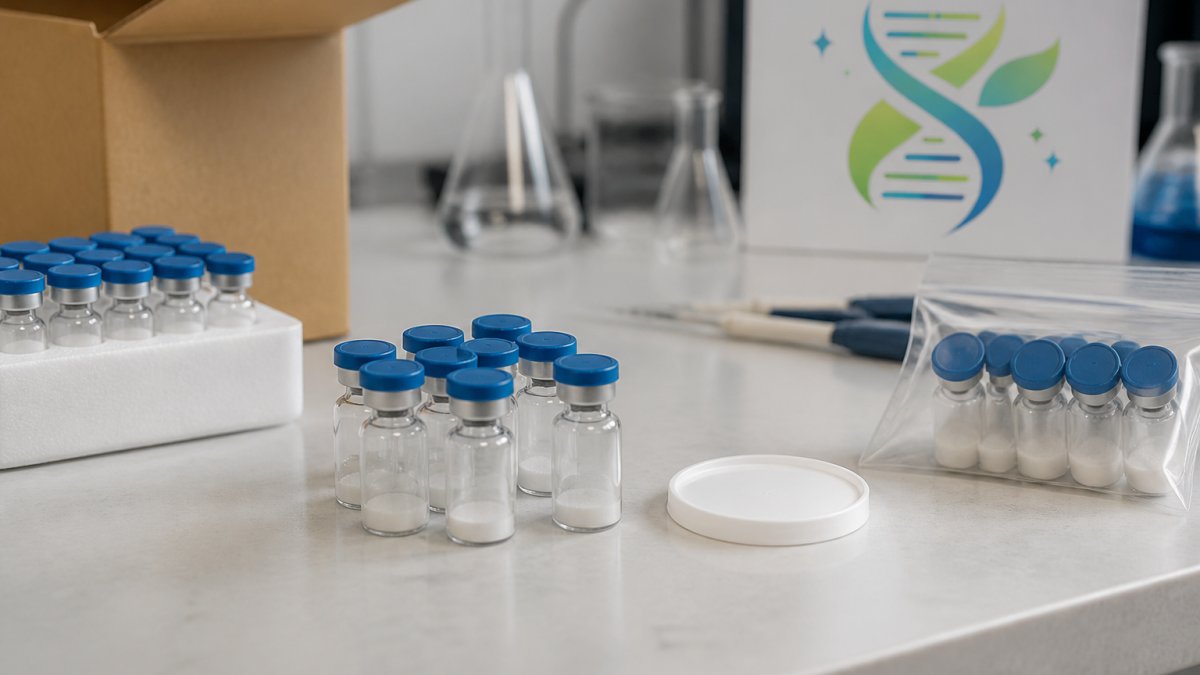
Research grade peptides are synthetic peptides manufactured and tested for laboratory use only, not for human consumption, and sold with batch-specific documentation. For a startup, the difference between a good supplier and a bad one usually comes down to three things: purity data you can verify, a certificate of analysis that matches the lot, and pricing that doesn't eat your entire reagent budget.
Here's the short version before we get into the details:
| Supplier | Starting Price | Best For | Standout Feature |
|---|---|---|---|
| Everform Research | See pricing page | Startups needing verified purity at fair prices | Third-party COA verification, cGMP-compliant manufacturing |
| Biomatik | $80/peptide | Custom, non-catalog sequences | Low per-amino-acid synthesis cost |
| GenScript | Quote-based | Scaling from research to development | Advanced synthesis technology |
| Bachem | Quote-based | High-purity standardized materials | Pharmaceutical-grade standards |
| PS Peptides | $39.99 | Budget-conscious labs | Independent purity testing |
| Biosynth | Quote-based | Drug discovery projects | Complex sequence support |
| AmbioPharm | Quote-based | Scale-up production | Cost-efficient large volumes |
| Phoenix Peptide | Quote-based | Domestic supply chains | US-based manufacturing |
| Thermo Fisher Scientific | Quote-based | One-stop lab shopping | Global distribution network |
More than 80 peptides have received FDA approval, per Koi Peptides industry data, so the regulatory bar for research materials keeps rising. Below, we'll show you exactly how to vet suppliers, read a COA properly, and stretch your budget without gambling on quality.
Research Grade Peptide Purity Standards Every Startup Should Know
Purity is the number that decides whether your assay works. Most suppliers quote purity by HPLC, and anything below 95% is a red flag for sensitive work.
The three measurements that matter:
- HPLC purity: percentage of the target peptide in the sample
- Mass spectrometry confirmation: proves the molecular weight matches your expected amino acid sequence
- Counter-ion and water content: affects how much actual peptide you're weighing out
A supplier claiming 98% purity without a mass spectrometry trace is asking you to take their word for it. Don't.
Peptide Certificate of Analysis Requirements: What to Demand From Suppliers
Peptide certificate of analysis requirements come down to one rule: the document must be lot-specific. A generic COA reused across batches tells you nothing about what's in your vial.
Demand these fields on every COA:
- Lot or batch number matching your vial label
- HPLC chromatogram with retention time
- Mass spectrometry data
- Purity percentage and testing method
- Storage and solubility notes
- Date of analysis and testing lab name
A comparative review of 16 research peptide suppliers evaluated catalog size, COA accessibility, payment infrastructure, and BBB status, per PureUSPeptide supplier comparison. COA accessibility was one of the four core metrics, which tells you how much weight buyers place on it.
Peptide Procurement Best Practices for Budget-Conscious Labs
Good procurement is about sequencing your purchases and your paperwork, not just finding the cheapest vial.
A practical startup workflow:
- Define the specification before you shop. Write down sequence, required purity, quantity, counter-ion form, and the assay the peptide will feed. Suppliers price against a spec, so a vague request invites a vague quote.
- Order the smallest available quantity of one compound.
- Run your assay and compare against a known reference.
- Request the full certificate of analysis and verify the lot number matches your vial label.
- Log the supplier in a simple internal register: date, lot, purity, assay result, and any deviation. This becomes your audit trail if a funder or institutional reviewer asks how materials were controlled.
- Only then negotiate bulk pricing, and negotiate against a written spec rather than a verbal one.
- Consolidate orders. Combining several sequences into one shipment usually reduces shipping and handling charges, which can be a meaningful share of a small order.
- Match quantity to protocol. Buying a larger vial to chase a lower per-milligram rate only pays off if your storage and usage plan can consume it before degradation.
- Ask about custom synthesis thresholds. For sequences that are not catalog items, custom synthesis is often quoted per sequence with a minimum scale. Knowing that minimum tells you whether custom or catalog is cheaper for your specific compound.
A comparative analysis of 12 peptide companies used four standardized metrics: purity, shipping reliability, customer support, and price, per PS Peptides supplier rankings. Notice that price comes last. Reliability beats a discount every time when a failed experiment costs you a month.
Bulk vs. Small-Batch: Cost Analysis for Growing Biotech Startups
A simple way to find it:
- Estimate your monthly consumption in milligrams for the peptide in question.
- Note the shelf life you can realistically achieve. Lyophilized powder stored cold and dry lasts far longer than a reconstituted stock, so the calculation changes depending on which form you buy.
- Compare the total cost of buying small quantities monthly against the total cost of one bulk order, then add the cost of the portion you expect to discard.
- If the bulk order's effective cost per usable milligram is lower after that discard allowance, bulk wins. If not, stay small.
The trade-off table.
| Factor | Small-Batch | Bulk |
|---|---|---|
| Upfront cost | Lower | Higher |
| Per-milligram price | Higher | Lower |
| Storage and degradation risk | Lower | Higher |
| Working capital tied up | Minimal | Significant |
| Best for | Validation runs, new assays, unproven sequences | Locked protocols, high-consumption sequences |
- Degradation waste. If half a bulk vial degrades before use, the effective per-milligram price can exceed the small-batch price. This is the single most common mistake in small labs.
- Freezer space and monitoring. Bulk quantities consume freezer capacity and require temperature monitoring. That is a real operating cost, even if it does not show up on an invoice.
- Protocol drift. If your assay changes, a bulk purchase of a sequence you no longer use is a total loss. Small batches keep you flexible while a method is still moving.
A note on storage economics. The cost analysis above assumes you can store material properly. If you cannot maintain cold, dry, light-protected storage, bulk purchasing is not a savings strategy at all. Fix storage first, then revisit quantity.
Stability and Storage Protocols That Protect Your Investment
Lyophilized peptides are stable for long periods when stored cold and dry. Once reconstituted, the clock starts ticking.
How to Vet Affordable Research Grade Peptides Suppliers
Vetting a supplier takes about an hour and saves months of bad data. Work through documentation, testing, and track record in that order.
Checklist before you commit:
- COA available per lot, not generic
- Third-party testing named, not just "in-house"
- HPLC and LC-MS data included
- Clear research-use-only labeling
- Responsive support before the sale
- Documented cGMP compliance if your institution requires it
Frequently Asked Questions
What criteria define research grade peptides for laboratory use?
Research grade peptides are defined by purity levels typically at or above 95%, verified through HPLC and mass spectrometry. They must include a certificate of analysis with lot-specific data, be labeled for laboratory use only, and come from suppliers using cGMP-compliant manufacturing. The global catalog peptides market is projected to grow significantly, reflecting rising demand for verified research materials.
How can small biotech startups verify third-party testing for peptides?
Request the certificate of analysis for each batch and confirm it includes HPLC chromatograms, mass spectrometry data, and the testing laboratory's name. Cross-reference the supplier's claims against their own website. Independent testing should be performed by a lab unaffiliated with the supplier.
What are the regulatory considerations for purchasing research grade peptides?
Research grade peptides are sold strictly for laboratory use only and are not approved for human consumption. Research-grade catalog items remain distinct from clinical therapies. Small biotech startups should ensure suppliers provide documentation confirming products are labeled for research use only and comply with applicable federal regulations.
How does batch consistency impact long-term research outcomes?
Inconsistent purity between batches undermines reproducibility. If one batch is 98% pure and the next is 96%, assay results may shift, invalidating comparisons across experiments. Startups running high-throughput screening need suppliers who test every batch and provide lot-specific certificates of analysis.
What documentation should accompany high-quality research peptides?
Every shipment should include a certificate of analysis with the amino acid sequence, molecular weight, purity percentage, and analytical testing methods used. Suppliers should provide lot-specific data, not generic certificates. Third-party validation through HPLC and LC-MS testing per batch is increasingly standard. Everform Research offers third-party COA verification and cGMP-compliant manufacturing for researchers who need documented quality signals.
Sourcing affordable research grade peptides for small biotech startups comes down to documentation you can verify, not marketing claims. Everform Research offers third-party COA verification, cGMP-compliant manufacturing, and batch consistency designed for reproducible research, all with accessible pricing for premium compounds. Use code EVER15 for 15% off your first order and get started with Everform Research today.