 ultimate-guide
How to Store Research Peptides for Stability
Table of Contents
- Understanding Peptide Stability and Storage Fundamentals
- Lyophilised vs. Reconstituted: Storage Differences Explained
- Temperature Requirements: -20°C, -80°C, and Refrigeration
- Peptide Reconstitution Best Practices for Optimal Stability
- How to Store Reconstituted Peptides: Containers and Sealing
- Lyophilised Peptide Shelf Life and Long-Term Preservation
- Protecting Peptides from Degradation: Moisture, Light, and Handling
- Frequently Asked Questions
Last Updated: September 20, 2026
Understanding Peptide Stability and Storage Fundamentals
Proper storage is the foundation of maintaining peptide integrity, which is why many researchers choose to store research peptides with precision and care. When you store research peptides correctly, you preserve their molecular structure, biological activity, and usability for months or even years. Get this wrong, and degradation begins immediately, sometimes within days.
Peptides are sensitive molecules that respond to temperature fluctuations, moisture, light exposure, and air inside their container. Understanding these vulnerabilities is essential for effective storage.
According to FormBlends stability guidelines for reconstituted research compounds, reconstituted peptides typically remain stable for 30 to 60 days when stored in refrigeration at 35-46°F (2-8°C). This window is your working timeframe for most liquid peptide applications. Beyond it, degradation accelerates significantly.
Researchers who maintain consistent results treat storage as a critical protocol step, not an afterthought. Your peptide quality is only as good as the conditions you maintain.
Lyophilised vs. Reconstituted: Storage Differences Explained
Storage method depends on whether your peptides are lyophilised (freeze-dried) or reconstituted in solution, as these forms have different stability profiles and requirements.
Lyophilised peptides are dry powders with most water removed. This absence of solvent dramatically extends shelf life. According to Peptides Lab UK shelf-life expectations for dry peptides, lyophilised peptides stored at -20°C remain stable for approximately 12 months. Some sources report stability extending several years at this temperature when stored away from light.
Reconstituted peptides are dissolved in a solvent, typically bacteriostatic water or a specific buffer. The liquid environment accelerates hydrolysis and oxidation, limiting the usable window to 30-60 days under refrigeration.
Choose lyophilised for long-term archival or infrequent use; choose reconstituted for active experiments requiring frequent aliquoting, though it demands faster consumption.
| Storage Form | Temperature | Shelf Life | Best For |
|---|---|---|---|
| Lyophilised | -20°C | ~12 months | Long-term archival, infrequent use |
| Lyophilised | -80°C | Several years | Extended preservation, regulatory compliance |
| Reconstituted | 2-8°C | 30-60 days | Active experiments, frequent handling |
| Reconstituted | -20°C | Extended (varies) | Short-term backup storage |
Choosing the wrong form for your workflow costs time and money. Lyophilised peptides require reconstitution before use, adding a preparation step. Reconstituted peptides eliminate that step but force you to work within a tighter timeline.
Temperature Requirements: -20°C, -80°C, and Refrigeration
Temperature is the single most critical variable controlling peptide stability. Even small deviations can accelerate degradation significantly.
According to Sigma-Aldrich technical handling guidelines for proteins and peptides, short-term storage for peptides is defined as 1-2 weeks at -20°C. This is your standard freezer temperature, accessible in most research environments.
For longer preservation, -80°C (ultra-low freezer) is the industry standard. According to American Peptides best practices for extended preservation of research materials, long-term archival storage for peptides is recommended at -80°C. At this temperature, lyophilised peptides remain stable for years, and reconstituted peptides maintain activity far longer than refrigeration allows.
Refrigeration (2-8°C) is a temporary solution for active work with reconstituted peptides used within days or weeks. Beyond 60 days, degradation becomes significant.
Thermal fluctuations accelerate degradation. Repeated freeze-thaw cycles cause ice crystal formation that damages peptide structure through mechanical stress and oxidation. Minimise these cycles by aliquoting peptides into smaller portions immediately, using one aliquot at a time whilst keeping the rest sealed and undisturbed.
Peptide Reconstitution Best Practices for Optimal Stability
Reconstitution introduces risks of bacterial contamination, oxidation, and pH instability. The most overlooked variable is buffer selection, the solvent you choose determines not just immediate solubility, but long-term stability in frozen storage.
Buffer selection and long-term stability
Different buffers have dramatically different effects on peptide stability over weeks and months in the freezer, yet this is rarely discussed in standard protocols.
Phosphate-buffered saline (PBS) mimics physiological conditions but has drawbacks for frozen storage. PBS contains phosphate salts that crystallise during freeze-thaw cycles, creating osmotic stress. For peptides stored beyond 2-3 weeks, PBS can accelerate aggregation and precipitation.
Acetic acid buffers (0.1-0.5% acetic acid in water) offer superior long-term freezer stability, inhibiting bacterial growth and resisting crystallisation. Peptides reconstituted in acetic acid remain stable for 60-90 days at -20°C, compared to 30-60 days in PBS, making this especially valuable for bulk reconstitution.
Tris buffers (tromethamine) are hygroscopic and absorb moisture from air, making them poor choices for long-term frozen storage unless sealed in a desiccated container.
Ammonium acetate buffers resist crystallisation, inhibit microbial growth, and maintain pH stability across freeze-thaw cycles, making them a recommended choice for extended storage.
Practical reconstitution workflow
Use sterile technique with bacteriostatic water or the specific buffer recommended by your supplier. Bacteriostatic water contains benzyl alcohol, which inhibits bacterial growth and is the industry standard for research peptides.
Consult your peptide's technical documentation for the optimal buffer and pH, as different peptides have different solubility and stability profiles.
Reconstitute in a biosafety cabinet or clean environment using sterile syringes and needles. Wipe the vial septum with 70% ethanol before and after needle insertion to prevent microbial entry.
Mix gently by inverting the vial slowly 5-10 times. Vigorous shaking introduces air and causes oxidation. If the peptide doesn't dissolve within a few minutes, let it sit for 15-30 minutes at room temperature before trying again.
For large batches, divide the solution immediately after reconstitution into small sterile vials (0.5-1 mL per aliquot) to minimise freeze-thaw exposure and allow single-aliquot use.
Document the reconstitution date, time, buffer used, and pH on every vial. Set a calendar reminder to use or discard the peptide before degradation becomes problematic.
How to Store Reconstituted Peptides: Containers and Sealing
Use amber or opaque vials, which block 99% of light wavelengths that cause molecular breakdown. Clear glass allows light penetration, triggering oxidation and photodegradation.
Use vials with rubber septa and crimp seals, not screw caps. Crimp seals maintain an inert atmosphere, slowing oxidation, whilst screw caps allow air exchange and moisture ingress.
Fill the vial completely or nearly completely to minimise headspace, which contains oxygen that oxidises peptides. For extended storage, consider nitrogen flushing to displace oxygen before sealing.
Label clearly with peptide name, concentration, reconstitution date, buffer used, and your initials for future reference.
Lyophilised Peptide Shelf Life and Long-Term Preservation
Lyophilised peptides are remarkably stable when stored correctly, as the absence of water eliminates hydrolysis and bacterial growth. Main threats are light, moisture, and temperature fluctuation.
At -20°C, expect 12 months of reliable stability. According to GenScript general storage and handling recommendations, lyophilised peptides can remain stable for several years when stored at -20°C away from light. This assumes proper sealing and minimal freeze-thaw exposure.
At -80°C, stability extends to multiple years (often 3-5 years or longer), depending on the peptide's chemical stability profile and reactive functional groups.
Store lyophilised peptides in their original vials when possible, as these are designed with desiccant packets to absorb residual moisture. If transferring to new containers, include a desiccant sachet to maintain low humidity.
Keep vials in a sealed container with a desiccant pack to prevent moisture ingress, especially if your freezer experiences frost accumulation or temperature cycling.
Visual inspection is your early warning system. Yellowing, browning, or darkening indicates oxidation; wet or clumpy powder indicates moisture penetration. Discard compromised vials.
Protecting Peptides from Degradation: Moisture, Light, and Handling
Three environmental factors drive peptide degradation: moisture, light, and mechanical stress from handling. Controlling these determines whether your peptides remain viable or fail prematurely.
Moisture and hydrolysis
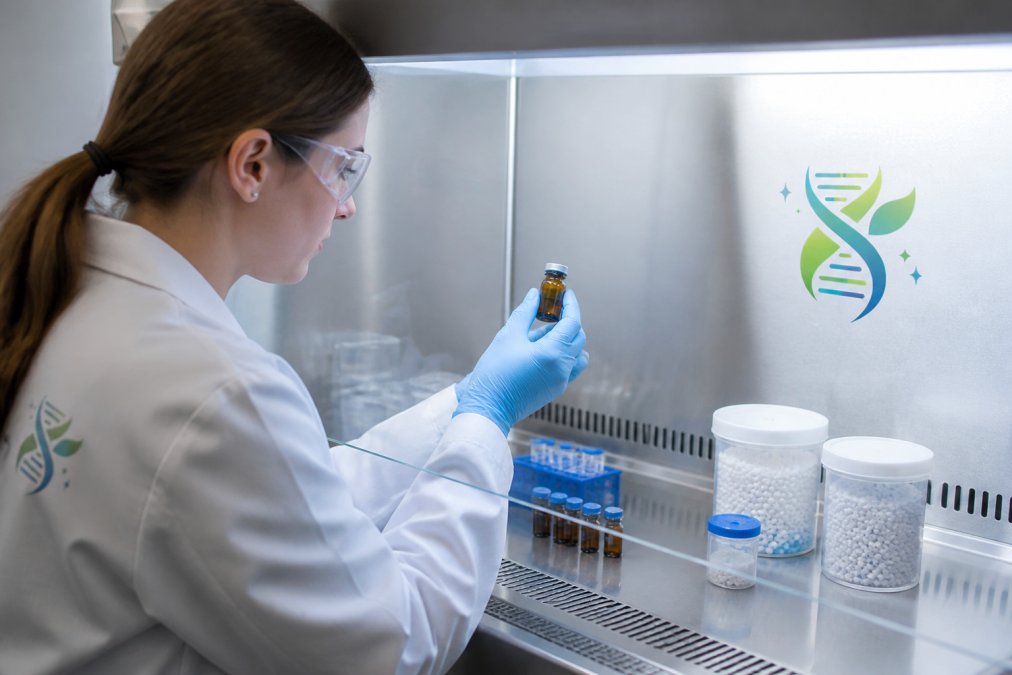
Moisture is the primary degradation pathway. Water molecules attack peptide bonds through hydrolysis, a process that accelerates with temperature. Even in frozen storage, trace moisture can cause slow degradation over months.
Prevent moisture ingress with proper sealing, crimp seals, and desiccant packets.
Light exposure and oxidation
Handling stress and freeze-thaw cycles
Visual degradation indicators: recognising compromised peptides
Equipment calibration: verifying your freezer temperature
Frequently Asked Questions
How long can research peptides remain stable without refrigeration?
Lyophilised peptides stored in dry conditions at room temperature may remain stable for limited periods, but most laboratory guidelines recommend -20°C or colder for long-term preservation to slow degradation. Reconstituted peptides are far more vulnerable and typically remain stable for only 30 to 60 days when stored at refrigeration temperatures of 35-46°F (2-8°C). Unrefrigerated reconstituted peptides degrade rapidly due to hydrolysis and microbial growth.
What is the difference between storing lyophilised and reconstituted peptides?
Lyophilised peptides are dry and far more stable, remaining viable for approximately 12 months at -20°C and several years when stored at -80°C. Reconstituted peptides are dissolved in solution and much more susceptible to degradation through hydrolysis, oxidation, and microbial contamination. Reconstituted peptides require refrigeration at 2-8°C and have a much shorter usable window of 30 to 60 days. Always reconstitute only the amount you need immediately.
How does freeze-thaw cycling affect peptide stability?
Repeated freeze-thaw cycles cause protein aggregation and structural damage to peptides. Each cycle exposes the peptide to thermal fluctuations that can break down molecular bonds and reduce solubility. To minimise this risk, aliquot your reconstituted peptides into smaller portions before freezing, so you can thaw only what you need for a single experiment. Avoid returning unused thawed peptide to the freezer.
Why is desiccant important for peptide storage?
Peptides are hygroscopic, meaning they absorb moisture from the air. Excess moisture triggers hydrolysis and degradation, reducing potency and introducing impurities. Desiccant packets or silica gel in storage containers absorb ambient moisture, maintaining a dry environment inside the vial. This is especially critical for long-term storage of lyophilised peptides. Replace desiccant periodically and store peptides in airtight, sealed vials to prevent moisture infiltration.