 ultimate-guide
The Complete Guide to Peptide Concentration and Draw Volume
Last Updated: October 26, 2026
Quick Summary
Peptide concentration draw volume refers to the relationship between how much peptide is dissolved in solution (concentration) and how much of that solution you extract with a syringe or pipette (draw volume). Together, they determine the actual mass of peptide you obtain: multiplying concentration by draw volume gives you the peptide mass removed from the vial.
- Mass concentration is expressed as mg/mL; molar concentration accounts for molecular weight and is expressed as mM or µM.
- The dilution equation C1V1 = C2V2 calculates how much stock solution to draw when preparing a working solution of lower concentration.
- Dead volume in needles and syringes (typically 0.2-3 µL) reduces the volume actually delivered and must be accounted for in high-accuracy work.
- Always convert all volumes to a single unit (mL or µL) before applying concentration formulas to avoid order-of-magnitude errors.
- Record the mass weighed, final volume prepared, reconstitution date, and instrument tolerances alongside every calculation for reproducibility and troubleshooting.
Table of Contents
- What Peptide Concentration and Draw Volume Actually Mean
- Concentration Units and How to Interpret Them
- Peptide Concentration Calculation: Working Through the Maths
- Peptide Syringe Units Explained
- Peptide Vial Reconstitution and Sample Preparation
- Peptide Storage and Handling for Consistent Results
- Getting Started with Your Peptide Research
- Frequently Asked Questions
What Peptide Concentration and Draw Volume Actually Mean
Peptide concentration is the amount of peptide solute dissolved in a given volume of solution, expressed as mass per unit volume (mg/mL) or molar concentration (moles per litre). Understanding peptide concentration and draw volume is essential for reproducible research: the peptide concentration draw volume relationship determines both how much peptide is present and how much solution you extract.
The distinction matters because a vial's label concentration is not the same as what ends up in your syringe or analytical instrument. According to tutorial review for peptide assays, circulating peptide hormones are mostly present at concentrations in the 0.1-100 picomolar range in biological samples, which illustrates why precision in measuring both concentration and volume is critical for research.
Accurate peptide concentration and draw volume calculations are important for reproducible experiments. Misunderstanding either can lead to dosing errors, failed experiments, or wasted compounds.
Concentration Units and How to Interpret Them
Peptide concentration can be expressed in several ways, and each unit conveys different information.
Mass concentration tells you the weight of peptide per unit volume: a 10 mg/mL solution contains 10 milligrams per millilitre. It is practical for direct dosing and often printed on vial labels.
Molar concentration accounts for the peptide's molecular weight. One mole contains Avogadro's number of particles (6.022 × 10²³), so a 1 mM solution contains one thousandth of a mole per litre.
Converting between these requires knowing the peptide's molecular weight. For example, a peptide with a molecular weight of 1,000 Daltons at 10 mg/mL equals approximately 10 millimolar. The relationship is:
Molarity (M) = (Mass concentration in mg/mL × 1,000) / Molecular weight (Daltons)
Picomolar (pM) and nanomolar (nM) concentrations are used when discussing extremely dilute solutions, particularly in assay development and receptor binding studies. Research from quantitative analysis of peptides and proteins in biomedicine describes deriving peptide concentrations from peak areas in mass spectrometry, where such dilute concentrations are common.
Peptide Concentration Calculation: Working Through the Maths
Calculating peptide concentration requires three pieces of information: the mass of peptide, the volume of solvent, and the molecular weight. The core formula is:
Concentration (mg/mL) = Mass of peptide (mg) / Volume of solution (mL)
The maths only becomes reliable when you check units at every step and document your assumptions. Below are two worked examples with unit checks, followed by a checklist for verifying a vial label.
Worked example 1: Mass concentration from reconstitution
Suppose you have a vial containing 5 mg of lyophilised peptide. You add 2.5 mL of sterile water.
Step 1, Confirm units: the vial states 5 mg and you added 2.5 mL, so no conversion is needed.
Now suppose you need to prepare 500 µL of a 0.4 mg/mL working solution from that 2 mg/mL stock. Use the dilution equation C1V1 = C2V2:
- C1 = 2 mg/mL (stock)
- C2 = 0.4 mg/mL (target)
- V2 = 500 µL = 0.5 mL (target volume)
V1 = (C2 × V2) ÷ C1 = (0.4 × 0.5) ÷ 2 = 0.1 mL = 100 µL.
So you draw 100 µL of stock and add 400 µL of buffer.
Worked example 2: Molar concentration from mass concentration
Suppose your peptide has a molecular weight of 1,500 Daltons and you have prepared a 5 mg/mL solution. What is the molar concentration?
Step 1, Convert to grams per litre: 5 mg/mL = 5,000 mg/L = 5 g/L.
If your vial label states 100 µg/mL and you need molarity, first convert micrograms to milligrams (100 µg/mL = 0.1 mg/mL), then apply the same steps.
Verifying what a concentration label actually means
A label that says "5 mg" may mean 5 mg total in the vial, 5 mg per mL of reconstituted solution, or 5 mg per dose, each interpretation changes your calculation. Before you calculate, confirm:
- Total mass vs. concentration. If the label states total mass, you must know the reconstitution volume to derive concentration.
- Mass per volume vs. amount per volume. Is the unit mg/mL (mass concentration) or mM/µM (molar concentration)? They are not interchangeable without molecular weight.
- Salt form and purity. A label stating 5 mg may refer to peptide content or total vial content including counter-ions and residual moisture. If purity is 95%, the actual peptide mass is lower than the gross weight.
Sources of measurement uncertainty
Even a correct formula produces an approximate result because every measurement carries uncertainty. The main contributors are:
- Balance accuracy. Weighing 5 mg on a balance with ±0.1 mg accuracy is a 2% uncertainty before you even add solvent.
- Incomplete dissolution. Undissolved material on the vial wall means the nominal concentration overstates the dissolved concentration.
- Pipette accuracy. Air-displacement pipettes are accurate to 1-2% at nominal volume but less so near the low end of their range; using a 100 µL pipette to deliver 10 µL multiplies the relative error.
A practical rule is to choose instruments so that the smallest volume you measure is no less than 10% of the instrument's maximum capacity, and to record the stated tolerance of each instrument alongside your calculation. simple peptide quantification approach for MS-based proteomics describes limitations of standard quantification approaches, underscoring why transparent documentation of your methods, including instrument tolerances, is essential.
Documentation is critical: record the mass weighed, final volume prepared, reconstitution date, any dilutions, and instruments used. This trail lets you verify calculations later and troubleshoot when results do not match expectations.
Peptide Syringe Units Explained
When you draw peptide solution into a syringe, the barrel markings indicate millilitres (mL) or microlitres (µL): a 1 mL syringe typically has graduations at 0.1 mL intervals, a 100 µL syringe at 10 µL intervals.
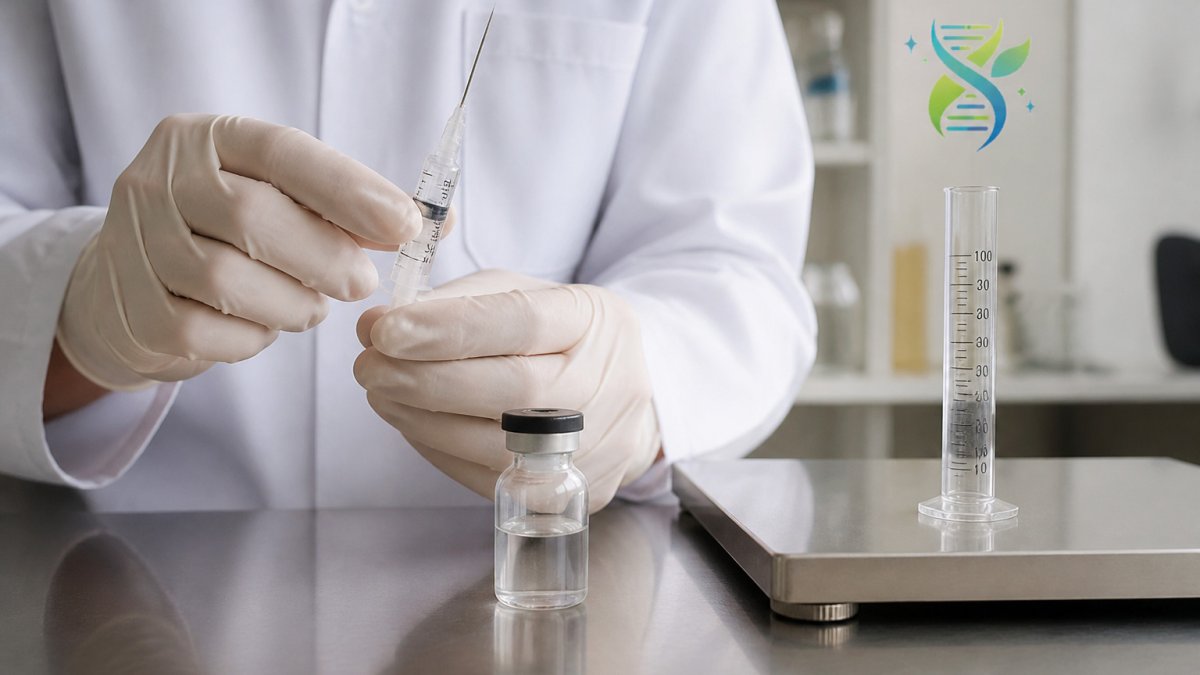
If your solution is 10 mg/mL and you draw 100 µL (0.1 mL), you are removing 1 milligram of peptide (0.1 mL × 10 mg/mL = 1 mg).
Three different meanings of "draw volume"
The phrase "draw volume" is used in three distinct contexts, and mixing them up causes confusion:
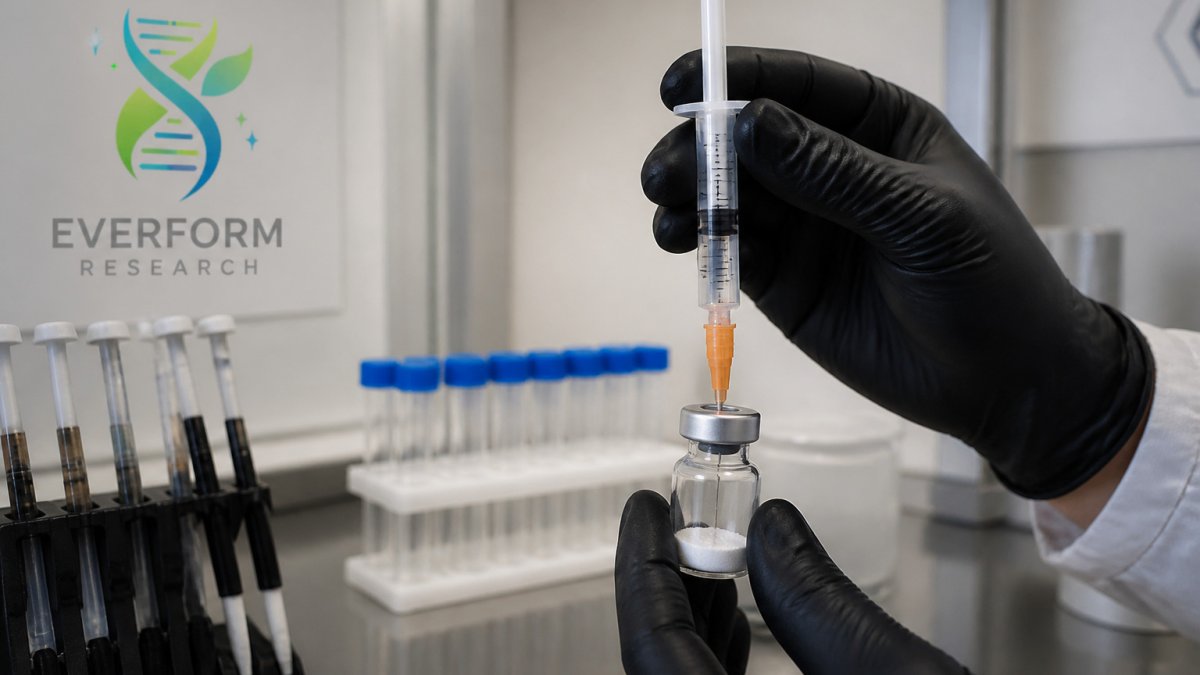
- Laboratory draw volume. The volume you withdraw from a stock vial or tube with a syringe or pipette for a bench experiment, dilution, or aliquot. It determines how much peptide mass you remove, calculated as volume × concentration.
- Analytical sample or injection volume. The volume injected onto a liquid chromatography column or mass spectrometer, typically 1-20 µL for reversed-phase peptide analysis. It is chosen for column capacity and detector sensitivity, and does not change the sample's concentration.
- Dosing-related volume. In clinical or preclinical contexts, a volume calculated to deliver a target mass of peptide per body weight. This is outside the scope of laboratory sample handling and is governed by separate regulatory and safety requirements.
This guide concerns laboratory draw volume and analytical injection volume only; it must not be used for preparing substances for human use.
Syringe and needle dead volume
Dead volume is the liquid remaining in the needle and hub after the plunger is fully forward. A 27-gauge needle might retain 0.5-1 µL; an 18-gauge might retain 2-3 µL. For high-accuracy work, use calibrated, low-dead-volume syringes and needles, and prime the needle before delivering the target volume.
| Syringe Size | Typical Graduation Interval | Dead Volume (approx.) | Best Use |
|---|---|---|---|
| 1 mL | 0.1 mL | 0.5-1 µL | General laboratory work |
| 500 µL | 50 µL | 0.3-0.5 µL | Smaller volumes, higher precision |
| 100 µL | 10 µL | 0.2-0.3 µL | Microanalysis, minimal waste |
Choosing a draw volume that matches your downstream step
Before you draw, work backward from the analytical requirement, ensuring your peptide concentration draw volume calculation matches your downstream analytical needs.
In analytical work, injection volume and sample concentration together determine the mass on column. Doubling the injection volume doubles the mass on column without changing concentration, useful when a peak is too small, but it can overload the column.
Peptide Vial Reconstitution and Sample Preparation
Lyophilised (freeze-dried) peptides arrive as a powder in sealed vials. Reconstitution means dissolving that powder in an appropriate solvent, usually sterile water, phosphate-buffered saline (PBS), or a supplier-specified buffer, and it directly determines your final concentration. How to Reconstitute Lyophilized Peptides Step by Step provides detailed instructions for this process.
Add the exact volume of solvent stated in the product documentation.
Use aseptic technique: work in a clean, controlled environment, sterilise the rubber septum with an alcohol wipe, and use a sterile syringe and needle to draw and inject solvent.
After reconstitution, aliquot the solution into smaller sterile tubes if you won't use it all at once. This reduces the risk of contamination and oxidation each time you access the vial.
Peptide Storage and Handling for Consistent Results
Peptide stability depends on temperature, light, pH, and the presence of proteolytic enzymes or oxidising agents.
Store lyophilised peptides in a cool, dry place, ideally at 2-8 °C or in a freezer at -20 °C or colder.
For reconstituted solutions, add a preservative if recommended (for example, 0.1% sodium azide for long-term storage at 4 °C) and store in sterile, airtight containers.
For reproducible results, maintain consistent storage conditions and handle vials minimally. Guidance on achieving reproducible results with peptides, best practices for peptide storage, and ideal temperature for peptide storage are available on our site.
Getting Started with Your Peptide Research
Understanding peptide concentration and draw volume is the first step towards confident, reproducible work. Read your product documentation carefully.
When you prepare your first experiment, calculate your draw volumes in writing and show your units at each step; if uncertain, double-check with a colleague.
Everform Research is committed to third-party quality testing and transparent documentation.
Ready to source peptides you can trust? Shop compounds from Everform Research and use code EVER15 for 15% off your first order.
Frequently Asked Questions
What does peptide concentration mean?
Peptide concentration describes how much peptide solute is dissolved in a given volume of solution. It's expressed as mass per volume (milligrams per millilitre) or molar concentration (moles per litre). For research applications, circulating peptide hormones typically exist in the 0.1-100 picomolar range, though laboratory stock solutions are much more concentrated. The concentration label on your vial is relevant to calculating how much solution to draw to obtain a target amount.
How do you calculate peptide concentration after reconstitution?
Start with the mass of peptide in your vial and the final volume after reconstitution. Divide mass (in milligrams) by final volume (in millilitres) to get mass concentration in mg/mL. For molar concentration, divide the number of moles by the final volume in litres. Always verify your calculations by checking units: moles ÷ litres = molarity; milligrams ÷ millilitres = mass concentration. Document your reconstitution volume carefully, as even small deviations affect the final concentration and your draw volume calculations.
How are peptide concentration and draw volume related?
Draw volume is the amount of solution you remove from a vial to obtain a specific amount of peptide. If you know the concentration and the amount you need, you can calculate draw volume using this formula: draw volume = desired amount ÷ concentration. For example, if your solution is 10 mg/mL and you need 5 mg, you draw 0.5 mL. Higher concentration solutions require smaller draw volumes; lower concentrations require larger volumes. Precision in both concentration measurement and draw volume is critical for reproducible research results.
What information do you need to calculate a peptide draw volume?
You need three pieces of information: the known concentration of your solution (from the product label or your reconstitution calculation), the amount of peptide you require (in the same units as concentration), and the measurement tool you're using (syringe with marked graduations). Ensure all units match before calculating. For example, if concentration is in mg/mL, your required amount must also be in milligrams. Keep a record of your reconstitution details and any dilutions made, as this documentation supports accurate calculations and troubleshooting if results don't match expectations.
What common mistakes can affect peptide concentration calculations?
The most frequent errors are unit mismatches (mixing milligrams with micrograms, or millilitres with microlitres), failing to account for dilutions made after reconstitution, and not verifying the final volume after reconstitution. Adsorption during sample preparation, particularly during ultrafiltration, can also reduce the actual peptide amount, making your calculated concentration inaccurate. Always double-check unit conversions, document every step of sample preparation, and consider that sample-preparation losses mean a calculated concentration should not be treated as analytically verified without independent measurement.
How should reconstituted peptides be stored and handled?
Follow the product-specific storage instructions on your certificate of analysis, as storage requirements vary by peptide type and formulation. Most reconstituted peptides should be stored at the temperature specified by the manufacturer to preserve stability. Use sterile, appropriate containers and label them clearly with the peptide name, concentration, reconstitution date, and expiry date. Minimise exposure to light and air, and avoid repeated freeze-thaw cycles unless the product guidance permits them. Proper storage and handling directly affect your results, so treat documentation and temperature control as part of your experimental protocol.
Why is third-party testing important for peptide concentration accuracy?
Third-party testing can provide quality information about peptide products. When sourcing peptides, consider the available quality documentation as part of your research decisions.
Peptide concentration and draw volume calculations form the backbone of reliable research. By mastering these fundamentals, you'll avoid costly errors, improve reproducibility, and gain confidence in your results. Whether you're new to peptide work or refining your protocols, accurate measurement and clear documentation are your best tools for success.