 comparison
Nationwide Peptides Alternatives for Researchers
Table of Contents
- Why Researchers Are Seeking Alternatives to Nationwide Peptides
- Key Criteria for Evaluating Peptide Suppliers
- How to Read a Certificate of Analysis for Peptides
- Third-Party Testing Requirements for Research Chemicals
- Best Practices for Peptide Storage and Handling
- Verified Alternatives to Nationwide Peptides
- Making Your Switch: Transition Considerations
- Conclusion
Last Updated: August 18, 2026
Why Researchers Are Seeking Alternatives to Nationwide Peptides
The peptide research landscape has shifted dramatically. Nationwide Peptides alternatives for researchers have become essential as labs demand transparency, quality verification, and reliable supply chains. The U.S. peptide synthesis market was valued at USD 239.15 million in 2025 and is expected to reach USD 563.82 million by 2035, growing at a CAGR of 8.99%, according to SNS Insider's U.S. Peptide Synthesis Market Report. This explosive growth reflects surging demand for high-purity compounds and rising standards for supplier verification.
The real catalyst for change came in 2026. FDA enforcement against research peptide vendors increased over 300% between 2024 and 2026, particularly targeting GLP-1 analogues. Peptide Sciences, a major supplier many researchers relied on, shut down on March 6, 2026, without warning. Independent testing by Janoshik Analytical revealed quality inconsistencies across their catalogue, with retatrutide failing grades in 37 tested samples between December 2024 and March 2026, including at least one counterfeit detection.
Researchers now understand that "peptide supplier" means a partner who can demonstrate rigorous third-party testing, batch-specific Certificates of Analysis, and transparent manufacturing standards. This guide examines why researchers are making the switch and which alternatives actually deliver.
Key Criteria for Evaluating Peptide Suppliers
Not all peptide suppliers are equal. Five measurable criteria separate suppliers worth your time from those that cut corners.
Third-party testing is non-negotiable. Batch-specific Certificates of Analysis (COAs) with HPLC chromatograms and mass spectrometry confirmation are the minimum standard for research-grade compounds. Triple third-party testing across independent certified labs sets the highest bar for purity confidence, according to BioLongevity Labs' 2026 Research Peptide Vendor Report.
Manufacturing transparency directly impacts reproducibility. cGMP-compliant facilities are baseline. Suppliers who document their manufacturing process and quality control checkpoints signal serious commitment to consistency.
Purity standards define what "high-quality" means. For research peptides used in receptor-binding studies, published literature sets the accepted threshold at greater than 95%. A supplier claiming 98% purity without specifying which impurities make up the remaining 2% is hiding information.
Batch consistency separates reliable suppliers from unreliable ones. Request historical COA data. A supplier confident in their process will provide this without hesitation.
Customer support and responsiveness matter more than most researchers admit. When you need clarification on a COA or technical guidance, you need someone who answers promptly.
| Evaluation Criterion | What to Look For | Why It Matters |
|---|---|---|
| Third-party testing | Independent HPLC + mass spec on every batch | Eliminates bias; proves actual purity |
| Manufacturing standards | cGMP-compliant facility with documented process | Ensures batch-to-batch consistency |
| Purity specification | >95% for research; detailed impurity profile | Guarantees reproducible experimental results |
| Batch stability data | Historical COA records showing consistency | Confirms supplier reliability over time |
| Customer support | Responsive to technical questions and and issues | Reduces troubleshooting time when problems arise |
How to Read a Certificate of Analysis for Peptides
A Certificate of Analysis is your window into compound quality. Learning to read a COA properly transforms it from a rubber stamp into actionable evidence.
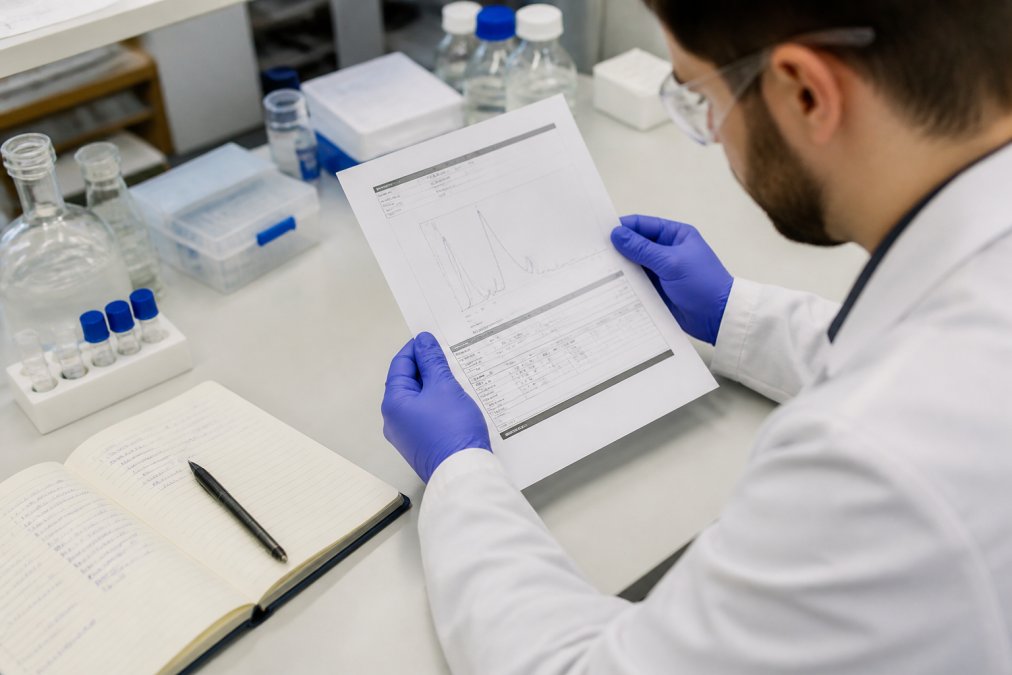
The header section tells you who tested what. Look for the testing lab's name, accreditation status, and analysis date. If the lab is unknown or the date is more than six months old, treat the COA with scepticism.
HPLC purity data is the centrepiece. The chromatogram shows peaks representing your peptide and impurities. The percentage next to the main peak is your purity figure. Mass spectrometry confirmation proves the peak is actually your peptide, not something else.
Mass spectrometry results provide identity confirmation. The molecular weight should match your peptide's theoretical weight within ±0.1%. A different weight means your compound is wrong.
Impurity profiles list what else is in the vial. Impurities above 0.5% are concerning for pharmaceutical-grade work. The key is knowing what's there.
Solubility and handling notes appear at the bottom. These tell you how the peptide behaves, whether it's hygroscopic, and any special handling requirements.
Third-Party Testing Requirements for Research Chemicals
Third-party testing separates legitimate suppliers from those cutting corners. Independent testing means a lab with no financial stake in the supplier's reputation conducts the analysis.
HPLC analysis measures purity by separating compounds and quantifying each component. A proper HPLC report includes the chromatogram, retention times, peak areas, and purity percentages.
Mass spectrometry confirmation verifies that the main peak is actually your peptide. A mass spec result matching your theoretical weight within ±0.1% proves identity.
Accreditation matters. Look for labs accredited by ISO/IEC 17025 or equivalent standards. This accreditation means an independent body has audited their methods, equipment, and quality control.
Nearly 58% of pharmaceutical companies in North America outsourced peptide synthesis operations to specialised CDMO providers during 2025, according to Peptide CDMO Market Size Forecast. This trend reflects growing demand for third-party quality assurance.
The most transparent suppliers publish COAs publicly. A supplier confident in their quality has nothing to hide.
Best Practices for Peptide Storage and Handling
How you store and handle peptides determines whether batch purity translates into experimental reproducibility.
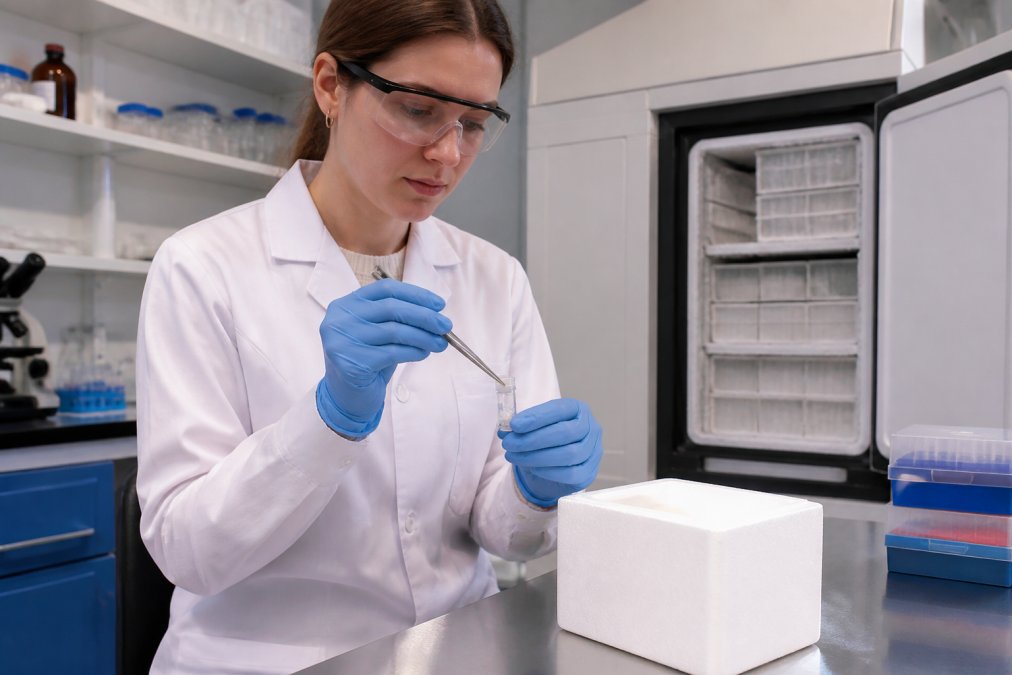
Temperature control is the first priority. Lyophilised peptides degrade fastest at room temperature. Store them at -20°C minimum; -80°C is better. A peptide stored at room temperature for a week may lose 5-10% purity.
Moisture is your enemy. Lyophilised peptides are hygroscopic. Store vials in a desiccator or use desiccant packets. Never open a vial at room temperature and leave it exposed.
Handling protocol prevents contamination. Use sterile technique whenever you open a vial. Wear gloves and use sterile pipette tips. Never touch the inside of the cap or vial opening.
Reconstitution matters. Use the solvent the supplier recommends. Different peptides have different solubility profiles. Prepare fresh solutions for time-sensitive experiments.
Documentation prevents confusion. Label every vial with the peptide name, lot number, date received, date opened, and storage location.
Verified Alternatives to Nationwide Peptides
The market for peptides alternatives for researchers has expanded significantly. Several suppliers now offer the transparency and quality verification that researchers demand.
Everform Research: Premium Quality with Transparent Verification
Everform Research stands out for uncompromising commitment to third-party verification and customer transparency. Every batch ships with a publicly accessible Certificate of Analysis independently verified by a USA-based laboratory using HPLC for purity analysis and mass spectrometry for identity confirmation.
The company's cGMP-compliant manufacturing ensures batch consistency that rivals pharmaceutical-grade production. Everform Research offers both lyophilised powder and pre-mixed solutions, accommodating different research workflows. Educational resources help researchers understand what they're reading and why it matters.
What distinguishes Everform Research is the philosophy behind their documentation. They don't just provide COAs, they explain them. This approach transforms a vendor relationship into a partnership where both parties understand quality standards.
Pros:
- Rigorous third-party testing with public COA access
- cGMP-compliant manufacturing for pharmaceutical-grade consistency
- Both lyophilised and pre-mixed options for flexibility
- Educational resources that help researchers understand quality standards
Cons:
- Pricing for pre-mixed products depends on quantity, dates, and delivery. Please check the Everform Research website for current prices or a quote.
Amino Asylum: Broad Catalogue with Independent Testing
Amino Asylum operates as a USA-based supplier emphasising third-party verification across a diverse product range. Every batch receives mass spectrometry and HPLC analysis with publicly accessible COAs.
The breadth of their catalogue appeals to labs requiring multiple compound types. Beyond peptides, Amino Asylum supplies SARMs and research chemicals, simplifying procurement for multi-disciplinary teams. cGMP-aligned manufacturing and fast shipping from the United States reduce lead times.
Pros:
- Independent mass spectrometry and HPLC verification on all batches
- Broad product catalogue beyond peptides
- cGMP-aligned manufacturing standards
- Fast shipping from USA-based operations
- Responsive customer support
Cons:
- Pricing requires browsing the shop, no upfront cost information
- Less emphasis on educational resources compared to Everform Research
Blue Sky Peptide: Affordability Meets Quality Standards
Blue Sky Peptide targets researchers prioritising cost-effectiveness without sacrificing quality assurance. The company provides Certificates of Analysis for all research products and emphasises USA manufacturing. A rewards programme returns money to repeat customers, effectively lowering long-term costs.
Positive customer reviews consistently highlight potency and shipping reliability. The trade-off is less emphasis on third-party testing transparency compared to premium alternatives. For budget-conscious labs, this represents acceptable risk.
Pros:
- Competitive bulk pricing
- USA-manufactured products
- Rewards programme reduces effective costs
- Positive track record for potency and shipping
- COA provided for all products
Cons:
- Less emphasis on third-party testing transparency
- Occasional shipping delays reported
- Limited information on manufacturing standards compared to competitors
Core Peptides: USA-Manufactured with High Purity Standards
Core Peptides delivers on a simple promise: USA-made peptides with purity exceeding 99%+. All synthesis and lyophilisation happens domestically, appealing to researchers prioritising supply chain control and regulatory compliance.
The comprehensive catalogue includes standard peptides, blends, and customisable orders. Third-party testing is confirmed, though COA access details aren't as prominently displayed as competitors. The ability to order customised peptides appeals to labs with specific research needs.
Pros:
- All USA synthesis and lyophilisation
- Purity exceeding 99%+
- Customised peptide orders available
- Competitive pricing with volume discounts
Cons:
- COA access details not as prominently displayed as premium competitors
- Specific testing methodology less transparent than alternatives
- Limited educational resources for researchers new to peptide sourcing
Making Your Switch: Transition Considerations
Switching peptide suppliers requires planning. Your experimental protocols were validated with your previous vendor's compounds. A new supplier's peptides, even at identical purity levels, may behave slightly differently due to manufacturing variations.
Run parallel batches during transition. Order from both your current supplier and your new alternative. Run the same experiment with both compounds. This validation step prevents surprises when you've already committed to a new supplier.
Document everything. Record which batch came from which supplier. Note any differences in solubility, handling, or experimental outcomes.
Start with non-critical experiments. Use the new supplier's compounds for preliminary work or pilot studies. Once you've confirmed reproducibility, move to your main research pipeline.
Communicate with your team. Notify other researchers about the supplier change. Share the quality assurance information to accelerate adoption.
Request historical data. Ask your new supplier for COAs from their last 10-20 batches of the specific peptides you use. Consistency across batches demonstrates reliability.
The transition typically takes 4-6 weeks from initial order to full validation.
Research institutions requiring maximum transparency: Everform Research's publicly accessible COAs and educational resources suit compliance-heavy environments.
Multi-disciplinary teams needing diverse compound types: Amino Asylum's broad catalogue simplifies procurement across research disciplines.
Labs prioritising domestic manufacturing: Core Peptides' USA-based synthesis appeals to researchers with supply chain requirements.
Conclusion
The shift toward peptides alternatives for researchers reflects a fundamental change in how labs evaluate suppliers. Transparency, third-party verification, and batch consistency are no longer premium features, they're baseline expectations. The market has responded with suppliers who embrace rigorous testing and documentation.
Nationwide Peptides alternatives now include options that match or exceed the quality standards of legacy suppliers whilst offering superior transparency. Everform Research leads this category with uncompromising third-party verification and cGMP-compliant manufacturing that delivers enhanced consistency across batches and increased trust through transparency. Their commitment to dependable quality for research applications makes them the strongest choice for labs where reproducibility determines outcomes.
The decision ultimately depends on your specific priorities. Budget-conscious labs benefit from Blue Sky Peptide's competitive pricing. Labs requiring maximum documentation transparency should prioritise Everform Research. Researchers needing diverse compound types find value in Amino Asylum's broad catalogue. Those prioritising domestic manufacturing should consider Core Peptides.
Whichever alternative you choose, the transition represents an upgrade, a move toward suppliers who understand that research depends on trust, transparency, and consistent quality. Your experiments deserve that standard.
Shop Compounds and use code EVER15 for 15% off your first order at Everform Research and experience the difference that rigorous third-party testing and transparent quality standards make in your research outcomes.
Frequently Asked Questions
What should researchers look for when choosing a peptide supplier?
Prioritise suppliers offering batch-specific Certificates of Analysis with HPLC chromatograms and mass spectrometry confirmation. Verify third-party testing from independent certified laboratories, confirm cGMP-compliant manufacturing, and check for documented purity standards exceeding 95% for research applications. Request proof of regulatory compliance and review the supplier's track record for batch consistency. A transparent supplier will provide access to all analytical documentation and respond promptly to technical questions about their synthesis methodology and quality assurance processes.
Why is third-party testing important for research peptides?
Third-party testing by independent laboratories eliminates conflicts of interest and provides objective verification of purity, identity, and impurity profiles. Research-grade peptides require documented purity above 95% for reliable receptor-binding and quantitative biological studies. Independent verification using HPLC analysis and mass spectrometry confirms that the peptide matches its stated molecular weight and sequence, and identifies any insertion, deletion, or double-hit impurities that could compromise your experimental results. This documentation protects the integrity of your research and ensures reproducibility across batches.
How do I verify that a peptide supplier's third-party testing is actually independent?
Ask the supplier to name the independent laboratory conducting their testing and request the accreditation credentials, typically ISO/IEC 17025 certification. Legitimate third-party labs maintain publicly searchable accreditation records. Request batch-specific COAs that include the testing laboratory's contact details and signature. Cross-reference the lab's website to confirm it operates independently from the peptide manufacturer. Reputable suppliers like Everform Research publish their COAs publicly and can provide documentation proving the testing laboratory is USA-based and certified, eliminating any ambiguity about the independence of their quality verification.
What is the difference between lyophilised and pre-mixed peptide solutions?
Lyophilised peptides are freeze-dried powders that require reconstitution with a solvent before use, offering longer shelf stability and lower cost per unit. Pre-mixed solutions arrive ready to use, eliminating reconstitution steps and reducing handling errors, but typically cost more due to the preparation labour and shorter stability window. For high-throughput screening or time-sensitive experiments, pre-mixed solutions reduce variables. For long-term storage or budget-conscious research, lyophilised powder is more economical. Both formats should come with documented stability data and clear handling instructions to maintain purity and biological activity.
Switching to a new peptide supplier requires confidence that quality standards are genuinely met. Everform Research removes that uncertainty through publicly accessible Certificates of Analysis, cGMP-compliant manufacturing, and responsive customer support. Your research reproducibility depends on compound consistency, invest in a supplier that delivers it.
This article was written using GrandRanker