 blog
blog
Peptide for Sale: Quality Standards & Sourcing Guide
Table of Contents
- Understanding Peptide Quality When Buying Peptides for Sale
- Third-Party Peptide Testing: Your Assurance of Authenticity
- Reading and Verifying Your COA for Peptides
- Peptide Storage and Handling: Maintaining Integrity
- Safety and Regulatory Compliance for Research Peptides
- Custom Peptide Synthesis and Catalog Options
- Finding a Trustworthy Peptide Supplier
- Conclusion
Last Updated: August 29, 2026
Understanding Peptide Quality When Buying Peptides for Sale
When sourcing peptide for sale, quality isn't negotiable. The difference between research-grade and substandard compounds determines whether you achieve reproducible results or waste months of work. Most assume that a website and certificate of analysis signal legitimacy, but half of people taking research-grade peptides mistakenly believe the compounds are FDA-approved, when the regulatory landscape remains fragmented and confusing (honehealth.com).
What separates trustworthy peptide for sale from the rest: documentation, testing, consistency, and transparency.
What Makes a Peptide Research-Grade
Research-grade peptides are synthesised to specific purity and quality standards for laboratory use. The term doesn't mean FDA-approved; it means the peptide meets defined specifications for identity, purity, and potency. A 95% pure peptide performs measurably worse than 98% pure in most assays, making that 3% difference in contamination a critical factor affecting your results.
Research-grade peptides carry documentation including a certificate of analysis, manufacturing date, and storage recommendations. They're synthesised using solid phase peptide synthesis, then purified using HPLC or chromatography techniques, with purity verified through mass spectrometry.
The Role of Purity Standards in Your Decision
Purity standards determine whether a peptide for sale will work reliably in your experiments. Most research applications require minimum 95% purity, whilst structural biology and crystallography often demand 98%+ (peer-reviewed research). Contamination becomes a confounding variable that can invalidate months of work. When evaluating peptide for sale, ask directly: what's the minimum purity threshold guaranteed? Reputable suppliers state this clearly and back it with third-party testing data.
Third-Party Peptide Testing: Your Assurance of Authenticity
Independent testing is the only reliable way to verify that the peptide for sale matches its label.

Why Independent Testing Matters
Third-party testing removes the conflict of interest. Mislabelling, subthreshold purity, and incorrect dosing are common enough that independent verification is essential. When you buy peptide for sale from a vendor using third-party testing, you're getting accountability. If tested purity doesn't match the label, you have recourse.
HPLC and Mass Spectrometry in Peptide Verification
HPLC (High-Performance Liquid Chromatography) and mass spectrometry are the gold standard for peptide characterisation. HPLC separates the peptide from contaminants and measures the percentage of your target compound. Mass spectrometry confirms molecular weight and sequence identity. For custom peptides, this is critical, a single amino acid substitution changes the molecular weight and can completely alter biological activity.
Reading and Verifying Your COA for Peptides
A Certificate of Analysis is your proof of purchase and legal protection. Learning to read a COA separates informed buyers from those taking unnecessary risks.
What a Complete Certificate of Analysis Should Contain
A legitimate COA for peptides includes:
- Batch number and synthesis date - Allows tracking the peptide's age and manufacturing run
- Peptide sequence and molecular weight - Confirms you received what you ordered
- Purity percentage (HPLC) - Should state a specific number, not a range
- Testing method details - HPLC, mass spectrometry, or both
- Testing lab name and contact information - Allows independent verification
- Storage recommendations - Temperature, light exposure, humidity guidance
- Expiration or stability data - When the peptide degrades or loses potency
- Lot-specific data - Actual results from your batch, not generic product information
A complete COA is typically 1-2 pages. When you receive a COA, cross-check the batch number against your invoice and verify the molecular weight matches the peptide sequence. Contact the testing lab to confirm they performed the analysis.
Batch Testing and Molecular Weight Confirmation
Batch testing ensures every vial from a production run meets the same standards. Your peptide should have a specific molecular weight based on its amino acid sequence. Mass spectrometry measures this directly. If the measured weight doesn't match the expected weight within 0.1%, something is wrong.
Peptide Storage and Handling: Maintaining Integrity
A high-quality peptide for sale will degrade if stored incorrectly. Proper storage is the difference between a stable compound and a worthless vial.
Temperature, Lyophilisation, and Long-Term Stability
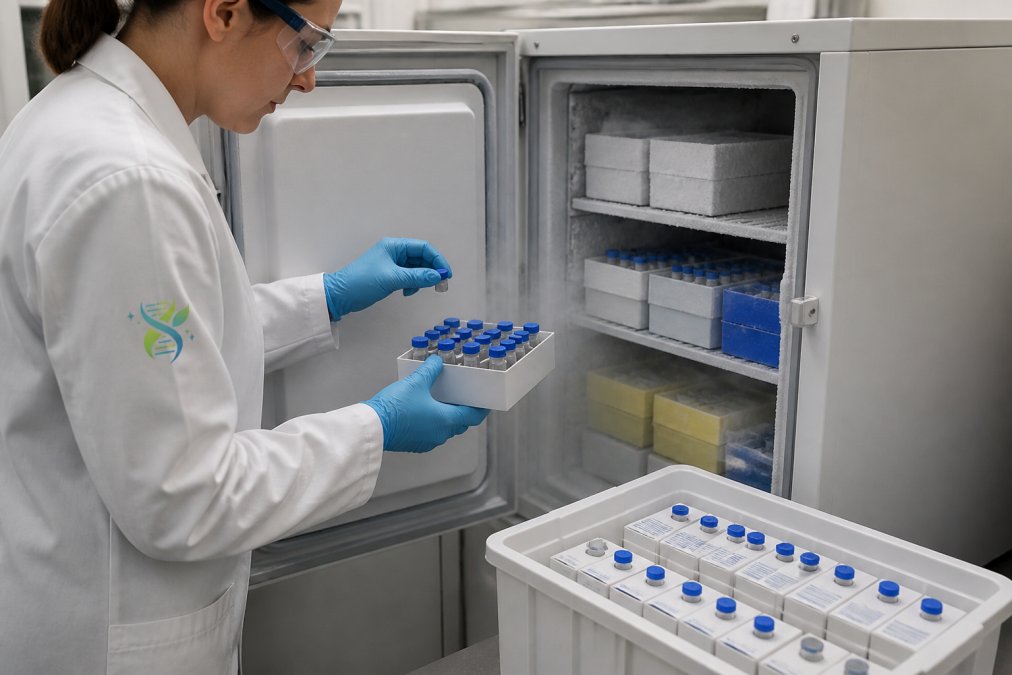
Most peptides are shipped as lyophilised powder, freeze-dried to remove water and extend shelf life. The enemies of peptide stability are heat, light, and moisture. Store lyophilised peptides at minus-20 degrees Celsius or colder. At room temperature, most peptides degrade within weeks. Avoid freeze-thaw cycles; every thaw causes some degradation. Light exposure accelerates degradation, so store peptides in opaque or amber vials, away from direct sunlight.
Reconstitution Best Practices for Biologically Active Peptides
Reconstituting a lyophilised peptide requires care. Start with sterile water or a buffer recommended by the supplier. Add water slowly to the lyophilised powder, then let it sit for 10-15 minutes without agitation. For biologically active peptides, pH matters. Most are stable at neutral pH (7.0-7.4). Phosphate-buffered saline (PBS) is a safe choice for most applications.
After reconstitution, store the solution at 4 degrees Celsius if you'll use it within a week. For longer storage, add glycerol (20-50% final concentration) as a cryoprotectant and freeze at minus-20 degrees or colder.
Safety and Regulatory Compliance for Research Peptides
The regulatory landscape for peptide for sale is complex and often misunderstood. Understanding the difference between research-grade and medical-grade peptides protects you legally and scientifically.
Understanding 'Research-Grade' vs Medical-Grade Designations
Research-grade peptides are explicitly not approved for human use. They're sold "for research purposes only." This label has legal meaning under the Federal Food, Drug, and Cosmetic Act. A compound marketed for human consumption is classified as a drug, regardless of its purity or quality. Medical-grade peptides follow pharmaceutical manufacturing standards, undergo clinical trials, and receive regulatory approval before sale. GLP-1 medicines alone accounted for about $132 billion, or roughly 14%, of all U.S. prescription drug spending in 2025, illustrating the scale of the approved peptide market.
For research applications, research-grade peptides are appropriate and standard. For any human use, medical-grade compounds are the only legal and ethical choice.
cGMP Manufacturing and Documentation Standards
cGMP stands for Current Good Manufacturing Practice. It's a set of standards enforced by the FDA that govern how pharmaceuticals and certain research compounds are manufactured. cGMP compliance ensures consistency, quality, and traceability across batches. A peptide for sale manufactured under cGMP standards has been produced in a facility meeting strict requirements for equipment calibration, environmental controls, personnel training, documentation, and quality assurance testing.
Custom Peptide Synthesis and Catalogue Options
When sourcing peptide for sale, you have two paths: buy from a catalogue of pre-made peptides or commission custom synthesis.
Choosing Between Off-the-Shelf and Custom Synthesis
Catalogue peptides are pre-synthesised compounds available for immediate shipment. They're cheaper because manufacturing cost is spread across multiple buyers. Custom synthesis gives you complete control over the sequence, modifications, and specifications. Custom synthesis takes longer (typically 2-4 weeks) and costs more per peptide, but it's essential for novel research or proprietary compounds. Whether you buy a catalogue peptide for sale or a custom-synthesised compound, demand third-party testing and a complete COA.
Amino Acid Derivatives and Sequence Verification
Modern peptide synthesis allows incorporation of modified amino acids and non-standard building blocks. When you order a custom peptide for sale with modifications, sequence verification becomes critical. Mass spectrometry confirms that the final peptide contains exactly the amino acids you ordered, in the correct order, with the correct modifications.
Finding a Trustworthy Peptide Supplier
The peptide market is growing rapidly. The U.S. peptide therapeutics market generated USD 87,315.5 million in revenue in 2025, and is projected to reach USD 199,806.7 million by 2033 (grandviewresearch.com). This growth has attracted both legitimate manufacturers and opportunistic operators.
Key Indicators of Supplier Reliability and Transparency
A trustworthy peptide supplier demonstrates several consistent behaviours:
- Publishes complete COAs with third-party testing data
- Lists the testing lab's name and and contact information
- Provides batch-specific data, not generic product information
- Responds quickly to questions about manufacturing or testing
- Offers documentation of cGMP compliance or manufacturing standards
- Maintains consistent inventory and doesn't oversell
- Accepts returns or replacements for batches that fail verification
Red flags include: vague COAs with missing data, reluctance to identify the testing lab, generic COAs applied to all batches, slow or evasive customer service, and pricing that seems too good to be true.
Batch Consistency and Track Record in Your Field
Ask potential suppliers for references. Have they worked with research groups in your field? A supplier with a track record in your specific application area has solved problems you'll likely face. Batch consistency matters. Ask directly: What's your batch-to-batch coefficient of variation for purity? Most reliable suppliers should be under 2-3%.
The peptide market is maturing, and standards are rising. Regulatory bodies are moving towards requiring physician-prescribed peptides from regulated compounding pharmacies, where standards for purity, dosing, and sterility are enforced.
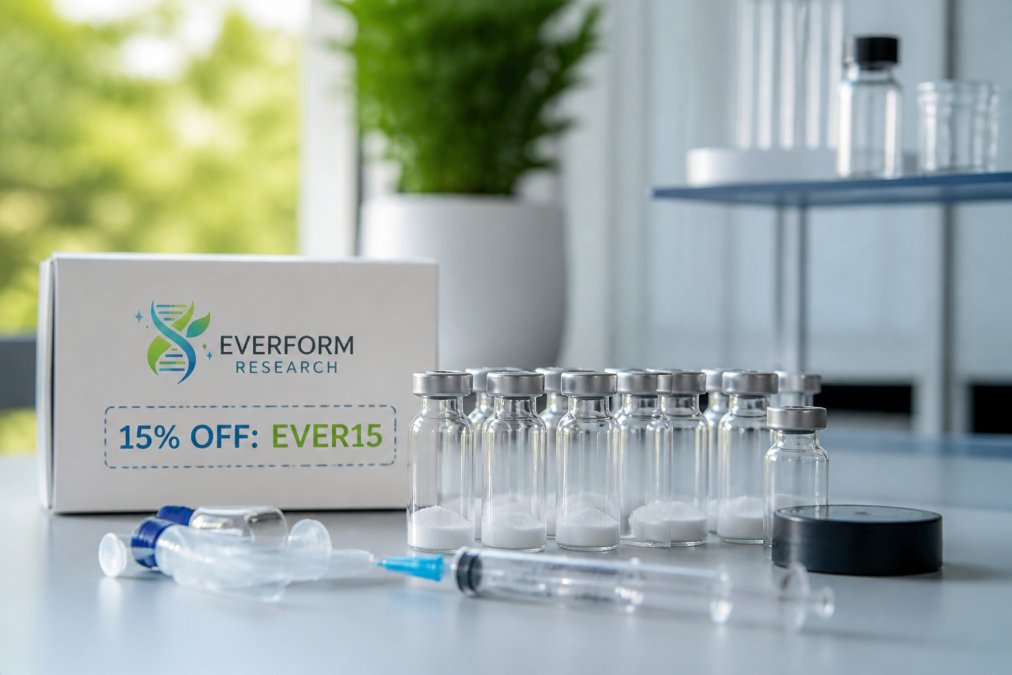
When you buy peptide for sale, you're making a choice about quality, accountability, and risk. Everform Research provides third-party tested peptides backed by cGMP manufacturing, complete documentation, and responsive support. Every peptide we sell is verified for identity and purity before it leaves our facility.
Use code EVER15 for 15% off your first order at Everform Research. Shop our verified peptide compounds and experience the difference that rigorous quality standards make.
| Peptide for Sale Evaluation Criteria | What to Look For | Red Flag |
|---|---|---|
| Certificate of Analysis | Third-party lab name, specific purity %, molecular weight | Missing lab info, vague ranges, supplier's own lab only |
| Testing Methods | HPLC + mass spectrometry for custom peptides | HPLC data only, no mass spec for modified peptides |
| Storage Recommendations | Specific temperature, desiccant requirements, stability timeline | Generic "keep cool and dry" with no specifics |
| Batch Documentation | Batch number, synthesis date, lot-specific test results | Generic product sheet used for all batches |
| Supplier Response | Quick answers, willingness to verify claims, references available | Evasive answers, reluctance to provide documentation |
=== FAQ ANSWERS (audit these too, same rules) ===
[1] Q: Why is third-party peptide testing essential when sourcing peptides for sale? A: Third-party peptide testing provides independent verification of purity, identity, and potency. A 2026 Hone Health survey found that half of people using research-grade peptides didn't realise their compounds lacked FDA approval. Independent testing via HPLC and mass spectrometry confirms the peptide matches its stated sequence and purity level. Without it, you risk inconsistent results, failed experiments, and wasted resources. Suppliers offering transparent, verifiable COAs from accredited labs demonstrate commitment to quality that 'research use only' labels alone cannot guarantee.
[2] Q: What should I look for in a COA for peptides before purchasing? A: A complete certificate of analysis should include the peptide's molecular weight, sequence verification, purity percentage (typically 95%+ for research-grade), batch number, testing date, and the name of the third-party laboratory that performed the analysis. Check that the COA isn't just a document the supplier created, verify the lab independently. Request lot-specific data, not generic range data, to ensure batch consistency for reproducible experiments.
[3] Q: How should I store and handle peptides to maintain their biologically active properties? A: Lyophilised peptides should be stored at -20°C or below in a freezer, away from moisture and light. Once reconstituted with an appropriate buffer, most peptides remain stable for 1-2 weeks at 4°C and several months at -20°C. Avoid repeated freeze-thaw cycles, which degrade peptide integrity. Use sterile, pyrogen-free water or buffer solutions for reconstitution. Keep detailed records of storage conditions and reconstitution dates. Proper peptide storage and handling directly affects the reproducibility of your research, inconsistent storage is a common cause of failed experiments and batch-to-batch variability.
[4] Q: What's the difference between research-grade and medical-grade peptides, and does it matter for my purchase? A: Research-grade peptides are synthesised for laboratory use and are not intended for human consumption or clinical application. Medical-grade peptides are manufactured under stricter FDA oversight and are approved for therapeutic use. Research-grade peptides may lack the same level of sterility testing, endotoxin removal, and regulatory documentation. However, 'research use only' labelling does not provide legal protection if the peptide is marketed or intended for human use, the Federal Food, Drug, and Cosmetic Act defines a drug by its intended use, not its label. Always verify your supplier's manufacturing standards and compliance documentation before purchase.
Frequently Asked Questions
Q: Why is third-party peptide testing essential when sourcing peptides for sale?
A: Third-party peptide testing provides independent verification of purity, identity, and potency. A 2026 Hone Health survey found that half of people using research-grade peptides didn't realise their compounds lacked FDA approval. Independent testing via HPLC and mass spectrometry confirms the peptide matches its stated sequence and purity level. Without it, you risk inconsistent results, failed experiments, and wasted resources. Suppliers offering transparent, verifiable COAs from accredited labs demonstrate commitment to quality that 'research use only' labels alone cannot guarantee.
Q: What should I look for in a COA for peptides before purchasing?
A: A complete certificate of analysis should include the peptide's molecular weight, sequence verification, purity percentage (typically 95%+ for research-grade), batch number, testing date, and the name of the third-party laboratory that performed the analysis. Check that the COA isn't just a document the supplier created, verify the lab independently. Request lot-specific data, not generic range data, to ensure batch consistency for reproducible experiments.
Q: How should I store and handle peptides to maintain their biologically active properties?
A: Lyophilised peptides should be stored at -20°C or below in a freezer, away from moisture and light. Once reconstituted with an appropriate buffer, most peptides remain stable for 1-2 weeks at 4°C and several months at -20°C. Avoid repeated freeze-thaw cycles, which degrade peptide integrity. Use sterile, pyrogen-free water or buffer solutions for reconstitution. Keep detailed records of storage conditions and reconstitution dates. Proper peptide storage and handling directly affects the reproducibility of your research, inconsistent storage is a common cause of failed experiments and batch-to-batch variability.
Q: What's the difference between research-grade and medical-grade peptides, and does it matter for my purchase?
A: Research-grade peptides are synthesised for laboratory use and are not intended for human consumption or clinical application. Medical-grade peptides are manufactured under stricter FDA oversight and are approved for therapeutic use. Research-grade peptides may lack the same level of sterility testing, endotoxin removal, and regulatory documentation. However, 'research use only' labelling does not provide legal protection if the peptide is marketed or intended for human use, the Federal Food, Drug, and Cosmetic Act defines a drug by its intended use, not its label. Always verify your supplier's manufacturing standards and compliance documentation before purchase.
This article was written using GrandRanker