 ultimate-guide
What Are Research Peptides: A 2026 Guide
Table of Contents
- What Are Research Peptides?
- How Research Peptides Function in the Body
- Best Peptides for Muscle Recovery and Performance
- How to Verify Peptide Purity and Quality Standards
- Research Peptide Storage Guidelines and Handling
- Regulatory Status and FDA Oversight
- Safety Considerations and Potential Risks
- Frequently Asked Questions
Last Updated: September 1, 2026
What Are Research Peptides?
Research peptides are short chains of amino acids, typically containing between 2 and 50 amino acid residues, synthesised in laboratory settings for scientific investigation (peer-reviewed research). They function as tools for studying biological processes, receptor interactions, and molecular signalling pathways without therapeutic application in humans. Research peptides are explicitly labelled "not for human consumption" and sold strictly for in vitro or animal research purposes. (Source: Food and Drug Administration (FDA) regulations)
The field has expanded significantly over the past decade, with laboratories, pharmaceutical companies, and independent researchers increasingly relying on these compounds to understand tissue repair mechanisms and metabolic pathways. Yet this expansion has created confusion about what research peptides actually are and which quality standards matter.
At Everform Research, we understand that consistency and transparency aren't luxuries, they're non-negotiable requirements for reliable experimental results. This guide breaks down what research peptides are, how they function, and what separates genuinely research-grade compounds from everything else on the market.
How Research Peptides Function in the Body
Research peptides operate through precise molecular mechanisms. When introduced into a biological system, they interact with specific receptors, enzymes, or cellular pathways, triggering measurable responses.
Peptide Bonds and Molecular Signalling
Peptide bonds form when the carboxyl group of one amino acid links to the amino group of another, creating a covalent connection. The sequence of amino acids dictates which receptors the compound will bind to and what cellular response follows.
Molecular signalling works like a lock-and-key system. A specific peptide approaches a receptor on a cell's surface. If the peptide's structure matches that receptor's binding site, it attaches, triggering a cascade of cellular events. Change even one amino acid in the sequence, and the entire signalling pathway can shift.
This precision explains why purity matters critically in research. Contaminants or impurities alter the peptide's molecular weight and structure, distorting how it binds to receptors. A batch that's 96% pure versus 98% pure isn't minor, it's the difference between reliable experimental results and noise in your data.
Common Applications in Research
Research peptides help scientists investigate several critical areas. Tissue repair studies use compounds like BPC-157 and TB-500 to understand how peptides promote cellular healing and collagen synthesis. Metabolic research employs peptides such as AOD-9604 and 5-amino-1MQ to explore weight management mechanisms and energy expenditure regulation.
Growth hormone secretion studies rely on compounds like GHRP-6, GHRP-2, and Ipamorelin to examine pituitary gland stimulation. Anti-ageing research investigates peptides such as Epithalon and NAD+-supporting compounds to understand cellular senescence and regeneration. Each application requires peptides with known, consistent purity and biological activity.
Best Peptides for Muscle Recovery and Performance
The fitness and performance community has taken considerable interest in certain research peptides, particularly those studied for muscle hypertrophy, recovery, and endurance support.
Popular Compounds and Their Mechanisms
BPC-157 (Body Protection Compound-157) is a 15-amino-acid peptide studied for its potential role in tissue repair. Research suggests it may promote angiogenesis (blood vessel formation) and enhance collagen synthesis. The mechanism involves interaction with growth factor pathways and cellular signalling cascades that support healing.
TB-500 (Thymosin Beta-4) is a 43-amino-acid peptide examined for its effects on tissue repair and inflammation modulation. Studies indicate it may promote cell migration and differentiation, processes central to muscle recovery.
Ipamorelin is a five-amino-acid peptide that functions as a growth hormone-releasing peptide (GHRP). It stimulates the pituitary gland to release growth hormone through specific receptor interaction. Research has examined its potential role in muscle protein synthesis and metabolic rate.
AOD-9604 is a fragment of human growth hormone studied for its potential metabolic effects. Early research suggested it might support fat oxidation and weight management through specific receptor pathways, though translating these findings to human applications remains an active area of investigation.
The critical distinction: these compounds are studied for specific mechanisms, not proven to produce consistent results in all contexts. Research-grade purity ensures that whatever results you observe come from the peptide itself, not from contaminants or batch variation.
How to Verify Peptide Purity and Quality Standards
Purchasing research peptides without verification is like running an experiment without controls. Verification starts with understanding what "research-grade" actually means.
Third-Party Testing and Certificates of Analysis
A Certificate of Analysis (COA) proves what you're buying is what you think you're buying. Reputable suppliers provide COAs showing purity levels measured via high-performance liquid chromatography (HPLC) and mass spectrometry. Research-grade peptides typically require 98% purity or higher to produce reliable experimental results.
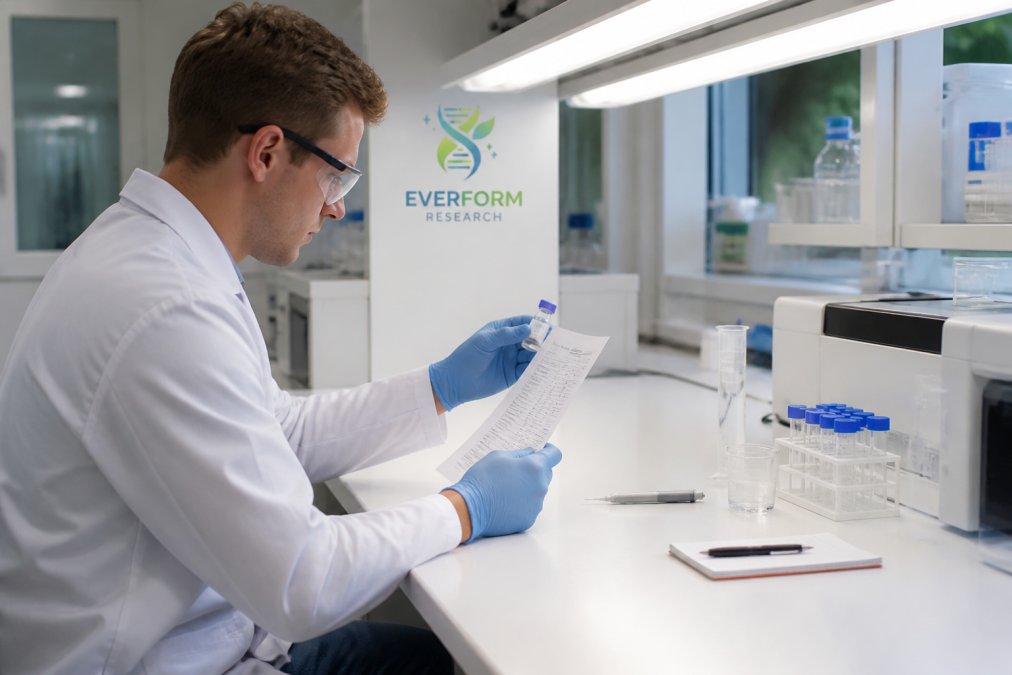
The key word is "third-party." A COA generated by the supplier's own laboratory is better than nothing, but independent testing carries far more weight. Third-party labs have no financial incentive to overstate purity and use standardised methods with maintained accreditation.
A complete COA contains the peptide's name and sequence, batch number, testing date, purity percentage, methodology used (HPLC, mass spectrometry, or both), and the signature of the testing organisation. Missing any of these elements suggests incomplete or potentially fabricated documentation.
Distinguishing Research-Grade from Pharmaceutical-Grade
Research-grade and pharmaceutical-grade compounds describe vastly different products. Pharmaceutical-grade compounds are manufactured under cGMP (current Good Manufacturing Practice) standards, approved by regulatory bodies like the FDA, and intended for therapeutic use in humans. They undergo rigorous clinical trials and continuous quality assurance.
Research-grade peptides are manufactured to high standards but without full regulatory apparatus. They're synthesised in controlled environments, tested for purity, and documented with COAs, but they're not FDA-approved for human use. This distinction has real consequences: research-grade peptides cost less because they bypass the enormous expense of clinical trials and regulatory approval. They're appropriate for laboratory work and animal research, not for human administration.
Some suppliers blur this line intentionally, marketing research-grade peptides with language suggesting therapeutic benefit or human safety data they don't possess. That's both misleading and illegal. Everform Research maintains absolute clarity: our peptides are research-grade, third-party tested, and sold exclusively for laboratory and animal research applications.
Research Peptide Storage Guidelines and Handling
How you store and handle research peptides determines whether they remain stable for months or degrade into useless compounds within weeks. Improper storage destroys purity and invalidates your COA.
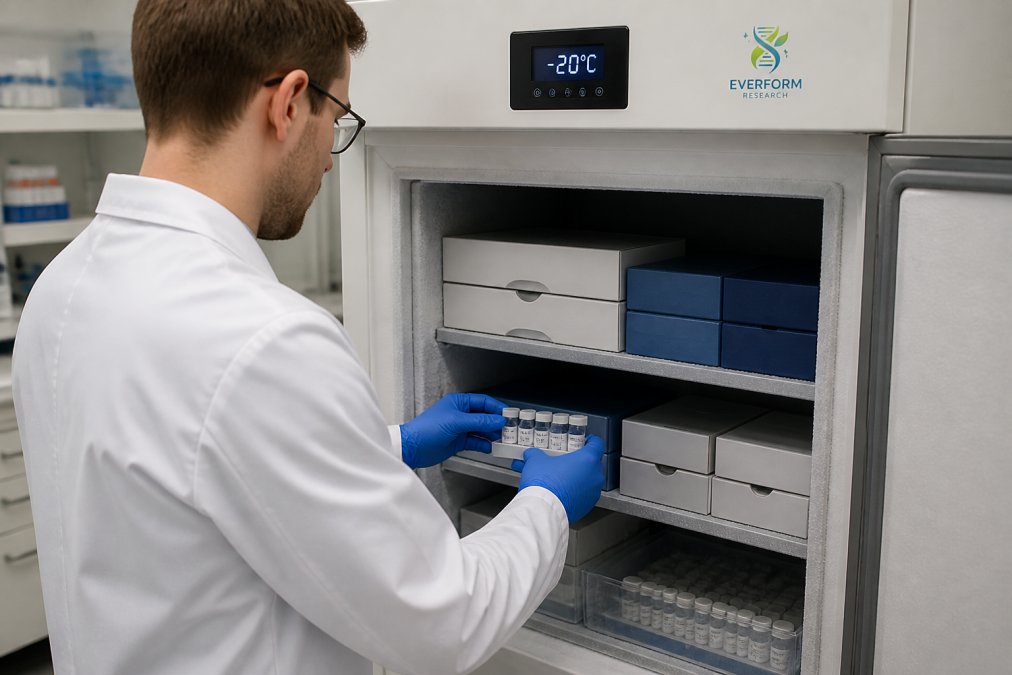
Most research peptides arrive as lyophilised (freeze-dried) powder. In this form, they're remarkably stable if stored correctly. Store lyophilised peptides in a -20°C freezer in airtight vials, ideally in a desiccated environment. At -20°C, most peptides remain stable for 12 months or longer.
Once reconstituted with a solvent like bacteriostatic water, stability decreases dramatically. Reconstituted peptides typically remain viable for 2-4 weeks when refrigerated at 2-8°C. Use sterile technique when reconstituting and avoid repeated freeze-thaw cycles. If you need multiple aliquots, divide the reconstituted solution immediately after mixing, then freeze those portions.
Temperature excursions during shipping can compromise peptides before they reach your laboratory. Reputable suppliers use insulated packaging with temperature monitoring, ensuring compounds arrive in specified condition. Everform Research ships all peptides with temperature tracking and protective packaging because a peptide that arrives damaged is worthless, regardless of its original purity.
Regulatory Status and FDA Oversight
The regulatory landscape for research peptides shifted significantly in 2023 and again in 2026. Understanding these changes is essential for sourcing compounds legally and responsibly.
In late 2023, the FDA moved 19 commonly studied peptides to its Category 2 Bulk Drug Substances list, meaning they could no longer be legally compounded by licensed 503A pharmacies (the FDA). In February 2026, HHS Secretary Robert F. Kennedy Jr. announced that approximately 14 of those 19 peptides would be moved back to Category 1, restoring compounding access for licensed pharmacies.
For researchers purchasing research peptides, the FDA maintains strict oversight of compounds sold for human consumption or therapeutic use. Research peptides operate in a different regulatory space, sold explicitly "not for human consumption," they fall outside FDA approval requirements but also outside FDA quality oversight.
This creates responsibility for buyers: you must source from suppliers who maintain rigorous quality standards because the FDA isn't doing it for you. A reputable supplier conducts third-party testing, maintains cGMP-aligned manufacturing practices, and provides complete documentation.
:::tip The regulatory distinction between "research" and "therapeutic" is not a loophole. It's a legal boundary. Selling research peptides as treatments or dietary supplements is illegal and puts both supplier and buyer at risk.
Safety Considerations and Potential Risks
Research peptides are tools for investigation, not finished medicines. Understanding the risks in laboratory settings and regarding human use is essential for responsible handling.
In laboratory settings, the primary risks are contamination and degradation. Contaminated peptides produce unreliable results, wasting time and resources. Degraded peptides lose biological activity, skewing your data. Both problems stem from poor storage, improper handling, or sourcing from suppliers who don't maintain quality standards.
Some individuals obtain research peptides outside approved channels and self-administer them, despite the explicit "not for human consumption" label. This practice carries significant risks. Without clinical trial data, adverse effect profiles remain largely unknown. Without medical supervision, adverse effects go unmonitored. Without pharmaceutical-grade manufacturing oversight, contamination risks increase substantially.
The FDA has not approved most research peptides for therapeutic use in humans. This doesn't mean they're inherently dangerous, it means their safety in human application hasn't been formally established through rigorous clinical trial processes. A peptide that's safe in a laboratory cell culture may behave very differently in a living human.
The responsible approach: use research peptides exclusively for their intended purpose, laboratory and animal research. If you're interested in peptide therapeutics for human health, wait for compounds that have completed clinical trials and received FDA approval.
Research peptides represent a powerful tool for understanding biological mechanisms, but they demand respect for their limitations and proper handling. The difference between a research peptide that delivers reliable results and one that wastes your time comes down to three things: verified purity through third-party testing, proper storage and handling, and sourcing from suppliers who prioritise transparency and quality.
At Everform Research, we've built our reputation on exactly these principles. Every peptide we supply comes with independent third-party testing documentation, cGMP-aligned manufacturing practices, and complete transparency about what you're purchasing and how to use it responsibly.
Ready to source research peptides you can trust? Explore Everform Research's full selection of third-party tested compounds, backed by detailed Certificates of Analysis and expert guidance. Use code EVER15 for 15% off your first order and experience the difference that genuine quality and transparency make.
Frequently Asked Questions
What is the difference between research peptides and regular peptides?
Research peptides are short synthetic amino acid chains (typically 2-50 amino acids) manufactured exclusively for in vitro or animal laboratory studies. They carry a legal 'not for human consumption' label and are sold under strict regulatory conditions. Regular peptides or therapeutic peptides have undergone clinical trials, received FDA approval, and are prescribed or dispensed for human use. The distinction matters: research peptides are unproven in humans and illegal to market as supplements or medications. Over 11% of new pharmaceutical entities approved by the FDA between 2016 and 2024 were synthetic peptides, but they had to complete rigorous clinical validation first.
How do I verify research peptide purity before purchase?
Request a Certificate of Analysis (COA) from the supplier before buying. Reputable research-grade peptides should be 98% pure or higher, verified through high-performance liquid chromatography (HPLC) and mass spectrometry. Confirm the testing was conducted by an independent third party, not the manufacturer itself. Check that the COA includes batch-specific data, not generic claims. Everform Research provides third-party COA verification with every compound, giving you documented proof of purity and consistency across batches.
What are the main risks associated with research peptides?
Research peptides carry several documented risks. Unverified purity can introduce contaminants that compromise experimental results or cause adverse effects. Improper storage (exposure to heat, light, or moisture) degrades peptide integrity and reduces bioavailability. Unauthorised human use, despite the legal prohibition, carries unknown pharmacokinetics, dosage protocols, and long-term efficacy data. Sourcing from unvetted suppliers risks receiving mislabelled or counterfeit compounds. Regulatory oversight is strict: the FDA moved 19 commonly studied peptides to Category 2 Bulk Drug Substances in late 2023, though approximately 14 were restored to Category 1 in February 2026.
Are research peptides considered steroids?
No. Research peptides and anabolic steroids are distinct compounds with different mechanisms of action. Steroids are synthetic derivatives of testosterone that bind directly to androgen receptors, triggering rapid protein synthesis and muscle hypertrophy. Peptides are amino acid chains that act as signalling molecules, triggering hormone regulation and cellular communication through specific receptors. Some peptides (like Ipamorelin or GHRP-6) stimulate growth hormone secretion indirectly, whereas steroids bypass this pathway. The legal and pharmacological distinctions are significant: steroids are Schedule III controlled substances, whilst research peptides occupy a different regulatory category.
This article was written using GrandRanker