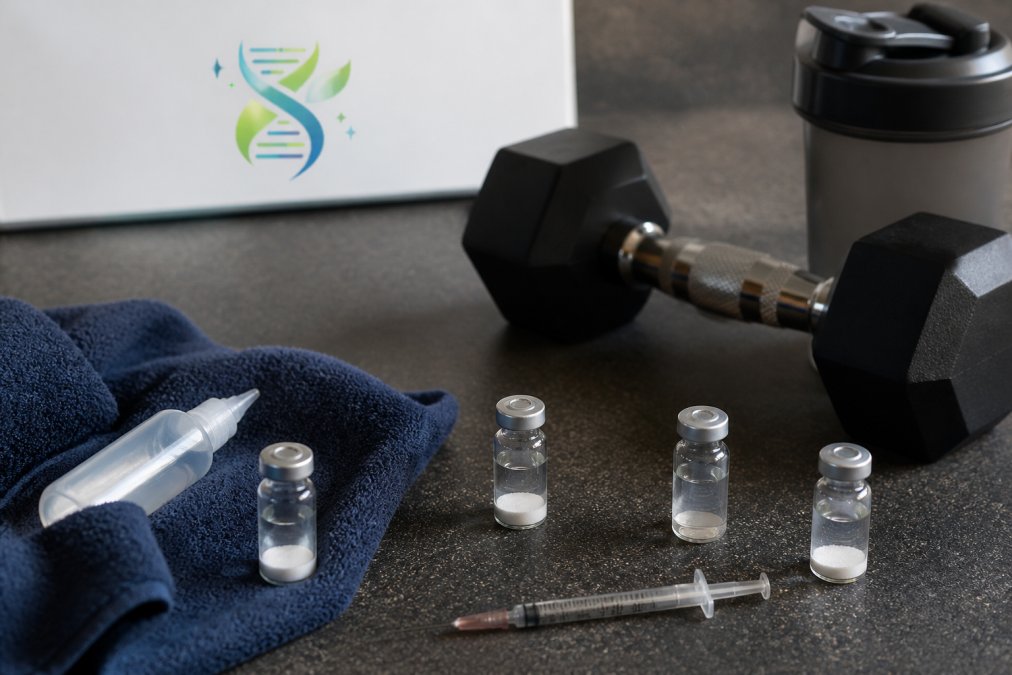
 listicle
Best Peptides for Muscle Recovery: 2026 Comparison
Table of Contents
- Quick Comparison: Top Peptides for Muscle Recovery
- BPC-157 Benefits for Recovery
- TB-500: Systemic Repair and Flexibility
- CJC-1295 and Ipamorelin: Growth Hormone Optimization
- Sermorelin and Tesamorelin: Clinical Options
- How to Choose High-Quality Peptides
- Safety, Legal Status, and Testing Considerations
- Frequently Asked Questions
Last Updated: September 11, 2026
Quick Comparison: Top Peptides for Muscle Recovery
The best peptides for muscle recovery in 2026 are BPC-157, TB-500, CJC-1295 with Ipamorelin, Sermorelin, and Tesamorelin, according to clinical trend analyses from Optimantra's 2026 peptide trends report and Ubie Health's clinical overview. At Everform Research, we supply third-party tested compounds for laboratory and research use, so this comparison sticks to what the evidence actually supports.
Peptides are short amino acid chains that act as signalling molecules in the body. In recovery research, they are studied for their role in tissue regeneration, protein synthesis, and inflammation reduction. The five compounds below dominate current discussion, but they work in different ways and suit different goals.
Quick Picks:
- Best overall for injury repair: BPC-157, the top-ranked healing peptide for 2026
- Best for systemic flexibility: TB-500, often stacked with BPC-157
- Best for growth hormone support: CJC-1295 combined with Ipamorelin
- Best clinical option: Tesamorelin, the only FDA-approved compound in this group
| Peptide | Primary Role | Typical Route | Best For | Evidence Base |
|---|---|---|---|---|
| BPC-157 | Tissue repair, angiogenesis | Subcutaneous injection | Tendon and muscle injury | Animal and mechanistic studies |
| TB-500 | Cell migration, flexibility | Subcutaneous injection | Systemic recovery | Animal and mechanistic studies |
| CJC-1295 + Ipamorelin | Growth hormone release | Subcutaneous injection | Lean mass, recovery kinetics | Mechanistic and clinical interest |
| Sermorelin | Endogenous GH stimulation | Subcutaneous injection | Supervised maintenance | Well-studied for safety |
| Tesamorelin | Visceral fat, lean mass | Subcutaneous injection | Prescription-led programs | FDA-approved indication |
BPC-157 Benefits for Recovery
BPC-157 benefits for recovery centre on its ability to promote angiogenesis and extracellular matrix remodelling, the two processes that drive tissue repair. Research from the National Institutes of Health on wound-healing peptides confirms that BPC-157, TB-500, and GHK-Cu all support these pathways.
What most guides miss is that BPC-157 has far more animal data than human trial data. That does not make it useless, but it does mean anyone quoting precise human recovery timeframes is overstating the evidence.
TB-500: Systemic Repair and Flexibility
TB-500 is a synthetic version of Thymosin Beta-4, a protein studied for cell migration and proliferation. Where BPC-157 tends to be discussed for localised injuries, TB-500 is usually framed as a systemic option for connective tissue and joint mobility.
The Peptidepedia overview of the Wolverine Stack notes that BPC-157 and TB-500 are increasingly combined to target synergistic recovery mechanisms. The logic is straightforward: one compound focuses on blood flow and matrix repair, the other on cell movement.
The drawback is patience. Most reported protocols run for weeks before users describe noticeable changes, and the research base remains largely preclinical.
CJC-1295 and Ipamorelin: Growth Hormone Optimization
The CJC-1295 and Ipamorelin combination is the most frequently recommended stack for growth hormone optimization, according to Musculoskeletal Key's 2026 review of research compounds. CJC-1295 stimulates the pituitary to release growth hormone; Ipamorelin amplifies that pulse with minimal effect on cortisol or prolactin.
This matters for recovery because growth hormone supports lean muscle mass, fat oxidation, and metabolic rate. Rather than introducing exogenous hormone, the stack works on endogenous hormone production, which is why researchers often describe it as a gentler approach.
The honest limitation: dosing schedules are demanding, and results depend on consistent timing. Skip doses and the feedback loop simply does not fire.
Sermorelin and Tesamorelin: Clinical Options
Sermorelin and Tesamorelin sit at the more clinical end of this list, and the differences between them matter more than most guides admit. Both are growth hormone-releasing hormone (GHRH) analogs, meaning they bind to GHRH receptors in the pituitary and stimulate endogenous growth hormone release rather than introducing exogenous hormone. But their regulatory status, evidence base, and practical use cases diverge sharply.
Sermorelin is a 29-amino-acid fragment of endogenous GHRH. It has been studied for decades, particularly in the context of age-related growth hormone decline, and its safety profile is well-documented in the clinical literature. Sermorelin is not FDA-approved as a standalone therapeutic, but it is frequently prescribed off-label through compounding pharmacies under physician supervision. A common pattern among practitioners is a nightly subcutaneous dose, typically in the 100-300 mcg range, timed to coincide with the body's natural nocturnal GH pulse. The trade-off is that sermorelin's half-life is short, roughly 10-20 minutes, so timing consistency matters enormously.
Tesamorelin is the only compound in this entire guide with an FDA-approved indication. It is approved for the reduction of excess visceral abdominal fat in adults with HIV-associated lipodystrophy, and that approval carries real weight: it means the compound has passed Phase III trials, has a defined safety database, and is subject to ongoing FDA post-market surveillance. Tesamorelin is a stabilized GHRH analog with a longer half-life than sermorelin, and clinical trials have shown it can reduce visceral adipose tissue while preserving lean mass. For recovery research, that lean-mass preservation is the relevant signal, though it is worth noting that the approved indication is narrow and does not include muscle recovery or athletic performance.
| Feature | Sermorelin | Tesamorelin |
|---|---|---|
| Mechanism | GHRH receptor agonist | GHRH receptor agonist (stabilized) |
| FDA status | Not approved; compounded off-label | Approved for HIV-associated lipodystrophy |
| Half-life | Short (~10-20 min) | Longer than sermorelin |
| Typical supervision | Physician-led, compounded | Prescription-led program |
| Evidence base | Decades of safety data | Phase III trial data |
| Recovery relevance | Indirect (GH pulse support) | Indirect (lean mass preservation) |
For a personalised recovery protocol, these two are the options a physician is most likely to discuss, because both have documented safety profiles and clear supervision requirements. Neither is a direct muscle-repair agent, their role is upstream, supporting the hormonal environment in which repair happens.
How to Choose High-Quality Peptides
Choosing high-quality peptides comes down to documentation, not marketing. A trustworthy supplier provides a batch-specific certificate of analysis from an independent laboratory, states purity and identity results, and can explain how the compound was manufactured.
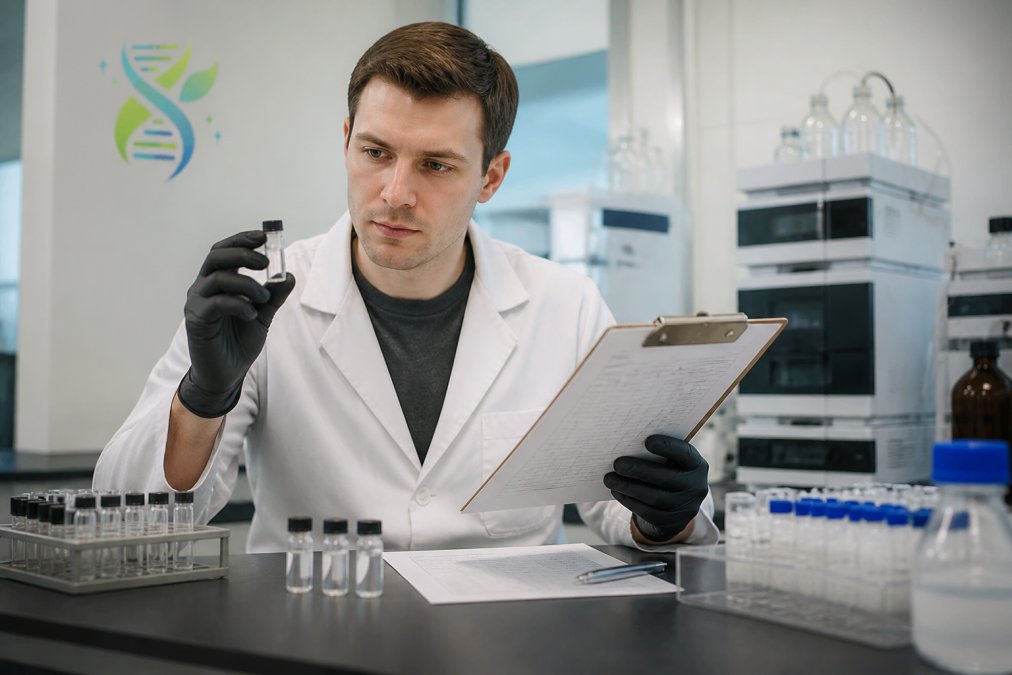
Use this checklist before buying:
- Batch-specific COA from a named third-party lab
- Purity figure reported by HPLC, identity confirmed by mass spectrometry
- Manufacturing described as cGMP-compliant
- Clear storage and handling instructions included
- Responsive support that answers technical questions directly
Everform Research builds its catalogue around exactly these signals: rigorous third-party testing, cGMP-compliant manufacturing, and documentation clear enough to submit to a compliance team. For research buyers who need batch consistency across long experiments, that transparency is the whole point.
Safety, Legal Status, and Testing Considerations
Safety, legal status, and testing are where most peptide guides get vague, and that vagueness is a problem. Many of these compounds remain in research phases, and medical experts consistently emphasise the need for clinical supervision, as GameDay Men's Health notes on peptide safety points out.
The legal picture is genuinely mixed, and it helps to break it down by category rather than treating "peptides" as one regulatory block.
FDA-approved: Tesamorelin is the only compound in this guide with an FDA-approved indication, and that approval is narrow, visceral fat reduction in a specific patient population. It is not approved for muscle recovery or athletic use.
Research-use-only: BPC-157, TB-500, CJC-1295, Ipamorelin, and Sermorelin are not FDA-approved for human therapeutic use. They are legally sold as research chemicals, which means the label must state they are not for human consumption. Buying them for personal injection sits outside that intended use, and the FDA has issued warning letters to companies marketing them as drugs.
Compounded: Sermorelin is sometimes prescribed off-label through compounding pharmacies under a physician's supervision. This is a legitimate pathway, but it requires an actual clinical relationship, not an online checkout.
Athletic Drug Testing: What Athletes Must Know
This is the gap most peptide articles skip entirely, and it is the one that can end a career. The World Anti-Doping Agency (WADA) maintains the Prohibited List, which is updated annually and adopted by the U.S. Anti-Doping Agency (USADA) for domestic testing. Several growth hormone secretagogues, including CJC-1295, Ipamorelin, Sermorelin, and Tesamorelin, are classified as prohibited peptide hormones and growth factors. BPC-157 and TB-500 have also appeared on WADA's prohibited list in recent years.
Testing programs do not distinguish between therapeutic intent and performance intent. A positive sample is a positive sample, and sanctions can include multi-year bans and loss of results. Any athlete subject to testing should check the current WADA Prohibited List and their sport's specific rules before considering any compound in this guide.
Oral vs. Injectable: Bioavailability Matters
A question that comes up constantly is whether oral peptide products work as well as injectables. The honest answer is that bioavailability differs dramatically. Most peptides are proteins, and the digestive system breaks them down before they reach the bloodstream. Injectable subcutaneous administration bypasses that problem entirely, which is why nearly all clinical research on these compounds uses injection.
Oral formulations that do exist tend to rely on absorption enhancers or modified chemistry, and even then, the fraction of active compound reaching circulation is typically a small percentage of an injected dose. For research purposes, this means oral and injectable versions of the same peptide are not interchangeable, and comparing results between them is misleading.
Natural Foundations Still Matter
On the natural side, sleep, hydration, protein intake, and movement remain the primary drivers of muscle repair. Pliability's 2026 recovery review notes that limited research supports some popular recovery aids, including Epsom salts. Peptides are an addition to the basics, never a replacement for them.
Frequently Asked Questions
What are the most effective peptides for muscle recovery?
Research identifies BPC-157, TB-500, CJC-1295, Ipamorelin, and Sermorelin as standout compounds for muscle recovery in 2026. BPC-157 and TB-500 target tissue repair and inflammation, while CJC-1295 and Ipamorelin support growth hormone release for lean muscle maintenance. Sermorelin offers a well-studied option for post-workout recovery. Many researchers combine BPC-157 with TB-500 for synergistic effects, often called the Wolverine Stack.
Does BPC-157 improve recovery?
Yes, BPC-157 benefits for recovery are well-documented in preclinical studies. Research shows it promotes angiogenesis, which improves blood flow to injured tissues, and supports extracellular matrix remodeling. This can accelerate healing of muscle, tendon, and ligament injuries. A 2026 NIH review confirms wound-healing peptides including BPC-157 promote these repair mechanisms. Clinical interest in BPC-157 as a leading recovery peptide continues to grow.
Are peptides safe for muscle recovery and performance?
Safety profiles vary by compound. Ipamorelin has a high safety profile with minimal impact on cortisol or prolactin. However, medical experts emphasize that many peptides remain in research phases and carry inherent risks. Clinical supervision is strongly recommended. Natural recovery methods like sleep, hydration, and protein intake remain foundational. Always consult a qualified professional before starting any peptide protocol.
What is the difference between growth hormone secretagogues and recovery peptides?
Growth hormone secretagogues like CJC-1295, Ipamorelin, and Sermorelin stimulate the pituitary gland to increase endogenous hormone production, supporting lean muscle mass and metabolic recovery. Recovery peptides like BPC-157 and TB-500 focus on tissue regeneration, inflammation reduction, and cellular repair. Both categories aid muscle recovery through different pathways, and some protocols combine them for comprehensive support.
How do I choose high-quality peptides?
Look for third-party testing, cGMP-compliant manufacturing, and clear certificates of analysis (COA). Reputable suppliers provide batch-specific documentation and transparent quality signals. Avoid vendors that cannot verify purity or source. Everform Research offers rigorous third-party testing and cGMP-compliant manufacturing for dependable research applications.
Recovery research moves quickly, and sourcing compounds you can actually trust is the hard part. Everform Research exists to make that easier, with third-party testing on every batch, cGMP-compliant manufacturing, and documentation you can hand straight to a procurement or compliance team. Use code EVER15 for 15% off your first order and shop compounds with confidence in what is in the vial.