 listicle
Buy High Purity Peptides Online: 2026 Buyer's Guide
Table of Contents
- Why Purity Claims Fall Short in Online Peptide Sales
- What Defines High Purity Peptides for Research Use
- The Non-Negotiable Role of a Peptide Certificate of Analysis
- How Third-Party Peptide Testing Verifies What You Buy
- Top Sources for High Purity Peptides Online
- Peptide Storage and Handling Best Practices After Delivery
- How to Order: A Checklist for First-Time Buyers
- Conclusion: Prioritise Verified Quality for Reproducible Results
- Frequently Asked Questions
Last Updated: September 8, 2026
A 2026 investigation by the Los Angeles Times found that tested batches of online peptides labeled at 99% purity actually contained between 7.7% and 14.37% of the active ingredient. That gap between marketing and reality is why knowing how to buy high purity peptides online has become a survival skill for researchers, not just a procurement preference. The market is volatile, vendor consolidation is reshaping the landscape, and the cost of a bad batch is wasted time, contaminated data, and compromised experiments.
This guide breaks down what defines high purity peptides, why documentation matters more than promises, and how to verify a supplier before committing funds. We'll also cover storage protocols and a practical checklist for first-time buyers.
Why Purity Claims Fall Short in Online Peptide Sales
The core problem is simple: a purity claim on a product page is not a purity measurement. Independent testing reveals a stark discrepancy between advertised and actual quality. The Los Angeles Times investigation cited above found real purity levels between 7.7% and 14.37% in products marketed as 99% pure, a devastating gap for any laboratory relying on reproducible results.
What most guides miss is that the problem is structural, not isolated. Following a "shakeout" in early 2026, major vendors have ceased operations, with one industry player holding approximately $7.4 million in estimated monthly online sales as of December 2025 shutting down entirely, according to market analysis by Dinesh Sahu. This consolidation pushes buyers toward unfamiliar suppliers exactly when scrutiny matters most.
The lesson: treat any purity percentage as a hypothesis until documentation proves otherwise. A vendor's reputation, website polish, or customer count tells you nothing about the contents of a vial.
What Defines High Purity Peptides for Research Use
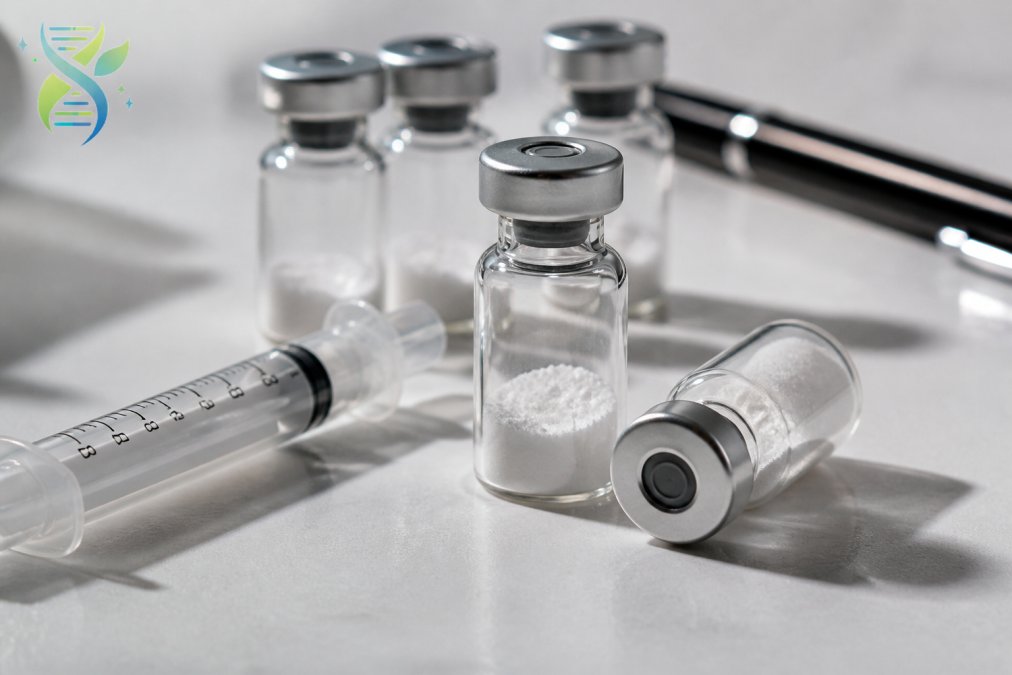
High purity peptides are synthetic peptide sequences manufactured to a verified standard, typically 98% or higher HPLC purity, suitable for controlled laboratory experiments. This benchmark, cited by FormBlends' peptide procurement guide in February 2026, represents the industry baseline for research-grade material where batch consistency directly impacts experimental validity.
Several specification points matter beyond the headline percentage:
- HPLC analysis: High-performance liquid chromatography confirms the peptide's purity profile
- Mass spectrometry: Verifies molecular weight and confirms the correct peptide sequence
- Sequence verification: Ensures amino acid derivatives are correctly assembled
- Sterility and lyophilization: Affects stability and reconstitution behavior
The distinction between research-grade and pharmaceutical-grade compounds matters too. Research-grade peptides are strictly for laboratory use and lack the stringency of pharmaceutical manufacturing, a point emphasized by industry experts in a Huberman Lab guest segment discussing peptide sourcing. Know which category you need before you buy.
The Non-Negotiable Role of a Peptide Certificate of Analysis
A peptide certificate of analysis (CoA) is the single document that separates legitimate suppliers from questionable ones. It provides lot-specific data confirming what's actually in the vial, including purity percentage, analytical methods used, and sequence verification results.
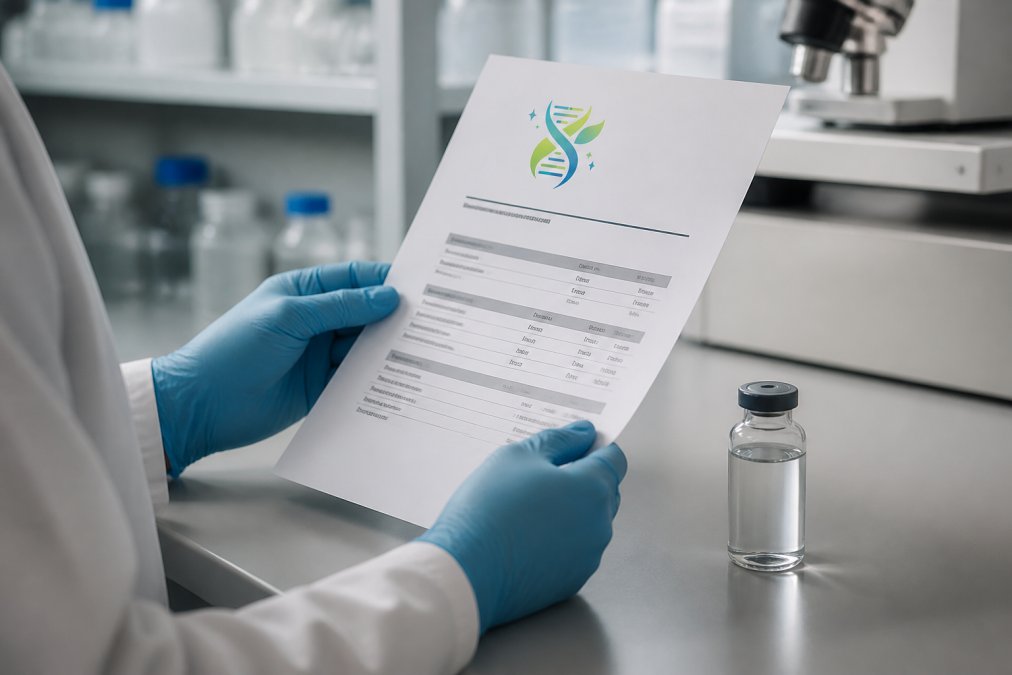
The CoA must be lot-specific, not a generic template. Community-driven vendor comparisons evaluating 25+ suppliers have identified CoA transparency as the primary ranking criterion, per the r/ScienceBioTechnology vendor comparison from February 2026. If a vendor cannot produce a CoA for the exact lot you're purchasing, that's an immediate disqualifier.
What should you check on a CoA?
- Lot number: Must match the vial you receive
- Purity percentage: Should meet or exceed 98% HPLC
- Analytical method: HPLC and mass spectrometry data should be present
- Date of analysis: Recent testing, not years-old data
- Testing laboratory: Ideally third-party, not in-house
How Third-Party Peptide Testing Verifies What You Buy
Third-party peptide testing means an independent laboratory, not the vendor, analyzes the product and issues documentation. This separation of interests is what makes the verification meaningful. When a vendor tests its own products, the conflict of interest is obvious.
Industry rankings from PSPeptides' 2026 supplier evaluation evaluate vendors on four key criteria: purity verified through CoA, shipping reliability, customer support quality, and price transparency. Notably, the evaluation sample covered 12 major companies, and the differentiator was almost always documentation quality, not marketing claims.
The verification chain you should expect:
- Vendor sends samples to an independent, accredited laboratory
- Laboratory performs HPLC and mass spectrometry analysis
- Results are documented in a lot-specific CoA
- CoA is provided to the buyer before or at delivery
For institutional buyers with strict procurement rules, documented proof of cGMP-compliant manufacturing matters as much as the CoA itself. Everform Research's manufacturing follows cGMP standards, and its third-party testing is designed to be genuinely independent, not rubber-stamped.
Top Sources for High Purity Peptides Online
Rather than presenting a simple list of vendors, a more useful approach for the discerning researcher is to understand the structural differences in business models that dictate quality and reliability. The 2026 market is not just about who has the best price, but who has built their operations to survive scrutiny.
The landscape is bifurcated. On one side are large, established biotech contract research organisations (CROs) like GenScript, which have decades of institutional credibility but pricing and minimum order quantities that cater to well-funded labs. On the other side are smaller, more agile suppliers that emerged after the 2026 market shakeout, often competing on price and accessibility, but with potentially inconsistent quality systems.
The most critical differentiator is not the brand name, but the transparency of the quality system. A vendor that openly discusses its manufacturing process, provides batch-specific Certificates of Analysis (CoAs) from independent labs, and clearly states its cGMP compliance status is inherently more trustworthy than one that only offers a generic purity percentage on a product page.
When evaluating a supplier, consider the following structural questions:
- Manufacturing vs. Brokering: Does the vendor manufacture the peptides themselves, or do they source from a third-party manufacturer and repackage? A broker adds a layer of opacity that can obscure the true origin and handling of the product.
- Scale of Operations: Is the vendor's facility and capacity aligned with its claims? A supplier claiming to produce kilogram quantities of a complex peptide should have the infrastructure to back that up.
- Documentation Culture: Is the CoA a prominent part of the sales process, or is it an afterthought? A vendor that proactively provides documentation is signalling that they have nothing to hide.
- Customer Support Expertise: Can the vendor's support staff answer technical questions about peptide solubility, storage, or reconstitution? A knowledgeable team is a strong indicator of a science-first culture.
A vendor like Everform Research is built on transparent, cGMP-compliant manufacturing with third-party testing, making verification a core part of the product.
Ultimately, the best source for high purity peptides is not a single name, but a vendor whose operational structure aligns with the principles of scientific verification. By asking these structural questions, you move beyond marketing and make an informed choice based on the integrity of the supply chain.
Peptide Storage and Handling Best Practices After Delivery
Once a high purity peptide arrives, its journey is far from over. The vial contains a lyophilized (freeze-dried) powder that is generally more stable than its reconstituted form, but it is not inert. Understanding degradation pathways is crucial for maintaining the integrity of your research.
The primary enemies of peptide stability are hydrolysis, oxidation, and deamidation. While lyophilization removes water to halt hydrolysis, trace moisture can remain and initiate degradation. Oxidation can occur at susceptible amino acid residues like methionine, cysteine, and tryptophan when exposed to atmospheric oxygen. Deamidation, a process where the side-chain amide group of asparagine or glutamine is hydrolyzed, is a common degradation pathway that can alter the peptide's structure and activity.
The Critical Role of Lyophilisation and Reconstitution
The form in which you receive your peptide is a critical factor. Most research-grade peptides are shipped as a lyophilized powder. This is because the absence of water drastically slows down all hydrolytic degradation pathways. The moment you reconstitute the peptide in a buffer or sterile water, you are restarting the clock on its stability.
A common but often overlooked mistake is the reconstitution buffer itself. Many researchers default to sterile water, but the peptide's net charge and isoelectric point (pI) can make it poorly soluble or unstable in water alone. A standard practice is to use a sterile, buffered solution like phosphate-buffered saline (PBS) at a physiological pH of 7.4, which mimics in vivo conditions and helps maintain the peptide's conformation. For peptides that are difficult to dissolve, a small amount of a solvent like DMSO or acetic acid may be needed, but this must be done with care as these can also affect stability.
The Freeze-Thaw Cycle: A Quantitative Problem
The most frequently cited storage mistake is repeated freeze-thaw cycling. As ice crystals form, the concentration of the peptide in the remaining liquid increases dramatically, promoting aggregation and precipitation, leading to measurable loss of active peptide with each cycle. The solution is to aliquot your reconstituted peptide into single-use volumes immediately, so you only ever thaw what you need and never re-freeze a partially used vial.
A Deeper Look at Storage Temperatures
While the general advice is to store at -20°C, a more nuanced approach is often beneficial.
- -80°C for Long-Term Storage: For peptides that will not be used for months, storage at -80°C is generally recommended. At this temperature, most chemical and enzymatic degradation processes are effectively halted. However, the physical stress of freezing and thawing is more pronounced at this temperature, making the practice of aliquoting even more critical.
- 4°C for Short-Term Use: For peptides that will be used within a few weeks, storage at 4°C in a refrigerator is often sufficient and avoids the physical stresses of freezing. This is particularly true for peptides that are reconstituted in a stabilising buffer.
- Room Temperature: Lyophilized peptides can often withstand short periods at room temperature during shipping or handling. However, they should be moved to a freezer as soon as possible.
The Importance of Desiccants and Light Protection
Lyophilized peptides are hygroscopic, readily absorbing moisture from the air, which is why they ship with a desiccant packet. Once opened, the vial should be tightly sealed and stored with a fresh desiccant. Exposure to ultraviolet (UV) light can catalyse oxidation, so storing vials in a dark container or wrapping them in foil is prudent.
By understanding the mechanisms of degradation and implementing a rigorous storage protocol, you can ensure that the high purity you paid for is the high purity you use in your experiments.
How to Order: A Checklist for First-Time Buyers
This checklist consolidates everything above into a practical sequence for first-time buyers.
- Verify the vendor's testing documentation: Request a lot-specific CoA before purchasing
- Confirm third-party testing: Ask which independent laboratory performed the analysis
- Check cGMP compliance: Request documentation if your institution requires it
- Match the lot number: Ensure the CoA matches the vial you receive
- Review shipping logistics: Confirm cold-chain handling if required
- Plan storage ahead: Have -20°C freezer space allocated before delivery
- Document everything: Keep CoAs and batch records for your protocols
For institutional buyers, procurement rules often require documented proof of quality systems. Everform Research's cGMP-compliant manufacturing and third-party COA verification provide the documentation trail your compliance team needs.
Conclusion: Prioritise Verified Quality for Reproducible Results
The peptide sourcing landscape in 2026 rewards diligence and punishes shortcuts. With documented cases of products labeled 99% pure testing at under 15%, the cost of a bad batch extends far beyond the purchase price. Reproducible experiments demand verified quality: third-party testing, lot-specific CoAs, and transparent manufacturing standards.
Everform Research was built around this principle. Our third-party testing, cGMP-compliant manufacturing, and commitment to transparent documentation exist to give researchers confidence in every vial. We understand the frustration of switching vendors after years with another supplier, which is why we prioritize batch consistency and clear quality signals above everything else.
Get started with Everform Research and experience peptide sourcing where quality is verified, not assumed. Shop our compounds today.
Frequently Asked Questions
Where can I buy high purity peptides online with verified quality?
Look for suppliers that publish a peptide certificate of analysis for every lot and use third-party peptide testing. Independent lab results should confirm HPLC purity of 98% or higher. Major industry players have exited the market after the 2026 shakeout, so verify current operations before ordering. Everform Research provides cGMP-compliant manufacturing with third-party COA verification for every batch.
What documentation should accompany high-purity peptides?
Every high-purity peptide order should include a lot-specific Certificate of Analysis (COA) from an independent laboratory. This document confirms HPLC purity percentage, mass spectrometry molecular weight verification, and sequence confirmation. Avoid suppliers that only provide batch-level or generic documentation. The COA should match the specific product lot you receive, not a representative sample from a different production run.
How do I verify the purity of peptides purchased online?
Request the lot-specific COA before purchase and check the reported HPLC purity percentage. Independent third-party testing is the gold standard. Be aware that testing by the Los Angeles Times found some online products labelled at 99% purity actually contained only 7.7% to 14.37% active peptide. If a supplier hesitates to share third-party documentation, consider that a warning sign.
What distinguishes research-grade peptides from pharmaceutical-grade products?
Research-grade peptides are manufactured for laboratory use only, not human consumption. They follow industry standards like 98%+ HPLC purity but lack the regulatory oversight applied to pharmaceutical manufacturing. Suppliers should clearly label products 'for research use only' and provide documentation for laboratory protocols. Always follow your institution's procurement rules and verify the supplier meets your specific research requirements.