 how-to
How Long Does cGMP Peptide Synthesis Take?
Table of Contents
- Understanding the cGMP Peptide Manufacturing Process
- Peptide Synthesis Lead Time: The Core Timeline
- Analytical Testing for cGMP Peptides
- Scaling from Bench to Commercial Manufacturing
- Regulatory Compliance and Its Impact on Timelines
- Conclusion
- Frequently Asked Questions
Last Updated: September 26, 2026
Understanding the cGMP Peptide Manufacturing Process
How long does cGMP peptide synthesis take? For most projects, the answer lands between four and eight weeks from order to release. Neoantigen work tends to run 30 to 40 days, while complex sequences stretch longer. We've watched this timeline tighten as automated synthesis and better process control reshape what labs can expect.
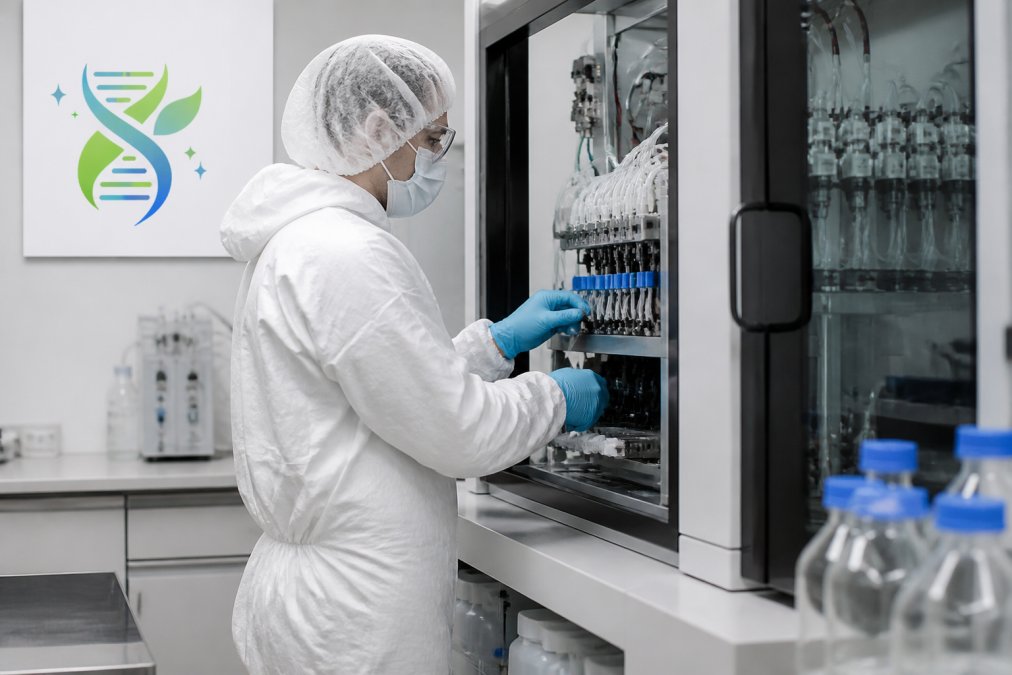
cGMP peptide synthesis is the manufacturing of peptides under current Good Manufacturing Practice rules, with validated processes, documented batches, and full traceability from raw material to final vial. It differs from research-grade synthesis in one key way: every step is recorded and every batch is tested against a written specification.
The global GMP peptide manufacturing services market is projected to reach USD 11.13 billion by 2032, according to OpenPR market outlook, a sign of how much demand now sits behind compliant production.
Solid-Phase vs. Liquid-Phase Synthesis
Solid-phase peptide synthesis, or SPPS, builds a peptide chain while it's anchored to a resin bead. Liquid-phase synthesis happens in solution instead. Most cGMP work uses SPPS because it's easier to automate and purify.
The trade-off is scale. SPPS handles small to mid-size batches well. Liquid-phase and hybrid methods take over when you need larger volumes or when fragment assembly makes more sense.
- SPPS: best for sequences under 30 residues
- Liquid-phase: better for large-scale and short peptides
- Hybrid: used when a long chain is built from fragments
Peptide Synthesis Lead Time: The Core Timeline
The typical cGMP peptide synthesis timeline runs four to eight weeks, but that range hides a lot. Pre-synthesis prep, analytical method setup, and regulatory paperwork all eat into the clock before a single resin bead is loaded. The honest answer to "how long does cGMP peptide synthesis take" is that the calendar is driven by three variables, sequence length, purity specification, and batch scale, and each one moves the schedule in a predictable direction.
Here is how the time usually breaks down for a straightforward 15-mer at 95% purity and a 10-gram scale:
| Phase | Typical Duration | What Happens |
|---|---|---|
| Pre-synthesis prep | 3-7 days | Documentation, method transfer, raw material release |
| Synthesis | 1-3 weeks | Chain assembly on resin |
| Cleavage and purification | 3-7 days | Cleavage, HPLC purification |
| Analytical testing | 5-10 days | Purity, identity, and counter-ion testing |
| QA review and release | 2-5 days | Batch record review, COA issue |
How Sequence Length, Purity, and Scale Move the Calendar
Most practitioners find that the same project can swing by two to three weeks depending on where it lands on these three axes. The table below shows the direction and rough magnitude of each shift, not a promise:
| Variable | Easier End | Harder End | Effect on Timeline |
|---|---|---|---|
| Sequence length | Under 15 residues | Over 30 residues, or any sequence with difficult couplings | Adds 1-3 weeks to synthesis and purification |
| Purity specification | 95% by RP-HPLC | 98%+ with tight impurity profile | Adds 1-2 weeks of purification and re-testing |
| Batch scale | Under 10 g | 100 g and above | Adds 2-4 weeks for process development and scale-up runs |
| Modifications | Standard L-amino acids | Non-natural residues, labels, cyclization | Adds 1-2 weeks for custom building block sourcing |
A short, unmodified peptide at modest purity can compress to about four weeks. A long, modified sequence at high purity and larger scale is realistically eight to twelve weeks, and sometimes longer if a custom building block has to be sourced.
Pre-Synthesis Preparation and Documentation
Pre-synthesis prep is the part most timelines ignore, and it's where projects quietly lose a week. Before synthesis starts, the manufacturer has to:
- Confirm the amino acid sequence and any modifications
- Set up analytical methods and reference standards
- Release raw materials against written specs
- Draft the batch record and testing plan
If your sequence needs a custom building block or a non-standard label, add time. A common mistake is assuming the clock starts at synthesis. It starts the moment your paperwork lands.
Where the Timeline Actually Slips
Three things cause most overruns, and all three are visible before synthesis begins:
- A sequence change after the batch record is drafted, which restarts method qualification
- A purity spec tightened mid-project, which forces a second purification pass
- A raw material on backorder, which stalls the run even when the resin is ready
Locking the sequence, the spec, and the raw material list before the first coupling is the single biggest lever a research team controls over the calendar.
Analytical Testing for cGMP Peptides
Analytical testing for cGMP peptides verifies identity, purity, and strength before a batch is released. It's not optional and it's not fast. Every batch needs a full data package that a reviewer can defend.
Standard tests include:
- Reverse-phase HPLC for purity profile
- Mass spectrometry for molecular weight confirmation
- Amino acid analysis for composition
- Residual solvents and counter-ion checks
- Microbial and endotoxin testing where required
Purity specs matter here. If one batch hits 98% and the next lands at 96%, high-throughput screening data gets noisy. Tight process control is what keeps those numbers consistent batch to batch.
Scaling from Bench to Commercial Manufacturing
Scale-up is where cGMP peptide synthesis gets genuinely hard. A process that works at 10 grams can behave differently at 100 grams.
The PolyPeptide Group documented a successful transition from 10 grams to several hundred grams of a 25-mer linear peptide through defined process development and GMP production cycles, according to PolyPeptide Group case study. That's the pattern most projects follow: prove it small, then expand in controlled steps.
Ambiopharm has manufactured up to 300 kg of GMP peptide APIs via solid-phase processes, per Ambiopharm manufacturing overview. The industry is moving toward hundreds-of-kilograms capacity, with leaders like Cambrex peptide synthesis insights expecting that scale by the end of 2026.
Fragment-based synthesis is helping here. It splits long peptides into smaller segments, synthesizes each one, then joins them. That approach can shorten the timeline for sequences that would otherwise be too long for a single run.
Regulatory Compliance and Its Impact on Timelines
Regulatory compliance adds time that no one can shortcut, but the size of that addition depends almost entirely on what the material is for. A batch destined for an early-phase clinical trial and a batch destined for commercial supply are not the same project, even when the peptide is identical. This is the distinction most timelines gloss over, and it's the one that most often surprises research teams.
Clinical Trial Material vs. Commercial API Manufacturing
The documentation load, the testing depth, and the review time all scale with the filing stage:
| Stage | Documentation Load | Typical Added Time vs. Research Grade |
|---|---|---|
| Preclinical / research use | Batch record, COA, basic identity and purity | Baseline |
| Phase 1 clinical trial material | Full batch record, method qualification, stability-indicating assays, QA release | Adds 1-2 weeks |
| Phase 2-3 clinical trial material | Formal method validation, expanded stability, deviation review | Adds 2-4 weeks |
| Commercial API | Full validation, ongoing stability program, change control, annual product review | Adds 4-8 weeks and continues after release |
For a Phase 1 batch, the added time is mostly front-loaded: method qualification and documentation review happen before release.
The Three Places Compliance Adds Time
- Filing stage: early-phase material needs less paperwork than late-phase, and the gap widens with each phase
- Method validation: formal validation adds weeks, and it cannot start until the methods are qualified
- Change control: any process change restarts part of the review, even a change that looks trivial on paper
If you're supplying material for a clinical trial, expect the documentation load to grow with the phase. That's not a vendor being slow. It's the system working as designed.
What This Means for Your Schedule
The practical takeaway is that the same peptide can take four weeks or twelve weeks depending on the filing stage, and the difference is almost entirely documentation and validation, not synthesis. Planning the regulatory pathway before the first batch is ordered is the most reliable way to keep the calendar honest.
Conclusion
Getting a peptide batch through cGMP synthesis on a predictable schedule comes down to planning, documentation, and a manufacturer who tells you the truth about lead times. At Everform Research, we built our process around that reality. Every compound ships with rigorous third-party testing, cGMP-compliant manufacturing, and clearer documentation so your team can trust the data.
Frequently Asked Questions
What factors influence the lead time for cGMP peptide synthesis?
Several factors affect the peptide synthesis lead time. These include the amino acid sequence complexity, peptide length, and the required scale of production. The cGMP peptide manufacturing process also involves rigorous analytical testing for cGMP peptides, which adds time. Additionally, regulatory filing stages and the need for detailed documentation can extend the timeline. Pre-synthesis preparation, such as process development and validation, is another key variable that impacts the overall schedule.
How does cGMP compliance impact the manufacturing timeline?
cGMP compliance significantly impacts the manufacturing timeline because it requires extensive documentation, validation, and quality control at every stage. Unlike research-grade synthesis, cGMP peptide synthesis must follow strict protocols for traceability, batch production, and analytical testing. This ensures the final product meets purity and safety standards. While these steps add time, they are essential for producing clinical trial material and commercial APIs. The exact duration depends on the project's specific requirements and the CDMO's capacity.
What are the typical stages of a cGMP peptide production project?
A typical cGMP peptide production project starts with pre-synthesis preparation, including process development and optimization. The next stage is the actual synthesis, often using solid-phase peptide synthesis (SPPS) or fragment-based synthesis. After synthesis, the peptide undergoes purification and analytical testing for cGMP peptides to confirm its purity profile. Finally, the product is lyophilized, packaged, and subjected to quality assurance reviews. Each stage includes documentation to ensure traceability and compliance with regulatory standards.