 how-to
cGMP Compliance in Peptide Labs: A 2026 How-To Guide
Table of Contents
- What cGMP Compliance Means for Peptide Labs
- Step 1: Map Your Peptide Manufacturing Process and Controls
- Step 2: Build Your Peptide Lab Audit Checklist
- Step 3: Implement Peptide Quality Control Testing
- Step 4: Conduct Peptide Supplier Qualification
- Step 5: Master Documentation, Data Integrity and Training
- Common Pitfalls in cGMP Compliance and How to Avoid Them
- Conclusion: Your Next Steps Toward cGMP Compliance
- Frequently Asked Questions
Last Updated: October 8, 2026
What cGMP Compliance Means for Peptide Labs
cGMP compliance means meeting the FDA's current good manufacturing practice rules for every batch of peptides you make or handle, covering your building, equipment, people, records and testing.
At Everform Research, we build every compound around that same standard. Our peptides are made in cGMP-compliant facilities and checked by independent labs before they ship.
The FDA describes current good manufacturing practice as the minimum requirements for methods, facilities and controls used in manufacturing. You can read the agency's own wording at FDA CGMP regulations overview.
So how do you ensure cGMP compliance in peptide labs? Work through five steps, in order:
- Map your process and controls
- Build an audit checklist
- Set up quality control testing
- Qualify your suppliers
- Master documentation, data and training
This guide walks through each step, with the records and checks you need.
The Regulatory Framework: FDA 21 CFR and ICH Q7
Two documents sit at the centre of peptide manufacturing rules. FDA 21 CFR is the US federal regulation covering drugs and manufacturing, setting out what you must do for facilities, equipment, records and testing. ICH Q7 is the international guidance on good manufacturing practice for active pharmaceutical ingredients, covering production, quality control and documentation. Read both before you write a single procedure.
Step 1: Map Your Peptide Manufacturing Process and Controls
Write down every step of your process before you change anything. A process map shows where contamination, mix-ups or record gaps can happen. You cannot control what you have not described.
Start with the raw materials. List each one, its supplier and its specification. Then follow the flow:
- Weighing and dispensing
- Synthesis
- Cleavage and deprotection
At each stage, note the process controls that keep the step inside its limits: temperature, time, pH and reagent amounts all count.
Solid-Phase and Liquid-Phase Synthesis Considerations
Solid-phase peptide synthesis builds the chain anchored to a resin bead, letting you wash away leftover reagents between steps, the standard route for longer chains. Liquid-phase peptide synthesis runs in solution, suiting shorter chains and larger volumes but needing more careful purification.
Either way, the controls matter more than the method. Track coupling efficiency, reagent purity and reaction times, a small drift in any of these changes the final polypeptide sequence.
Document the exact sequence you intend to make. Then prove the batch matches it. That link between intent and result is the backbone of cGMP.
Step 2: Build Your Peptide Lab Audit Checklist
A peptide lab audit checklist turns the regulations into questions you can answer with evidence. Build it once, then run it on a schedule:
- Are all facility areas classified and monitored for air quality?
- Is equipment calibrated on a set schedule with records?
- Are cleaning procedures written, followed and signed off?
Run it monthly at minimum; a quarterly full audit catches slower drift.
Facility and Equipment Qualification
Facility qualification proves your building suits the work, air handling, water systems, cleaning zones and the flow of people and materials. Equipment qualification proves each machine does what it claims. Both follow the same pattern: design, install, operate, then perform. Write down what you expect, test that reality matches, and keep every result. A common mistake is treating qualification as one-time: change a filter, move a machine or swap a supplier and you may need to requalify, so build that trigger into your checklist.
Turning the Checklist into an Inspection-Readiness Program
A checklist you only run before an inspection is a checklist that fails. Labs that pass cleanly treat every month as a mock audit.
1. Assemble the document request list before anyone visits. Inspectors ask for the same categories every time. Have a single indexed folder ready:
- Site master file and quality manual
- Organisation chart with named quality unit responsibilities
- Equipment qualification and calibration records
**2.
3. Interview your own staff. Inspectors talk to operators, not just managers.
4. Score and close. Rate each checklist line as compliant, partial or missing. Anything partial or missing gets an owner, a due date and a verification step.
**5.
What Inspectors Actually Look For
Most findings in peptide facilities cluster around a handful of habits: records completed after the fact, vague cleaning steps, calibration overdue by days, deviations closed without a root cause, and shared login accounts. The audit checklist exists to catch them before an investigator does.
Step 3: Implement Peptide Quality Control Testing
Peptide quality control testing proves each batch meets its specification before release. You set the limits first, then test against them. Your specifications list every attribute and its acceptance criteria; your analytical testing measures the batch against those criteria.
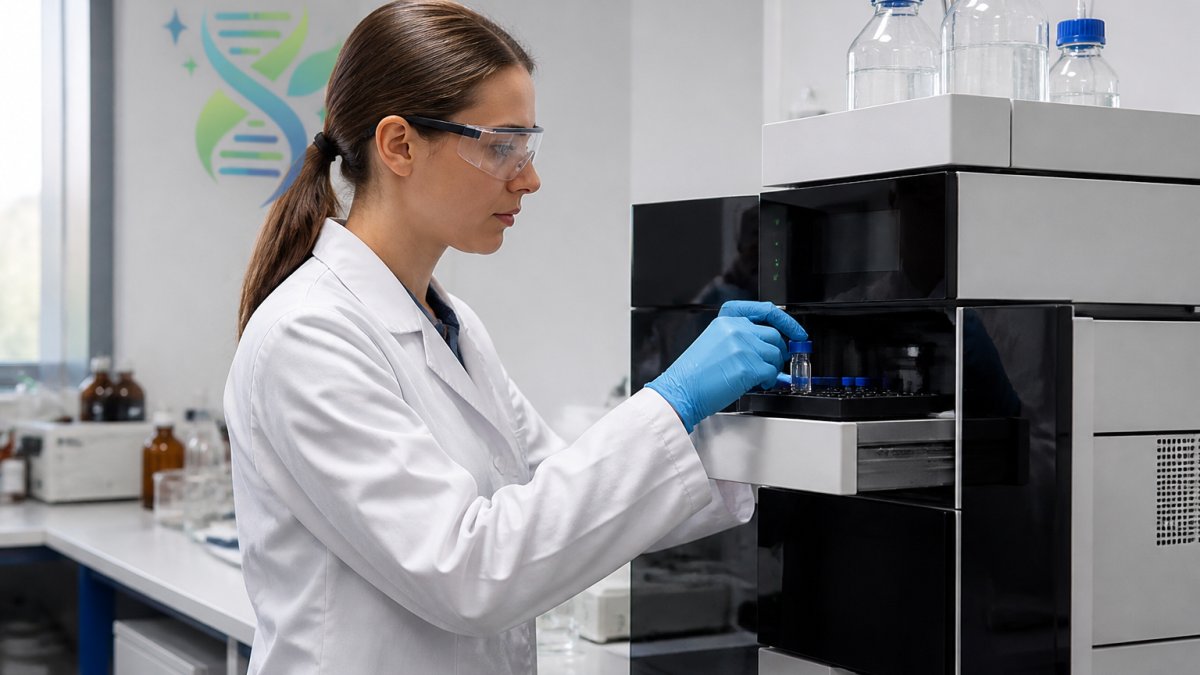
Core tests for a peptide batch include:
- Identity testing to confirm the correct sequence
- Purity testing by chromatographic methods
- Assay to measure how much peptide is present
Analytical Methods: HPLC, Mass Spectrometry and Beyond
HPLC separates the components in your sample and shows purity as a percentage, the workhorse method for peptide release testing. Mass spectrometry confirms molecular weight, verifying identity. Pair the two and you have a strong case: HPLC tells you how clean the batch is, mass spec tells you it is the right molecule. Add a second HPLC method with a different column chemistry for extra confidence, set system suitability checks before every run, and record the raw data, not just the final number. Reproducibility across batches is the goal, a tight method plus tight controls gives you that.
Step 4: Conduct Peptide Supplier Qualification
Peptide supplier qualification means proving every vendor meets your standards before you use their material, raw materials, reagents, excipients and any outside testing lab. Ask each supplier for their quality documentation and check it against your own requirements. A certificate alone is not enough; you want the data behind it.
Your supplier qualification file should hold:
- A completed supplier questionnaire
- Certificates of analysis for each lot
- An audit report if you visit the site
Re-qualify on a schedule. Suppliers change processes quietly. Your file should reflect the supplier you are actually buying from today.
Step 5: Master Documentation, Data Integrity and Training
Documentation is where most labs lose points. Batch records must show what happened, who did it and when.
Data integrity means your records are complete, accurate and unaltered. Electronic systems need audit trails that capture every change.
Personnel training and qualification closes the loop. Every person who touches a batch needs documented training for that task.
Keep these records current:
- Training files per employee
- Equipment logs and calibration certificates
- Deviation and investigation reports
Traceability ties it all together: from raw material lot to finished batch, you should be able to follow the chain in both directions.
Deviation Handling and CAPA
A deviation is any departure from an approved procedure, specification or instruction. Burying small deviations is the most common cause of repeat findings, treat every deviation as data. A workable workflow has five stages:
- Log it immediately. Date, time, batch, person, and a plain description of what happened. No interpretation yet.
- Contain it. Quarantine the affected material. Decide whether the batch can continue, be reworked, or must be rejected.
- Investigate to root cause. Ask why at least three times. "Operator error" is not a root cause; it is a starting point. The real cause is usually a procedure that allowed the error, a training gap, or an equipment condition nobody flagged.
- Assign corrective and preventive action (CAPA). Corrective action fixes this batch. Preventive action stops the next one. Both need an owner and a due date.
- Verify effectiveness. Re-check the same process after a defined interval. If the deviation recurs, the CAPA failed and the investigation reopens.
Change control runs alongside this: any change to a procedure, supplier, equipment or software goes through a written request, impact assessment, approval and defined effective date. Changes without that paper trail surface in an inspection two years later.
Data Integrity in Practice
Data integrity is not a software feature but a set of rules about who can do what to a record, and when.
For electronic systems, the minimum expectations are:
- Unique user accounts. No shared logins, ever. Each result traces to one person.
- Audit trails that cannot be switched off. Every creation, modification and deletion of a record is captured with a timestamp and a user ID.
- Access controls by role. An analyst should not be able to delete a result. A reviewer should not be able to alter raw data.
For paper records, the rules are simpler but just as strict. One-line strike-through, never erase or overwrite. Initial and date every correction. Never back-date. If a page is replaced, keep the original.
Training Matrices and Competency Checks
A training matrix is a grid: people down one side, tasks across the top, a status in each cell. It answers one question at a glance, is this person qualified for this task, today?
Reading a procedure is not qualification. Competency checks should include:
- A written or verbal knowledge check on the procedure
- An observed practical demonstration for hands-on tasks
- A signed record of who assessed the person and when
Gowning qualification deserves its own line for any controlled area: a person who has not been observed gowning correctly is not qualified to enter the room, however many years they have worked there.
Common Pitfalls in cGMP Compliance and How to Avoid Them
Most failures come from small habits, not big gaps:
| Pitfall | What goes wrong | How to fix it |
|---|---|---|
| Back-dated records | Batch records filled in days later | Record in real time, initial each step |
| Unqualified suppliers | No documentation on file | Run a full supplier qualification first |
| Skipped calibration | Results drift out of range | Set a calibration schedule and honor it |
| Weak deviation handling | Problems repeat silently | Investigate every deviation to root cause |
| Shared login accounts | No way to trace who did what | Give each person their own credentials |
| Vague cleaning steps | Cross-contamination risk | Write step-by-step cleaning procedures |
Every fix is a habit, not a purchase. Start with the records you keep today, because that is where an inspection starts too.
Cleaning and contamination control deserve special attention: peptide residues can carry over between batches if your cleaning validation is thin. Prove your cleaning works with swab or rinse sampling, and keep the results.
Conclusion: Your Next Steps Toward cGMP Compliance
The gap between a compliant lab and a struggling one usually comes down to records, testing and supplier control. Pick one of the five steps above and start there this week.
At Everform Research, we take that same approach with every compound we sell.
Ready to source peptides you can document? Use code EVER15 for 15% off your first order and shop our compounds today.
Frequently Asked Questions
What are the FDA requirements for cGMP in peptide manufacturing?
The FDA requires peptide manufacturers to follow Current Good Manufacturing Practice (CGMP) regulations, which set minimum standards for methods, facilities and controls. Key requirements include validated processes, raw material testing, batch records, analytical testing for identity and purity, and documentation. For specific peptides, also check 21 CFR and ICH Q7 guidance. Always verify current requirements on the FDA's official CGMP resources page.
What should a peptide lab audit checklist include?
A thorough peptide lab audit checklist should cover facility and equipment qualification, raw material and supplier qualification, batch record review, analytical testing (HPLC, mass spectrometry, purity and identity), deviation handling, data integrity, and personnel training. Include acceptance criteria for each step and ensure all records are traceable. This helps you identify gaps before an inspection and maintain cGMP compliance.
How can a lab qualify suppliers of peptide raw materials?
Qualifying suppliers involves evaluating their quality systems, requesting certificates of analysis (COAs), auditing their manufacturing sites if possible, and verifying that their materials meet your specifications. Establish a approved supplier list, perform periodic re-qualification, and maintain documentation of all assessments. This ensures raw materials are consistent and traceable, which is critical for cGMP compliance.
What testing helps verify peptide identity, purity, and quality?
Common tests include high-performance liquid chromatography (HPLC) for purity, mass spectrometry for molecular weight confirmation, amino acid analysis for composition, and endotoxin testing for safety. Each test should have defined acceptance criteria and be performed on every batch. These analytical methods are core to peptide quality control testing and help ensure reproducibility and product quality.