 how-to
How to Store Peptides Without a Freezer: A Practical Guide
Table of Contents
- Understanding Peptide Storage Basics
- Peptide Storage Temperature: What You Need to Know
- How to Store Lyophilised Peptides Without Freezer Access
- How to Store Reconstituted Peptides: Temperature and Shelf Life
- How Long Do Peptides Last in the Fridge?
- Practical Steps for Non-Freezer Peptide Storage
- Common Mistakes to Avoid When Storing Peptides
- Frequently Asked Questions
Last Updated: October 14, 2026
Understanding Peptide Storage Basics
Peptides are sensitive compounds that break down when exposed to heat, light, and moisture. Proper storage keeps them stable and effective.
The good news: you don't need a freezer to store peptides safely. Many researchers and athletes work around freezer limitations using the right containers, temperature control, and handling practices.
At Everform Research, we help customers maintain peptide integrity. Whether you're a researcher, athlete, or biohacker, the principles are the same: control temperature, block light, and minimise moisture exposure.
This guide covers practical methods for how to store peptides without a freezer, including refrigeration options, insulated containers, and what to do if you can't keep them cold.
Peptide Storage Temperature: What You Need to Know
Peptide storage temperature determines how long your compounds remain stable, and there is no single rule. Requirements vary by peptide form, preparation state, and product, so the label and manufacturer's guidance always outrank general advice, including anything on this page.
Dry peptides (lyophilised powder) are the more stable form. Many tolerate short periods at room temperature, but some products are labelled for weeks at controlled room temperature while others must stay cold from arrival. The only reliable source is the documentation that came with your vial.
Reconstituted peptides (dissolved in solution) are far more fragile. Once mixed with water or solvent, the clock starts and degradation accelerates. Most products in this state are labelled for refrigerated storage, and some are labelled for freezing. Treat any reconstituted vial as requiring cold storage unless its own paperwork says otherwise.
When Room-Temperature Storage Is Appropriate
Room-temperature storage is appropriate only when the specific product's label or manufacturer instructions permit it, for the stated period, within the stated temperature range. It is not a general property of peptides.
A practical way to think about it:
- Sealed lyophilised powder with label guidance permitting ambient storage: follow the label's temperature window and duration. Keep it dark, dry, and stable.
- Sealed lyophilised powder with no ambient guidance: treat refrigeration as the default and use ambient storage only as a short bridge, for example, during shipping or a power outage.
- Reconstituted solution: refrigerate unless the label explicitly allows otherwise. Do not improvise.
- Any product past its labelled in-use period: storage conditions no longer rescue it.
If you cannot find storage instructions for your specific product, do not assume room temperature is fine. Contact the manufacturer or a pharmacist before deciding. A vial that looks unchanged may still have lost potency.
Why Temperature Fluctuations Matter More Than Steady Warmth
Repeated temperature swings do more damage than a constant, moderate temperature. Each warm-cool cycle stresses the peptide structure, and the cumulative effect is harder to predict than simply being slightly warm throughout.
A cooler that drifts between 4°C and 15°C daily may be worse than a cupboard sitting steadily at 20°C, if the label permits ambient storage. Stability comes from consistency as much as from cold.
How to Monitor Temperature Without Lab Equipment
You do not need a laboratory to know what your storage environment is doing.
- Use a simple min-max thermometer. Inexpensive digital models record the highest and lowest temperature since the last reset, revealing whether storage is truly stable.
- Log it. A daily or weekly reading reveals drift before it becomes a problem.
- Keep the thermometer near the vials, not the cooling element. The temperature at the back of a fridge is not where your product sits.
- Avoid direct contact between vials and ice packs. Wrap ice packs in cloth or place a barrier between them and the product.
- Keep storage away from sunlight, radiators, ovens, and warm electronics. Ambient heat defeats insulation faster than most people expect.
What to Do After a Temperature Excursion
If your peptides warmed unexpectedly, a failed fridge, a delayed delivery, a cooler left in a warm room, do not guess whether the vial is still usable.
- Note what happened. Record the approximate high temperature and exposure duration.
- Check the product's own instructions. Some labels include excursion guidance; most do not.
- Contact the manufacturer or a pharmacist. Give them the product, form (powder or reconstituted), temperature, and duration. They can confirm whether it remains within its labelled stability envelope.
- If you cannot get a definitive answer, do not use the product where potency matters. Visual inspection cannot confirm activity.
The keyword question, how to store peptides without a freezer, has a conditional answer. Some products may tolerate specified room-temperature periods; others require refrigeration regardless of what equipment you have. Read the label first, then build your storage system around it.
FDA guidance on drug storage and handling
How to Store Lyophilised Peptides Without Freezer Access
Lyophilised (freeze-dried) peptides are your easiest option without a freezer. The powder form is inherently more stable than liquid.
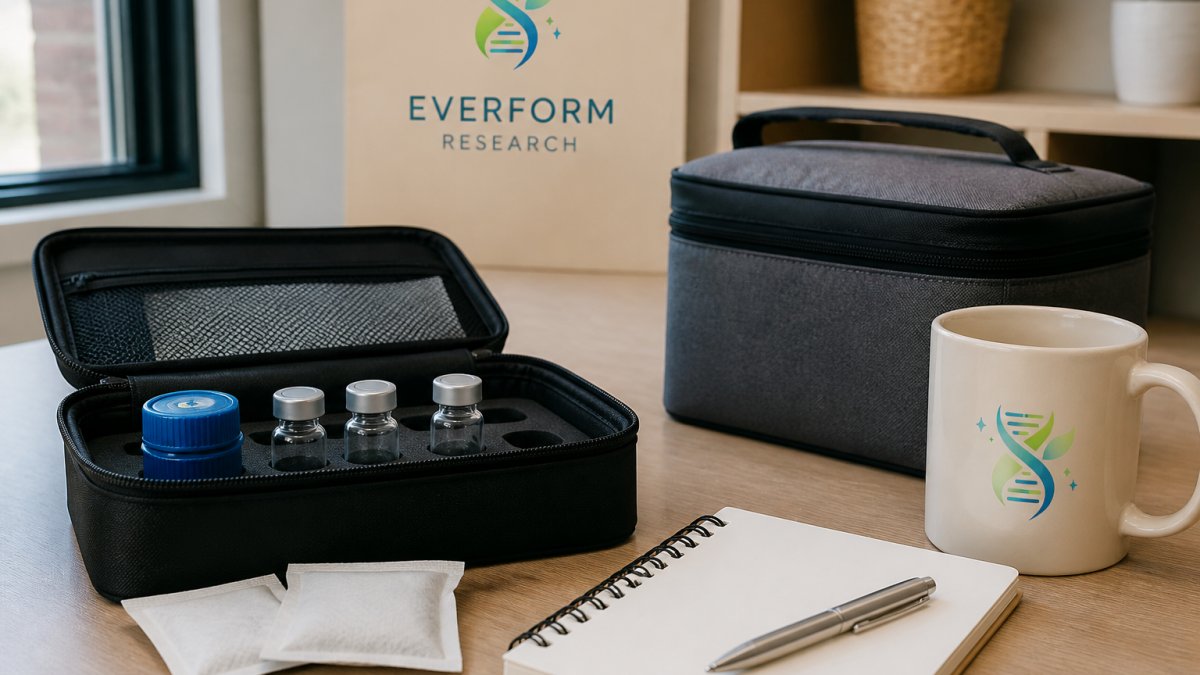
Step 1: Use an opaque, airtight container. Light breaks down peptides quickly. Store vials in an amber or opaque container that blocks UV light, and keep the original packaging if it's dark.
Step 2: Add desiccant packs. Moisture is the enemy of dry peptides. Place silica gel packets inside your container and replace them monthly in humid climates.
Step 3: Keep temperature consistent. A dedicated mini-refrigerator set to 4°C and monitored with a basic thermometer works well. Refrigerator temperature (2-8°C) is acceptable for dry peptides over weeks or months.
Step 4: Store in a cool, dark place. If refrigeration isn't possible, use an insulated cooler with ice packs in a dark cupboard, replacing ice packs every 24-48 hours.
Step 5: Label everything clearly. Write the peptide name, storage date, and expiration estimate on each vial to prevent mix-ups.
How to Store Reconstituted Peptides: Temperature and Shelf Life
Reconstituted peptides need more care. Once you've mixed powder with water or solvent, the clock starts ticking.
Refrigerator storage is your best non-freezer option. At 2-8°C, most reconstituted peptides stay stable for 2-4 weeks, though some remain viable longer depending on the peptide and solvent.
Temperature control is critical. Don't store reconstituted peptides at room temperature; they degrade rapidly, often within days. If you can't refrigerate, use an insulated container with ice packs, replaced regularly.
Sealed containers prevent contamination. Use sterile vials with tight seals and never leave the cap off, even briefly.
Avoid repeated freeze-thaw cycles. Each cycle damages peptide molecules. Divide reconstituted peptides into smaller portions before freezing so you only thaw what you need.
The solvent matters too. Check your documentation for the recommended solvent and storage conditions.
How Long Do Peptides Last in the Fridge?
This depends on whether your peptides are dry or reconstituted.
Dry peptides in the fridge: 6-12 months or longer, depending on the compound. Keep them sealed and away from light.
Reconstituted peptides in the fridge: 2-4 weeks typically. Always check your supplier's stability data or certificate of analysis for the specific timeframe.
Temperature stability matters. A dedicated mini-refrigerator maintaining a steady 4°C is better than a standard fridge that opens and closes frequently.
Check for signs of degradation.
The safest approach: use peptides sooner rather than later.
Practical Steps for Non-Freezer Peptide Storage
Here's a straightforward system you can set up today.
What you'll need:
- Opaque or amber storage container (or original vials)
- Desiccant packs (silica gel)
- Mini-refrigerator or insulated cooler
- Ice packs or frozen water bottles
- Thermometer (optional)
- Labels and permanent marker

Step 1: Choose your cooling method. Option A: Mini-refrigerator (best for consistent temperature). Option B: Insulated cooler with ice packs (portable, good for travel). Option C: Dark cupboard with ice packs replaced daily (lowest cost, requires discipline).
Step 2: Prepare your storage container. Place desiccant packs on the bottom, arrange vials upright so labels are visible, and ensure the container is opaque or amber-tinted to block light.
Step 3: Set up temperature monitoring. If using a mini-fridge, place a basic thermometer inside and aim for 2-8°C, checking weekly. If using a cooler, measure daily and replace ice packs as needed.
Step 4: Label and inventory. Write storage date and expected expiration on each vial, and keep a simple spreadsheet or notebook listing what you have and when you stored it, so older stock gets used first.
Step 5: Maintain your system. Check peptides weekly, replace ice packs every 24-48 hours if using a cooler, refresh desiccant packs monthly, and keep the storage area dark and away from direct sunlight.
This setup works for researchers, athletes, and anyone managing peptides without freezer access.
Common Mistakes to Avoid When Storing Peptides
Mistake 1: Storing reconstituted peptides at room temperature. Once in solution, degradation accelerates. Unless the label permits ambient storage for a stated period, refrigerate it. If you cannot refrigerate immediately, use a cooler with a barrier between vials and ice packs.
Mistake 2: Using clear or translucent containers. Light degrades peptides. Keep products in their amber vials, or transfer to an opaque or amber-tinted container stored in a dark cupboard.
Mistake 3: Ignoring humidity. Moisture damages dry peptides. Replace desiccant packs on a schedule, monthly in humid climates, and reseal containers promptly.
Mistake 4: Repeated temperature swings. Moving vials between warm and cool environments stresses them more than steady storage. Pick a method, keep it in one place, and avoid unnecessary handling.
Mistake 5: Forgetting to label and date vials. Write the product name, storage date, and labelled in-use period on every vial the moment it enters storage, and keep a simple inventory so older stock gets used first.
Mistake 6: Storing peptides near heat sources. Ovens, radiators, direct sunlight, and warm electronics defeat insulation. A cool, dark cupboard beats a warm shelf every time.
Mistake 7: Mixing different peptides in one container. Cross-contamination and mix-up are real risks. Store products separately or in sealed compartments, and never combine a reconstituted vial with a dry one.
Mistake 8: Storing peptides alongside food or household items. Peptides should not share a shelf with food, drinks, or cleaning products. Keep them in a dedicated container or clearly separated area to protect the product and prevent accidental ingestion.
Mistake 9: Handling vials carelessly. Clean hands, a clean surface, and a wiped vial top before every entry reduce contamination risk. Keep vials sealed when not in use.
Mistake 10: Guessing after a problem instead of checking. If a vial warms unexpectedly, changes appearance, or passes its labelled in-use period, do not rely on smell or colour. Check the product's instructions, and if they do not answer the question, contact the manufacturer or a pharmacist. When in doubt, discard.
A simple rule that prevents most of these mistakes: treat every vial as if it has its own instructions, because it does. The label that came with your product is more specific than any general guide, including this one.
Mistake 11: Assuming all peptides store the same way. Lyophilised powder and reconstituted solution have different requirements, and products differ within each category. Applying one rule to every vial is how people ruin the ones needing different handling.
CDC guidance on safe handling and storage practices
Frequently Asked Questions
Can reconstituted peptides be frozen?
Reconstituted peptides can be frozen, but stability depends on the specific peptide and solvent used. Many reconstituted peptides remain stable at −20°C or lower, though some formulations may degrade faster than others. Always follow the manufacturer's stability data and product-specific instructions, as freezing conditions can affect peptide integrity differently depending on preparation method and solvent composition.
How long do peptides last in the fridge without a freezer?
Refrigerated peptide shelf life varies significantly by peptide type and form. Lyophilised (dry) peptides stored in a standard refrigerator (2-8°C) may last weeks to months if kept in sealed, light-protected containers. Reconstituted peptides have shorter stability, typically lasting days to weeks depending on the solvent and storage conditions. Always check manufacturer stability data and storage guidelines for your specific product.
Can lyophilised peptides be stored at room temperature?
Lyophilised peptides can be stored at room temperature only if manufacturer instructions explicitly permit it and the vial remains sealed in original, light-protective packaging. Most lyophilised peptides degrade faster at ambient conditions than at cooler temperatures. Room-temperature storage works best for short-term use (days) and requires protection from light, humidity, and heat exposure. Verify product-specific guidance before relying on room-temperature storage.
What should I do if my peptides experience a temperature excursion?
If peptides are exposed to higher-than-recommended temperatures, assess the duration and extent of the excursion. Brief exposures (hours) to moderately elevated temperatures may not affect stability, but prolonged heat exposure can damage peptide integrity. Check the product's stability data and contact the supplier for guidance. When in doubt, contact your supplier or consider re-testing batch quality.