 ultimate-guide
What Is the Importance of Peptide Integrity?
Table of Contents
- What Peptide Integrity Means in Practice
- Why Peptide Integrity Matters for Reproducible Research
- Peptide Purity Testing: How Researchers Verify What Is in the Vial
- Reading a Peptide Certificate of Analysis Without Getting Fooled
- Peptide Stability: What Causes Degradation and How to Slow It
- Peptide Storage Best Practices for Long-Term Integrity
- Conclusion
- Frequently Asked Questions
Last Updated: October 6, 2026
What Peptide Integrity Means in Practice
Peptide integrity is the degree to which a peptide sample matches its stated identity, purity, and potency from synthesis to use.
A peptide is a short chain of amino acids linked by peptide bonds, and its structure determines everything it does. Change one residue or let oxidation creep in, and the molecule you test is no longer the molecule you ordered.
The importance of peptide integrity comes down to one uncomfortable fact: a vial can look perfect and still be wrong.
The Three Pillars: Purity, Identity, and Potency
Integrity rests on three separate questions, and passing one says nothing about the others.
- Purity asks what percentage of the material is your target peptide, versus truncated sequences, water, or counterions.
- Identity asks whether the sequence is actually correct. A 99% pure sample of the wrong peptide is still the wrong peptide.
- Potency asks whether the material still does what it is supposed to do biologically.
A certificate showing high purity with no identity confirmation is only a third of the picture.
Why Peptide Integrity Matters for Reproducible Research
Reproducibility collapses when the input material changes between experiments. A 2022 review of peptide stability and delivery strategies notes that peptides play roles across immunology, medical diagnostics, and drug discovery, and that keeping them stable is an active area of pharmaceutical research.
A 2% purity difference between two vials sounds trivial, but across a 50-experiment screening run it can mean the difference between a clean signal and data you cannot defend.
For labs working with therapeutic peptides, the stakes are higher. Research published in Therapeutic Peptides: Current Applications and Future Directions describes peptide drugs used across oncology, metabolic, cardiovascular, respiratory, and pain-related conditions. Integrity is not a paperwork issue in that context.
How Degradation Affects Biological Activity
Degradation changes molecular structure, and structure dictates function. Common pathways include hydrolysis, oxidation of sensitive residues, deamidation, and aggregation, each altering how the peptide binds and how long it survives in solution.
A degraded sample does not usually fail loudly. It produces weaker, noisier, or simply different results. That is what makes it dangerous in a research setting.
Peptide Purity Testing: How Researchers Verify What Is in the Vial
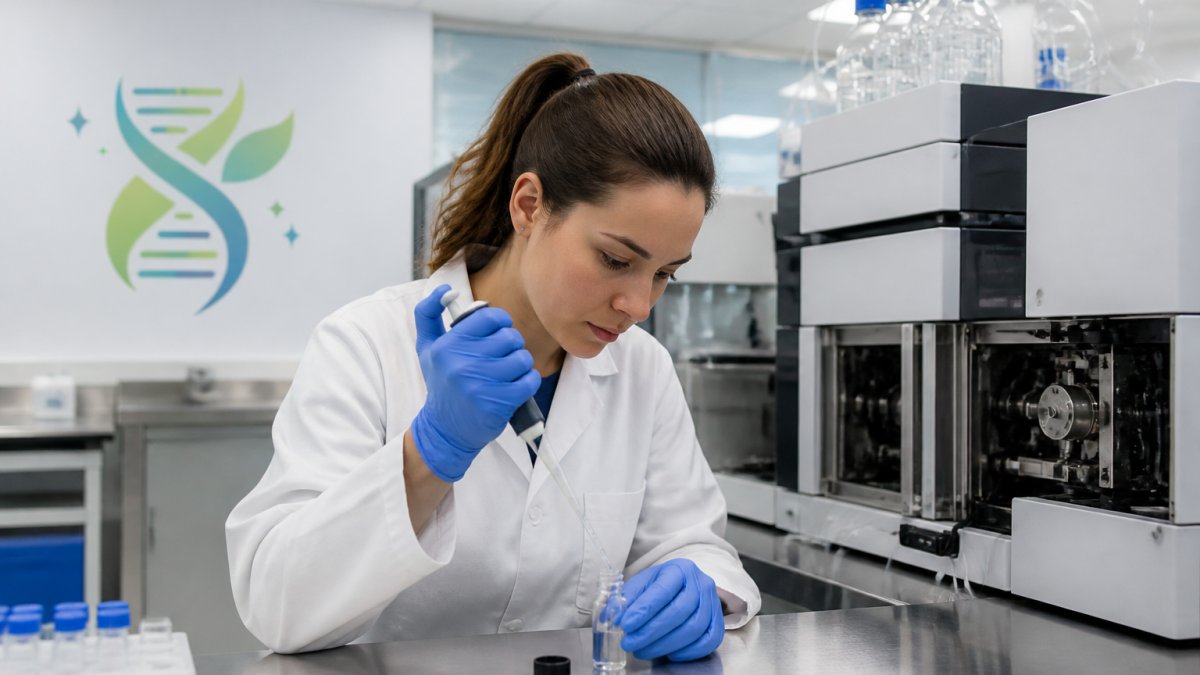
Analytical testing confirms what is actually in the vial. No single method answers every question, so reputable suppliers run several and report all of them.
Common Analytical Methods
High-performance liquid chromatography (HPLC) separates components by their interaction with a stationary phase, giving a purity percentage based on peak area.
Mass spectrometry (MS) measures molecular weight. If the observed mass matches the calculated mass for your sequence, identity is confirmed, the single most useful check against a mislabeled vial.
Amino acid analysis breaks the peptide into its constituent residues and quantifies them, confirming composition.
Peptide mapping uses enzymatic digestion followed by separation to verify the full sequence, residue by residue.
| Method | What It Confirms | Best For |
|---|---|---|
| HPLC | Purity percentage | Routine batch release |
| Mass spectrometry | Molecular identity | Catching mislabeled vials |
| Amino acid analysis | Residue composition | Confirming formulation |
| Peptide mapping | Full sequence | High-stakes validation |
Reading a Peptide Certificate of Analysis Without Getting Fooled
A certificate of analysis is only as good as the lab behind it, and even a genuine certificate can mislead if you do not know how to read it. It is a collection of separate measurements, and integrity only holds when those answers line up.
Start with the administrative layer: the testing laboratory's name, accreditation status, method used, batch number, and date of analysis. If any are missing, treat the document as marketing rather than evidence.
What Each Result Actually Tells You
Purity by HPLC gives a percentage based on peak area.
Mass spectrometry gives a molecular weight, the single most useful check against a mislabeled vial, because a match between observed and calculated mass sharply reduces the odds of a wrong sequence.
Amino acid analysis breaks the peptide into its constituent residues and quantifies them, confirming composition and expected ratios.
Peptide mapping uses enzymatic digestion followed by separation to verify the full sequence, residue by residue.
Residual solvents, counterion content, and water content are often reported alongside the main results.
Why One Purity Figure Is Not Integrity
Integrity is the alignment of identity, purity, and potency. A certificate can show 99% purity by HPLC, a matching mass, and a clean appearance, and still describe a batch that has lost biological activity through oxidation or aggregation that neither test was designed to catch.
A practical way to read any certificate is to ask three questions in order. First, does the identity evidence match the sequence I ordered? Second, does the purity method actually separate my peptide from its likely degradation products?
Here is what to check, in order:
- Testing lab named and independent of the supplier
- Batch or lot number matching your vial
- Purity figure with the method stated (HPLC, typically)
- Mass spectrometry result confirming molecular weight
- Date of analysis, ideally within the last 12 months
- Storage and handling instructions included
- Any potency or bioassay data, if the application depends on function
If a supplier cannot produce all of these, that is your answer.
Peptide Stability: What Causes Degradation and How to Slow It
Peptide stability depends on the sequence itself, the solution it sits in, temperature, pH, and exposure to oxygen and light. Some sequences are strong. Others degrade within days at room temperature.
A 2022 review in Pharmaceuticals on strategies for improving peptide stability and delivery examines chemical modifications used to slow degradation, including changes to the peptide backbone and the addition of unnatural amino acids.
Factors that accelerate breakdown:
- Repeated freeze-thaw cycles
- Alkaline or highly acidic pH outside the stable range
- Dissolved oxygen and trace metal ions
- Light exposure, particularly UV
- Bacterial contamination in reconstituted solutions
Warning Signs of a Compromised Peptide
Visible cloudiness, gel formation, or a color shift in a reconstituted solution are obvious red flags. So is a precipitate that will not dissolve back into solution.
Less obvious signs matter more. A drop in potency, unexpected variability between replicates, or a mass spec result showing extra peaks all point to degradation or contamination. If your results suddenly stop matching earlier runs, suspect the material before the protocol.
Peptide Storage Best Practices for Long-Term Integrity
Storage is where integrity is either preserved or quietly lost. Lyophilized peptides stored dry at -20°C or lower hold their integrity far longer than reconstituted solutions. Once in solution, the clock runs fast, and the rate depends on sequence, concentration, pH, and the container itself.
A useful way to think about storage is to separate the risks into four categories: thermal, chemical, physical, and biological. Each has its own warning signs and countermeasures.
Thermal and Light Risks
Temperature is the most obvious variable and the one most often handled carelessly. Lyophilized powder tolerates short excursions, but repeated warming and cooling drives moisture migration and can accelerate aggregation. Store dry powder at -20°C or lower, and let the vial equilibrate to room temperature before opening.
Light exposure is underestimated. Ultraviolet and even strong visible light can drive oxidation of sensitive residues such as methionine, tryptophan, and cysteine. Amber vials or opaque packaging matter most for sequences containing those residues.
Chemical Risks: pH, Oxygen, and Metals
Every peptide has a pH range where it is most stable, and outside that range hydrolysis and deamidation accelerate. Reconstituting in a buffer matched to that range matters more than the buffer brand.
Dissolved oxygen and trace metal ions are a common and underappreciated pair. Iron and copper in particular catalyse oxidation. If your peptide is sensitive, use metal-free water, avoid prolonged exposure to air, and consider degassing buffers before use.
Physical Risks: Freeze-Thaw, Shear, and Adsorption
Repeated freeze-thaw cycles are the single most common cause of preventable degradation in working labs. Each cycle concentrates solutes as ice forms, shifts pH locally, and can drive aggregation.
Vortexing is another quiet culprit: it can shear larger peptides and drive aggregation at air-liquid interfaces, so mix by gentle inversion instead. Adsorption to plastic and glass is a third physical risk, especially for hydrophobic or low-concentration peptides.
Biological Risks: Contamination in Reconstituted Solutions
Once a peptide is in aqueous solution, it is a potential growth medium. Bacterial contamination introduces proteases that cleave your peptide and changes pH and ionic conditions. Use sterile technique, filter buffers where appropriate, and keep working solutions at 4°C for short-term use only.
A Practical Storage Routine
- Store lyophilized powder desiccated, protected from light, at -20°C or lower.
- Aliquot before freezing so you never thaw more than you need.
- Reconstitute with sterile buffer matched to the peptide's stable pH range.
- Avoid vortexing; mix by gentle inversion.
- Keep working solutions at 4°C for short-term use only, and record the date.
- Inspect for cloudiness, gel formation, or a color shift before each use.
Storage guidance varies by sequence, so follow the documentation for your specific compound. When in doubt, treat a change in appearance or a drop in assay performance as a signal to question the material before the protocol.
Conclusion
Getting consistent results starts with material you can trust, and that means verified purity, confirmed identity, and documented stability at every stage. For research groups sourcing peptides, we offer rigorous third-party testing, cGMP-compliant manufacturing, and clearer documentation so every batch is traceable and every result is defensible. Use code EVER15 for 15% off your order, and shop compounds at Everform Research to see the difference verified quality makes.
Frequently Asked Questions
What does peptide integrity mean?
Peptide integrity is the degree to which a peptide sample matches its intended molecular structure, purity level, and biological activity. It covers three connected ideas: identity (is this the correct amino-acid sequence?), purity (how much of the sample is the target peptide versus impurities or truncated fragments?), and potency (does it still produce the expected biological effect?). A peptide can pass a purity test yet still fail on identity or potency, which is why integrity is a broader measure than purity alone.
Why is peptide integrity important in research?
Inconsistent peptide integrity undermines reproducibility. If one batch is 98% pure and the next is 96%, or if a peptide has partially degraded during shipping, experimental results can shift for reasons unrelated to the hypothesis being tested. Regulatory guidelines for therapeutic peptide analysis emphasize validated characterization methods for exactly this reason. Researchers who source peptides with verified integrity spend less time troubleshooting unexplained variability and more time generating data that holds up.
How can peptide purity be verified?
Peptide purity testing typically combines reversed-phase high-performance liquid chromatography (RP-HPLC) to separate and quantify impurities, mass spectrometry (MS) to confirm molecular weight and identity, and amino-acid analysis or sequencing when sequence confirmation is needed. A certificate of analysis should report results from at least two orthogonal methods. If a supplier provides only a single HPLC trace with no mass spectrometry data, the documentation is incomplete for most research applications.
What can cause a peptide to degrade?
Common degradation pathways include hydrolysis (breaking the peptide bond), oxidation of susceptible residues like methionine and cysteine, deamidation of asparagine and glutamine, and aggregation. Temperature fluctuations, repeated freeze-thaw cycles, exposure to light, and incorrect pH all accelerate these processes. Proper storage, lyophilization, and minimizing handling are the main defenses. A peptide that looks fine visually can still have lost significant potency if it has been stored poorly.