 how-to
5 Critical Peptide Degradation Prevention Mistakes During Storage
Last Updated: October 24, 2026
Quick Summary
Peptide degradation prevention during storage requires controlling temperature, moisture, light and oxygen exposure. Store lyophilised peptides at −80°C or −20°C in sealed vials away from light, and keep reconstituted solutions at −20°C or colder for weeks to a few months, minimising freeze-thaw cycles and handling.
- Lyophilised peptides at −80°C remain stable for years; at −20°C for several months to a couple of years.
- Reconstituted solutions degrade faster and remain usable for weeks to a few months even when cold.
- Freeze-thaw cycles damage peptide structure; use aliquoting to divide reconstituted peptides into single-use portions.
- Peptides containing methionine, cysteine or tryptophan are prone to oxidation and require colder storage and reduced oxygen exposure.
- Manual-defrost freezers are preferable to frost-free models because defrost cycles create temperature swings and moisture that accelerate degradation.
Table of Contents
- Why Peptide Degradation Happens During Storage
- Choosing the Right Peptide Storage Temperature
- How to Store Lyophilised Peptides for Maximum Stability
- Reconstituted Peptide Storage: Moisture, Light and Time
- Peptide Freeze-Thaw Stability: Avoiding Repeated Cycles
- Detecting and Documenting Peptide Degradation
- Getting Started with Proper Peptide Storage Protocols
- Frequently Asked Questions
Why Peptide Degradation Happens During Storage
Peptide degradation prevention during storage starts with understanding what breaks your samples down.
The most common culprits are oxidation and hydrolysis. Oxidation happens when peptides containing methionine, cysteine, or tryptophan react with oxygen in the air.
Temperature swings are another major problem. Every time you freeze and thaw a peptide solution, ice crystals form and damage the molecular structure.
According to a comparative study on peptide storage conditions, a 0.1% TFA solution stored between 4°C and −80°C appeared to slow peptide degradation effectively.
The stakes are high.
Choosing the Right Peptide Storage Temperature
Temperature control is the foundation of peptide degradation prevention, but there is no single correct setpoint. The right temperature depends on whether your peptide is dry or in solution, how long you need to store it, and what equipment you can access. Treat any recommendation as a starting point, not a rule.
Start with the physical state
Lyophilised (freeze-dried) powder is the most stable form because removing water shuts down hydrolysis. The practical range is −20°C to −80°C: at −80°C most lyophilised peptides remain stable for years, while at −20°C expect several months to a couple of years depending on the sequence.
Reconstituted solution is different. Once water is added, hydrolysis and oxidation proceed even when cold, just more slowly. Store it at −20°C or colder and accept a usable life of weeks to a few months, not years. Refrigeration at 4°C is a working-sample compromise, not long-term storage.
Match the setpoint to the peptide, not just the freezer
Different sequences have different vulnerabilities, so a protocol that protects one peptide may be overkill or inadequate for another. A few patterns are worth knowing:
- Peptides containing methionine, cysteine, or tryptophan are prone to oxidation. For these, colder storage and reduced oxygen exposure matter more than for sequences without those residues.
- Peptides with asparagine or aspartic acid motifs can be susceptible to deamidation and isomerisation, especially in solution at neutral to slightly basic pH. Cold storage slows these reactions but does not stop them.
- Simple sequences without reactive side chains are more forgiving and may tolerate −20°C for extended periods.
- Formulation matters too. Buffers, salts, and excipients can either stabilise or destabilise a peptide, so the storage medium is part of the temperature decision, not separate from it.
A comparative study indexed on PubMed Central reported that a 0.1% TFA solution stored between 4°C and −80°C appeared to slow peptide degradation effectively, which illustrates that the storage medium and the temperature work together. comparative study on peptide storage conditions
A practical decision path
Use this sequence when you are setting up storage for a new peptide:
- Is the peptide dry or in solution? Dry powder goes to −20°C or −80°C. Solution goes to −20°C or colder and gets a shorter review date.
- How long will you store it? Under a month, −20°C is usually adequate for dry powder. Over a year, −80°C is the safer default.
- What equipment do you have? If you have a −80°C freezer, use it for long-term storage and keep a −20°C working stock. If you only have −20°C, plan shorter review intervals and document them.
- Does the sequence have reactive residues? If yes, prioritise colder storage and minimise opening the vial.
- Is the freezer manual-defrost or frost-free? Frost-free freezers cycle through warming periods that create temperature swings and moisture. A manual-defrost freezer is preferable for peptide storage even though it costs more upfront.
Avoid the common temperature mistakes
The most frequent errors are storing lyophilised powder at room temperature for convenience, leaving reconstituted solution out overnight, and using a frost-free freezer without accounting for defrost cycles. Each shortens usable life in ways that may stay invisible until an assay fails.
The right storage temperature depends on whether your peptide is dry or in solution, how long you need to store it, and what equipment you have access to.
| Physical State | Storage Temperature | Expected Stability | Key Consideration |
|---|---|---|---|
| Lyophilised powder | −80°C | Years | Most stable form |
| Lyophilised powder | −20°C | Several months to couple of years | Acceptable if −80°C unavailable |
| Lyophilised powder | Room temperature | Days only | High risk, short handling only |
| Reconstituted solution | −20°C or colder | Weeks to few months | Hydrolysis proceeds even when cold |
| Reconstituted solution | 4°C | Weeks to few months | Working-sample compromise only |
| Peptides with methionine, cysteine, tryptophan | −80°C preferred | Extended | Prone to oxidation |
| Simple sequences without reactive residues | −20°C | Extended periods | More forgiving |
How to Store Lyophilised Peptides for Maximum Stability
Lyophilised peptides are your most stable form: with the water removed, hydrolysis risk during storage is eliminated.

Store them in their original sealed vial, which protects against moisture and light.
The key steps are straightforward:
- Keep vials sealed until you need them
- Store at −20°C minimum, −80°C ideally
- Use a manual-defrost freezer, not a frost-free one
- Keep vials away from moisture and light
- Label each vial with the peptide name, date received, and expiry estimate
According to guidance on controlled-release systems and peptide stability, controlled-release systems must be dried to avoid premature degradation during storage.
Some researchers add desiccant packets to freezer storage boxes. This removes ambient moisture and extends shelf life, simple, inexpensive insurance.
Watch out: an auto-defrost freezer builds up ice that then melts, creating moisture that attacks your peptides.
Consider how to store research peptides properly for a comprehensive guide on storage techniques beyond the essentials covered here.
Reconstituted Peptide Storage: Moisture, Light and Time
Once you dissolve a lyophilised peptide, everything changes: the water you introduce accelerates hydrolysis, and your solution is on a clock. Follow step-by-step instructions for reconstituting lyophilised peptides safely to prevent degradation from the start.
Reconstituted peptides are far less stable than powder, typically remaining usable for weeks to a few months depending on sequence and storage conditions.
Keep reconstituted solutions in sealed vials at −20°C or colder. Never leave them at room temperature overnight. Every hour at room temperature shortens their lifespan.
Light degrades reconstituted peptides quickly.
Moisture is still a threat.
The practical workflow is this: prepare only what you need for immediate use.
Learn more about how to store research peptides for stability to understand the chemistry behind reconstituted peptide storage in detail.
Peptide Freeze-Thaw Stability: Avoiding Repeated Cycles
Freeze-thaw cycles are brutal on peptide solutions: ice crystals form and rupture molecular structures, and each cycle damages your sample further.
The rule is simple: minimise freeze-thaw events. Ideally, avoid them entirely.
If you must freeze a reconstituted peptide, do it once and plan to use the entire vial.
Instead, use aliquoting. Divide your reconstituted peptide into small working portions immediately after reconstitution. Freeze each aliquot separately.
Peptide freeze-thaw stability comes down to chemistry: each freeze damages the peptide. One freeze-thaw is fine, two is acceptable, and beyond that you are accumulating damage.
Detecting and Documenting Peptide Degradation
Prevention is the goal, but you also need to know whether your storage protocol is working. Visual inspection is the first check and the least reliable: a clear, colourless solution can still contain hydrolysed or oxidised peptide, and a lyophilised cake can look intact while its integrity has declined. If appearance is all you check, you are guessing.
When visual inspection is not enough
Visual inspection can catch gross problems, precipitation, discolouration, cloudiness, or a collapsed cake, but it cannot quantify loss of potency or detect subtle modifications. If your assay results are drifting, if a peptide has been stored longer than its review interval, or if you need to release material for a regulated study, move to analytical testing.
Analytical methods and what they tell you
Mass spectrometry is the most direct way to confirm identity and detect fragmentation.
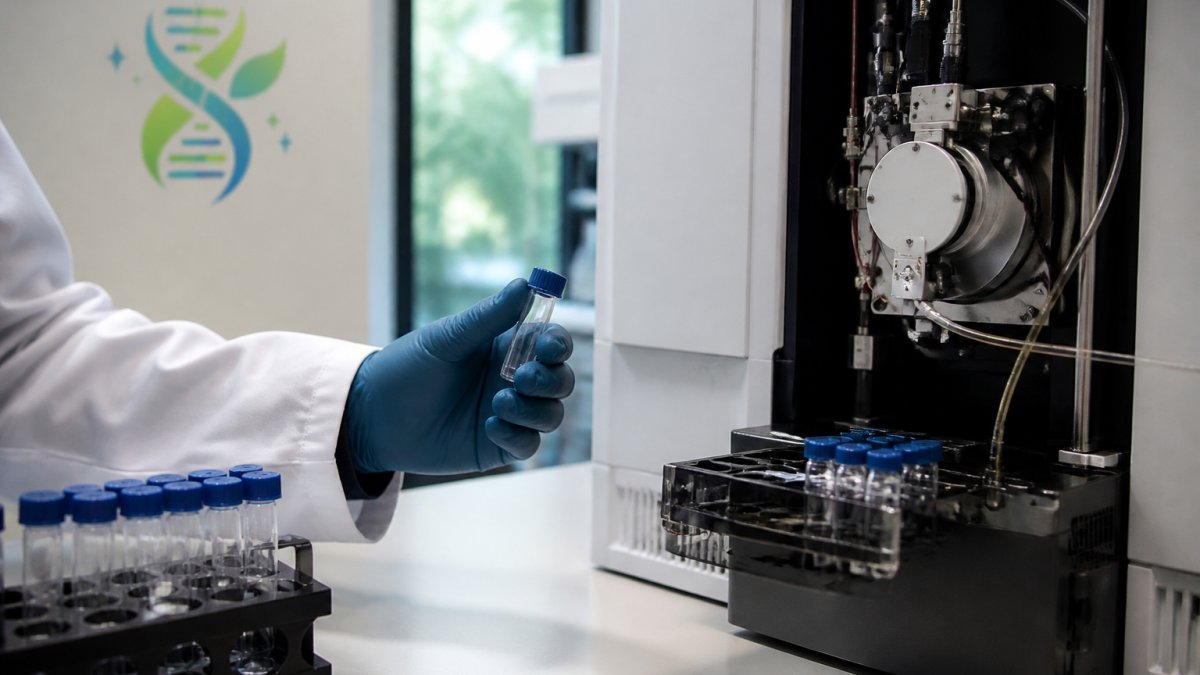
HPLC (high-performance liquid chromatography) separates peptide components by size and charge, revealing impurities and degradation products. It is the workhorse method for purity assessment and for tracking changes over time.
Other methods have narrower roles. Ion-exchange chromatography can resolve charge variants from deamidation. Size-exclusion chromatography is useful for aggregation. The right method depends on what you are trying to detect, so define the question before choosing the test.
Build a documentation system that makes storage reproducible
Detection only helps if you can connect a result to a storage history. A simple documentation system should capture:
- Peptide name, lot number, date received, and date opened
- Storage location and setpoint, with a temperature log that records excursions
- Desiccant replacement dates if desiccant is used
- Aliquoting records: how many aliquots were made, their labels, and when each was used
- Any visible changes noted at each handling
- Analytical results and the date each test was run
Temperature logs deserve special attention. A logger that records continuously is better than a daily manual check because it captures overnight and weekend excursions. If a freezer fails or a defrost cycle runs long, the log is your evidence of what the peptide experienced.
Connect documentation to release decisions
Documentation is not paperwork for its own sake. It lets you decide whether a peptide is still fit for use. A common pattern is to set a review interval based on the storage condition, shorter for reconstituted solution, longer for lyophilised powder at −80°C, and to require an analytical check before extending use beyond that interval.
At Everform Research, we provide third-party testing and documentation with every peptide order, which gives you a baseline for comparison. If you test your sample after six months and find degradation, you know it happened in your lab, not during manufacturing or shipping.
Getting Started with Proper Peptide Storage Protocols
Building a storage protocol takes planning but pays dividends in data quality and reproducibility.
Next, categorise your peptides. Different sequences have different stability profiles. Peptides with aromatic residues need colder storage.
Create a simple storage log. Record peptide name, vial number, date received, storage location, and date opened.
At Everform Research, we provide third-party testing and documentation with every peptide order. This gives you a baseline for comparison.
Peptide degradation prevention during storage isn't complicated, but it demands consistency.
Everform Research supplies premium peptides backed by rigorous third-party testing and cGMP-compliant manufacturing. Get started with proper peptide storage protocols today, and use discount code EVER15 for 15% off your first order. Shop compounds and invest in the quality your research deserves.
Frequently Asked Questions
How should peptides be stored to prevent degradation?
Store lyophilised peptides in a sealed vial at −20°C or preferably −80°C in a manual-defrost freezer to minimise moisture and oxidation exposure. Keep them in a desiccated environment away from light. For reconstituted solutions, use airtight storage at −20°C or colder. A 2012 study found that a 0.1% trifluoroacetic acid solution stored between 4°C and −80°C slowed peptide degradation significantly (Tran et al., Journal of Biomolecular Techniques, 2012).
Can repeated freeze-thaw cycles damage peptide freeze-thaw stability?
Yes. Repeated freeze-thaw cycles cause mechanical stress and chemical degradation, particularly in reconstituted solutions. Each cycle exposes peptides to temperature fluctuations and increases aggregation risk. Aliquot your peptide solution into single-use portions before freezing so you thaw only what you need. This approach protects the remaining stock and maintains peptide integrity across your experiments.
How long do peptides last in storage?
Shelf life depends on peptide composition, storage conditions, and whether the peptide is lyophilised or reconstituted. Most lyophilised peptides remain stable for several years under recommended conditions (−20°C or −80°C, desiccated, sealed). However, sequences containing cysteine, methionine, or tryptophan are prone to air oxidation and may degrade faster. Reconstituted solutions have shorter shelf life, typically weeks to months, depending on your storage temperature and the peptide's chemical stability. Always consult your certificate of analysis for specific guidance.
What information should a peptide certificate of analysis include?
A complete certificate of analysis should list peptide purity percentage, molecular weight, storage recommendations (temperature, container type, desiccant requirements), expiration date or stability data, and the testing methodology used. It should also identify any amino-acid residues that may affect long-term stability and specify whether the peptide was tested by a third-party laboratory. This documentation helps you make informed decisions about storage protocols and batch consistency.