 how-to
How to Store Research Peptides Properly
Table of Contents
- Why Proper Peptide Storage Matters for Your Research
- How to Store Lyophilised Peptides in Original Packaging
- Peptide Storage Temperature: What the Evidence Shows
- How to Store Reconstituted Peptides and Maintain Stability
- How Long Do Reconstituted Peptides Last in Storage
- Monitoring Stability: Signs of Peptide Degradation
- Creating a Storage Decision Tree for Your Laboratory
- Frequently Asked Questions
Last Updated: October 20, 2026
Why Proper Peptide Storage Matters for Your Research
When you store research peptides properly, you ensure reliable results instead of wasted experiments. When peptides degrade, your data becomes unreliable. Temperature swings, light exposure, and moisture are the main culprits. Getting storage right means your compounds stay potent for months or years.
The good news: proper storage is straightforward once you understand the basics. Your peptides will maintain their integrity and give you consistent, reproducible results.
The stakes are high. A single degraded batch can invalidate weeks of work. But follow the right approach, and your peptides remain stable and effective for your entire project timeline.
How to Store Lyophilised Peptides in Original Packaging
Lyophilised (freeze-dried) peptides are your most stable form. These arrive as powder in sealed vials and can last years when stored correctly. The key is keeping them cold, dry, and dark.
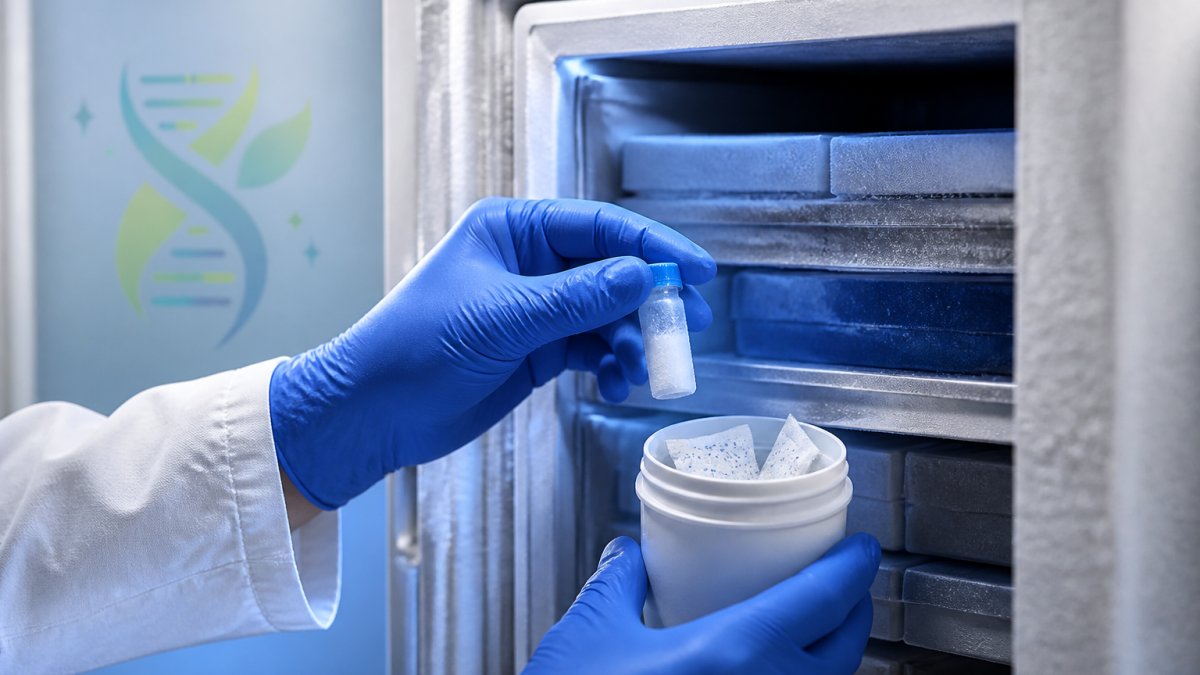
Leave lyophilised peptides in their original vials. The manufacturer designed that packaging to protect your compound. Don't transfer to new containers unless absolutely necessary.
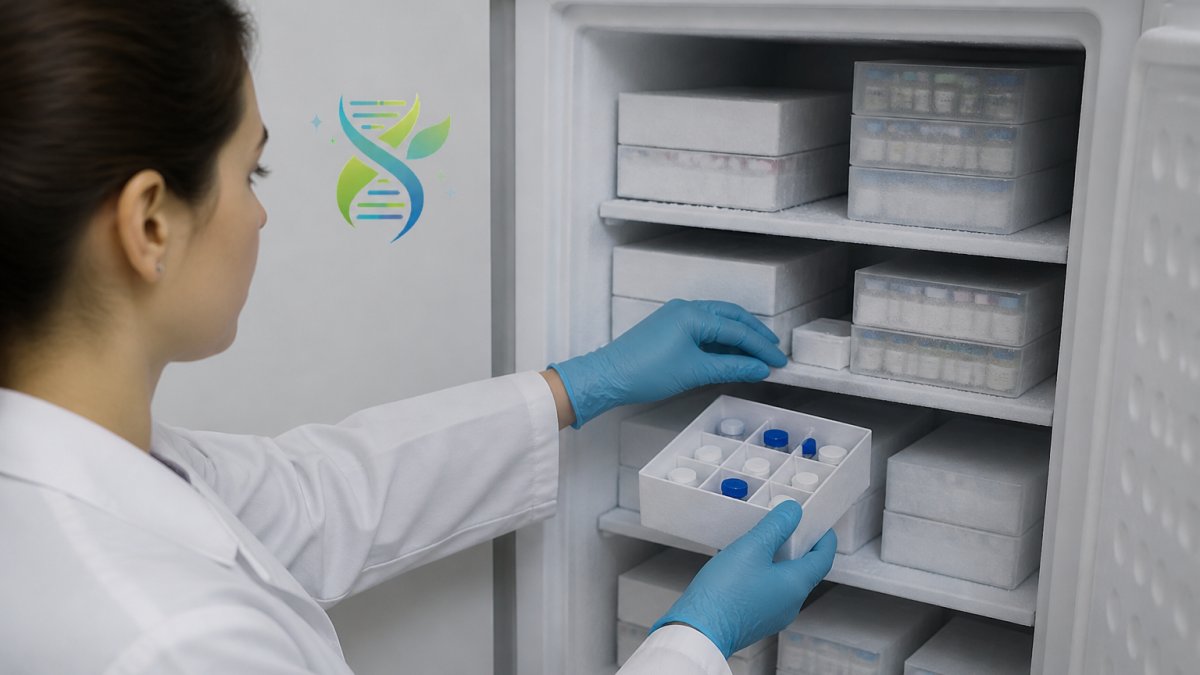
Store in a freezer at −20°C or colder. According to peer-reviewed guidance on peptide storage, lyophilised peptides stored at −20°C or lower for long-term storage exceeding 6 months experience minimal degradation. Keep them away from the freezer door, where temperature fluctuates most. Place vials toward the back, in the coldest zone.
Optimal temperature ranges and freezer placement
Your freezer temperature matters more than you might think. Here's what works:
- −20°C freezer: Standard laboratory freezer. Works well for most lyophilised peptides for 1-2 years.
- −80°C freezer: Ultra-low freezer. Best for long-term storage beyond 2 years or for temperature-sensitive peptides.
- Avoid: Refrigerator (2-8°C) for lyophilised peptides. Too warm. Use only for reconstituted solutions if stability data supports it.
Place vials in the coldest part of your freezer. The back of a −20°C freezer is colder than shelves near the door. If your lab has an ultra-low −80°C freezer, use it for your most critical or long-term stocks.
Protecting from light, moisture and temperature fluctuations
Lyophilised peptides fear three things: light, moisture, and temperature swings.
Light exposure: Store vials in a dark freezer or in an opaque box inside the freezer. Direct light degrades peptides. Amber or opaque vials offer extra protection if your supplier provides them.
Moisture: Keep the freezer door closed as much as possible. Each time you open it, warm air enters and ice forms on vials. This freeze-thaw cycle damages peptides. Minimise door openings. Grab what you need and close quickly.
Temperature excursions: If your freezer fails or power is lost, peptides can degrade rapidly. Monitor your freezer temperature with a thermometer or alarm. If temperature rises above −15°C for more than a few hours, assume the batch is compromised.
Keep desiccant packets inside vials if the manufacturer included them. They absorb moisture. Never remove them unless you're about to reconstitute the peptide.
Peptide Storage Temperature: What the Evidence Shows
Research shows that temperature control is non-negotiable. Industry storage guidance from multiple suppliers recommends −20°C away from bright light for lyophilised peptides, with some peptides requiring −80°C for longer storage. The exact temperature depends on your peptide, its form, and how long you plan to store it.
Short-term and long-term storage have different rules. Know which applies to you.
Short-term versus long-term storage requirements
Short-term storage (up to 6 months):
- Lyophilised peptides: −20°C freezer is sufficient
- Reconstituted solutions: −20°C or lower, depending on the peptide
- Keep original vials sealed until use
Long-term storage (6 months to 2+ years):
- Lyophilised peptides: −80°C ultra-low freezer recommended
- Reconstituted solutions: −80°C if stability data supports it; otherwise discard after 1-3 months
- Minimise freeze-thaw cycles
The difference matters. A peptide stable at −20°C for 12 months may degrade within 3-6 months at −80°C if you open the vial repeatedly. Plan your storage based on how often you'll use the peptide.
Recognising temperature excursions and recovery steps
Temperature excursions happen. A freezer fails. Power goes out. A door is left open. What do you do?
First, check the thermometer or alarm. How high did the temperature rise? For how long?
- Brief excursion (minutes, temperature stays below −10°C): Peptide likely unharmed. Return to proper storage immediately.
- Extended excursion (hours, temperature rises above −10°C): Peptide may be partially degraded. Test a small aliquot before using the full batch.
- Severe excursion (hours at room temperature or above): Assume the batch is compromised. Do not use for critical experiments.
Once temperature returns to normal, return vials to cold storage immediately. Do not leave them at room temperature "just to thaw." This causes rapid degradation.
If you suspect an excursion, contact your supplier.
How to Store Reconstituted Peptides and Maintain Stability
Reconstituted peptides are peptides dissolved in liquid. They're less stable than lyophilised powder. Stability depends on the solvent, the peptide itself, and storage temperature.
Research on peptide solution stability notes that reconstituted peptides should be stored at −20°C or lower depending on stability in solution, and some may require −80°C. Stability is peptide-dependent. Always check your supplier's guidance.
Choosing the right solvent and aseptic technique
The solvent you choose affects stability. Common options:
- Bacteriostatic water: Contains benzyl alcohol as a preservative. Suitable for peptides that tolerate it. Allows repeated access without contamination.
- Sterile water: No preservative. Use only if your peptide is sensitive to benzyl alcohol. Requires aseptic technique on every access.
- PBS or other buffer: Matches physiological conditions. Use only if your downstream application requires it. Check stability first.
Ask your supplier which solvent is best for your peptide. Never guess.
Use aseptic technique every time you access a reconstituted solution:
- Work in a biosafety cabinet or clean workspace
- Use sterile, pyrogen-free needles and syringes
- Wipe the vial stopper with 70% ethanol before puncturing
- Never touch the needle tip
- Return the vial to the freezer immediately after withdrawing your aliquot
Preventing contamination and freeze-thaw damage
Two enemies threaten reconstituted peptides: contamination and freeze-thaw cycles.
Contamination prevention:
- Never leave a reconstituted vial at room temperature
- Use a new, sterile needle every time
- Keep the vial sealed except during withdrawal
- Store in a dedicated freezer section away from other materials
- Label clearly: "Reconstituted, Do Not Share"
Freeze-thaw damage:
- Aliquot your reconstituted peptide into smaller vials before freezing
- Use one aliquot per experiment or day
- Never refreeze a thawed aliquot
- Thaw only what you need, only when you need it
If you must store a reconstituted peptide long-term, freeze it in small aliquots. This way, you thaw only one vial at a time. The rest remain protected in the freezer.
How Long Do Reconstituted Peptides Last in Storage
Reconstituted peptide shelf life varies widely. Some remain stable for 3 months at −20°C. Others degrade within weeks.
The variables:
- Peptide sequence: Some amino acid combinations are inherently unstable
- Solvent: Bacteriostatic water preserves longer than sterile water
- Temperature: −80°C extends life compared to −20°C
- Contamination: Even one contamination event shortens shelf life dramatically
- Freeze-thaw cycles: Each thaw reduces remaining stability
Your supplier's technical datasheet should specify expected shelf life for your reconstituted peptide. If it doesn't, ask. Don't assume.
A conservative approach: assume reconstituted peptides last 1-3 months at −20°C unless your data sheet says otherwise. If you need longer storage, consider keeping the peptide lyophilised and reconstituting only what you need, when you need it.
Monitoring Stability: Signs of Peptide Degradation
How do you know if a peptide has degraded? Visual inspection catches some problems.
Look for:
- Discoloration: Yellowing or browning suggests oxidation or contamination
- Precipitation: Particles or cloudiness in a solution indicate degradation or contamination
- Odour: Unusual or foul smell signals bacterial growth
- Vial damage: Cracks, leaks, or frost buildup mean the seal failed
If you see any of these, do not use the peptide. Discard it safely according to your institution's protocol.
For reconstituted peptides, also check:
- pH change: Some peptides hydrolyse and shift pH over time
- Viscosity change: Degraded peptides may thicken or thin
- Loss of activity: Your assay results drop unexpectedly
If activity drops, suspect degradation. Run a control with a fresh batch to confirm.
Creating a Storage Decision Tree for Your Laboratory
Different peptides need different storage. Create a simple decision tree to guide your team.
| Peptide Form | Storage Duration | Recommended Temperature | Container | Notes |
|---|---|---|---|---|
| Lyophilised | Up to 6 months | −20°C | Original sealed vial | Keep door openings minimal |
| Lyophilised | 6+ months | −80°C | Original sealed vial | Best for long-term stability |
| Reconstituted (bacteriostatic) | 1-3 months | −20°C or −80°C | Sealed vial, aliquoted | Thaw only what you use |
| Reconstituted (sterile water) | 1-2 weeks | −80°C | Sealed vial, aliquoted | Higher contamination risk |
| Solution in buffer | Per datasheet | −80°C | Sealed vial, aliquoted | Check stability first |
Post this table in your lab. Train your team to use it. Consistency prevents mistakes.
Add a checklist to your lab protocol:
- Check peptide datasheet for storage requirements before opening
- Verify freezer temperature is correct (−20°C or −80°C)
- Inspect vial for damage, discoloration, or contamination
- Use aseptic technique when reconstituting or withdrawing
- Label with date received and date opened
- Return to freezer immediately after use
- Monitor freezer temperature weekly
Proper peptide storage protects your research investment and ensures reproducible results. The steps are simple: keep peptides cold, dry, and dark. Use aseptic technique with reconstituted solutions. Monitor for signs of degradation.
When you source peptides from Everform Research, you're starting with a compound backed by rigorous third-party testing and cGMP-compliant manufacturing. Proper storage keeps that quality intact. We provide detailed storage guidance with every order and remain available to answer questions about your specific peptide. Use discount code EVER15 for 15% off your first order. Shop compounds with confidence, knowing your storage protocol protects every vial.
Frequently Asked Questions
What is the best temperature for storing research peptides long-term?
For long-term storage exceeding 6 months, lyophilised peptides should be stored at −20 °C or colder, according to published handling guidance. Some suppliers recommend −80 °C for extended periods. Short-term storage of lyophilised peptides can occur at 2-8 °C if kept in original sealed packaging away from light. Always check your peptide's Certificate of Analysis for manufacturer-specific recommendations, as stability varies by formulation.
How long do reconstituted peptides last after preparation?
Shelf life for reconstituted peptide solutions depends entirely on the specific peptide and its stability in solution. Some reconstituted peptides remain stable for weeks at −20 °C or lower; others degrade within days. Store reconstituted peptides in sealed vials at −20 °C minimum, and consult your supplier's documentation for the expected stability window. Freeze-thaw cycles shorten shelf life, so aliquoting into smaller portions before freezing helps preserve potency across multiple uses.
Should I refrigerate lyophilised peptides or keep them in a freezer?
Lyophilised peptides in original sealed packaging can be refrigerated at 2-8 °C for short-term storage (weeks to a few months). However, freezer storage at −20 °C or colder is strongly preferred for anything beyond a few weeks, as it dramatically slows degradation. Avoid repeated temperature fluctuations between refrigeration and freezer, as these cycles can introduce moisture into the vial and compromise stability. Check your supplier's guidance for the specific peptide's optimal conditions.
How do I know if my research peptides have degraded?
Visual inspection is your first line of defence. Look for discolouration, unusual odour, or visible particles in lyophilised powder or solution. Reconstituted solutions that show cloudiness, precipitation, or separation suggest degradation or contamination. If peptides have experienced temperature excursions, extended light exposure, or repeated freeze-thaw cycles, potency may be reduced even if they appear normal. When in doubt, run a potency assay or contact your supplier, degraded peptides will compromise your experimental reproducibility.